
NGOs: The change of street names shows an arbitrary relationship of central authorities toward local self-government
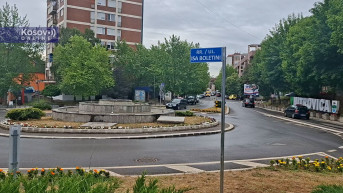
Civil society organizations operating within the Serbian community in Kosovo have expressed serious concern over what they describe as increasingly frequent actions by central institutions that restrict the ability of local self-governments in northern Kosovo to exercise competences guaranteed by the applicable legal framework.
As they emphasize, the latest case regarding street names in North Mitrovica represents only one example of a broader problem that calls into question the actual scope of local self-government powers in practice.
“The case goes beyond the issue of street names themselves and opens a fundamental question about the functioning of the local self-government system in Kosovo. If decisions that fall within the undisputed legal competences of municipalities can be practically rendered meaningless by the intervention of central institutions, the question arises of the real content of decentralization and local autonomy. In that sense, the dispute over street names is a clear indicator of an arbitrary relationship of central authorities toward the constitutional and legal competences of municipalities, as well as toward the principles of local self-government guaranteed by the European Charter of Local Self-Government,” the statement says.
The organizations point out that additional concern is caused by the fact that such activities are taking place during the election campaign, which, as they state, raises the question of the political motives behind them.
“Instead of issues within the competence of local self-government being resolved through dialogue and institutional procedures, they are once again being used to generate political tensions and mobilize the electorate. Previous practice shows that such moves rarely contribute to solving concrete problems for citizens, but almost always produce additional divisions and undermine mutual trust between communities,” the statement adds.
They also note that the European Union has cited the functioning of newly elected local institutions in northern Kosovo as one of the key indicators of stabilizing conditions following the political crisis that accompanied local elections.
“However, this case, as well as a series of similar occurrences in the previous period, indicates that there is still a significant gap between the formal transition of power and the actual exercise of local competences.”
For this reason, they called on the European Union and other international actors to demand consistent respect for the principles of local self-government from Kosovo institutions and to oppose practices that, as they claim, restrict or undermine the exercise of legally guaranteed municipal competences.
The statement was signed by the Center for Affirmative Social Actions (CASA), Aktiv, the New Social Initiative (NSI), and the Institute for Territorial Economic Development (InTER).


0 comments