
Novakovic: Prerequisite for the Belgrade-Pristina dialogue resumption is substantial de-escalation on the ground
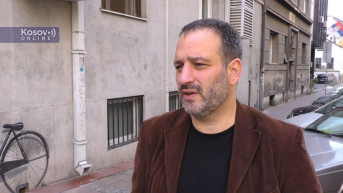
Following the conflict in Banjska, the Belgrade-Pristina dialogue is facing significant challenges, and its continuation is uncertain, Igor Novakovic from the Center for International and Security Affairs says. He believes that a prerequisite for resuming talks is a substantial de-escalation on the ground and clear security guarantees for the local population in the north, as well as assurances to both sides, that no new incidents will occur.
"We should also consider what preceded this incident in Banjska, if we can even call it that, and that is that Pristina was very dissatisfied with the mediating role of the European Union, primarily with Special Representative Miroslav Lajcak, and to some extent with High Representative Josep Borrell," Novakovic says.
He adds that at this moment, the continuation of the dialogue appears uncertain.
"It is uncertain in its current form, at least as it stands now, and it seems to me that the first step that should be taken is substantial de-escalation on the ground and clear security guarantees for the local population in the north, as well as assurances to both sides that no new incidents will occur and that there will be a strong response against them," Novakovic states.
Regarding unofficial information about possible measures by the European Union against Serbia, Novakovic notes that such a step requires the consensus of all member states.
"There are a total of 27 member states, and consensus is required for such measures. The key factor in taking such a step is to establish a clear link between the conflict that occurred in northern Kosovo and official Belgrade. We have already heard that President Vucic denied the existence of such a link. He said that the weapons found there probably came from the black market," Novakovic says.
He adds that the most important thing is to see what the investigation will reveal.
"It is crucial to avoid certain 'halo effects,' as we have already seen, where Pristina almost immediately accused Belgrade of sponsoring the attack. What is crucial is that the investigation receives verification from EULEX and KFOR," Novakovic says.
He believes that discussions about EU measures can only take place after the investigation is completed.
"As for what those measures could be, if there are any, the range is quite wide. We have seen how this can happen, for example, with Pristina. The situation with Serbia is somewhat different simply because we have ongoing EU accession negotiations, so we can also expect consequences in that regard," Novakovic concludes.



0 comments