
Odalovic: Establishment of the Joint Commission marks a key breakthrough in resolving the issue of missing persons
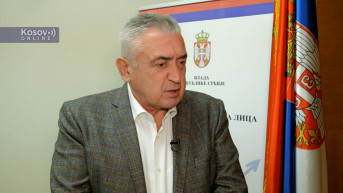
The President of the Serbian Government Commission on Missing Persons, Veljko Odalovic, stated, following yesterday’s round of the Belgrade–Pristina dialogue in Brussels, that a significant breakthrough has been achieved in addressing the issue of missing persons. Speaking to Kosovo Online, he assessed that the establishment of the Joint Commission is good news for the families of the missing and for all those who approach this issue in good faith.
Odalovic recalled that the process is based on the Declaration on Missing Persons, which, as he noted, was agreed three years ago.
“I believe that, together with the Declaration agreed three years ago by President Aleksandar Vucic and the representative of the provisional institutions in Pristina, this represents good news for the families of the missing and for all those who wish to address this matter sincerely and in good faith,” Odalovic said.
He emphasized that a key breakthrough was made yesterday with the establishment of the Joint Commission, noting that this followed persistent insistence by the Serbian side.
“Yesterday marked a crucial breakthrough—the Joint Commission was established after our persistent insistence on principled issues. In essence, we defended the Declaration, we defended the working group, and we defended the humanitarian aspect of this issue, working with Mr. Petkovic and his team to safeguard those principles,” Odalovic stated.
He underlined that yesterday’s meeting confirmed the legitimacy of the Serbian side’s demands, adding that this was also acknowledged by the European mediator in the dialogue.
“In a way, yesterday we received confirmation that we were right. What we insisted on and what constituted our demands was formally endorsed yesterday by Mr. Peter Sørensen, to whom we owe thanks, as he recognized this problem in a relatively short period of time. He understood how important it is to activate this mechanism, to operationalize the Joint Commission, and to establish clear rules,” Odalovic said.
He expressed the expectation that the first operational meeting would be held in the coming weeks.
“After that, we will speak about dynamics, topics, and everything that families of the missing—both Serb and Albanian—are most concerned about. It seems to me that this is the moment when we can say we have set a good course and that, if the Pristina delegation continues to act as it did yesterday, I believe we will reach more substantial results. This is indeed good news, and I repeat: the humanitarian aspect, as a civilizational issue at the core of our mandate, has prevailed,” Odalovic said.
Speaking about next steps, he stressed that the Working Group remains the key operational mechanism, while the Joint Commission will play a supportive role.
“The Working Group has been identified and remains an irreplaceable mechanism, as it carries out the substantive work. The Joint Commission will provide support to the Working Group in resolving issues it identifies and for which it seeks assistance,” he explained.
He identified the issue of archives as one of the key topics.
“It is extremely important to establish this as the first point—how we exchange information and how we handle it. In public discourse, claims have often appeared that are inconsistent with both the spirit of the Declaration and this document. My colleague from Pristina, Andin Hoti, has often said that he sent some kind of request to Aleksandar Vucic. That is truly absurd. I have repeatedly pointed out that he has no basis for that, nor any mandate or right,” Odalovic said.
He explained that only now can Hoti appear in his capacity as head of the process and specify which archives are of interest—identify them, define them precisely, and link them to missing persons.
“That is crucial for us, because our mandate is the missing person—the event, the zone, the area. On that basis, we can create a framework for further searches, both in domestic and international archives,” Odalovic stressed.
He highlighted that international archives are of particular importance for Serbia with regard to persons who went missing after 10 June 1999.
“The largest number of persons we are searching for—Serbs and members of other non-Albanian communities—disappeared or were killed at that time, and none of us knows what happened to them. This is a good moment, if we wish to continue in this spirit, to sit down at the table, for the Joint Commission to establish rules and begin exchanging information, and then, on the basis of that information, to move toward concrete searches. Pristina within the archives of the so-called Kosovo Liberation Army, and we, in our archives, will responsibly examine every document and anything that can help clarify the fate of any missing person,” Odalovic said.
According to him, the objective is a full exchange of information regardless of the national affiliation of the missing.
“All information must be made available and put to use in clarifying the fate of missing persons. This is something we have been striving for over the past three years, and, thank God, we have succeeded in securing understanding that this is the essence of what should follow—not merely to say that ‘something has been agreed,’ but that we have now established a basis, a model, and a mechanism with which all sides can be satisfied,” he stated.
Odalovic expressed regret that families of the missing will not participate to the full extent in the work of the Joint Commission.
“Our side proposed that representatives of families—both Serb and Albanian—be included as observers or mediators in the work of the Joint Commission. Unfortunately, colleagues from Pristina rejected this at the time. We will revisit this issue. I firmly believe that transparency and their presence would be of great importance, enabling them to fully understand what we are doing, rather than relying on media statements and speculating about motives, politics, and intentions,” Odalovic said.
He concluded by emphasizing that the essence of the process lies in a civilizational and humanitarian approach.
“The essence is a civilizational, humanitarian approach. That is where we seek the support of all those who have goodwill and sincere intentions and are ready to work with us,” Odalovic concluded.


0 comments