
Odalovic: Serbian victims are not a priority for Pristina, our delegations have been absent from sites it investigates for seven years
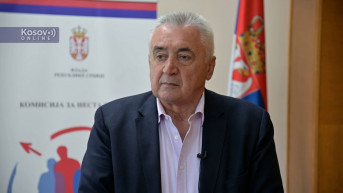
President of the Serbian Government Commission on Missing Persons Veljko Odalovic said, regarding the start of the identification of human remains found in Zubin Potok, that caretaker Kosovo Prime Minister Albin Kurti's appeal for the international community to pressure Serbia into opening its archives was unfounded, given that Serbian delegations had not been present at sites investigated by Pristina for seven years, were not invited to searches, and Pristina did not act on their requests. This, he said, demonstrated that Serbian victims were not a priority for Pristina and that, it appeared, Pristina had no interest in them at all.
Odalovic stressed that the beginning of the process of identifying the human remains was good news for the families of missing persons, adding that the fate of more than 2,500 cases had so far been resolved through DNA analysis.
"I assume they have sufficient samples from the families, and this is a process that will probably take some time. However, the process concludes with the International Commission on Missing Persons receiving a report confirming the identities of those identified using this method. We also appeal to those who have not provided blood samples, or where there are insufficient blood samples, to do so in order to make the database as operational as possible," Odalovic told Kosovo Online.
According to him, the Kosovo public needed to know that information concerning everything currently being investigated had existed since 2003 in the archives of the Kosovo Police, UNMIK, and subsequently EULEX.
"I can understand that perhaps the UNMIK and EULEX archives were not searched in detail, but why were the families not informed earlier when this information also existed in the Kosovo Police archives—that an incident had occurred at that location and that they had witness statements describing all the details? Those statements were not made available to us, and we did not participate in that process. As far as the Working Group and our representatives are concerned, we visited the location twice together with representatives of the Pristina delegation, the International Committee of the Red Cross, and EULEX investigators, but those searches and examinations did not lead us to the location where the human remains were found," Odalovic explained.
At the most recent meeting of the Working Group in Geneva, the Serbian delegation presented specific proposals for searches of domestic and international archives, as well as for the establishment of a joint team involving representatives of the European Commission and the International Committee of the Red Cross.
"That path is absolutely indispensable because not all archives are located in either Belgrade or Pristina. Many are also held in the archives of international organizations. There are numerous locations, including another one that is of particular interest and on which we insist. It is a location near Istok, where international archives also contain certain information concerning the details of what happened to people and the discovery of human remains, but we have no information about where they were buried. Cooperation regarding archives is therefore extremely important because, at this distance in time, if we do not have archival documents and confirmation of specific events and locations, it will be very difficult to reconstruct what happened, given how much time has passed and how much the terrain and other features have changed," Odalovic said.
He recalled that, through the Working Group mechanism, 2,417 documents had been provided to the International Committee of the Red Cross for sharing with the Pristina delegation, and that more than 100 sets of remains of Kosovo Albanians had been found in this way.
"We have not received a single document from their delegation, from any source, and their response has consistently been that they do not have such documents in their archives. These were even their official responses at Working Group meetings, which is something that is absolutely inconsistent with, and does not contribute to, resolving the fate of missing persons, primarily Serbs and other non-Albanians. Something that is very often emphasized in the media and among the Pristina public and presented solely in the way Pristina wishes to portray it concerns the 37th Motorized Brigade. At a Working Group meeting, we specifically asked our colleagues from the Pristina delegation to tell us what exactly their request to search the archives of the 37th Motorized Brigade referred to. We asked them to link each request to an event and a specific disappearance so that we could approach the search for information not only in the archives of the 37th Motorized Brigade but also in other potential databases, because we believed this was something we should all work on together," Odalovic stressed.
He also assessed that insisting on the handover of the archives of the 37th Motorized Brigade, as well as requests which, according to Pristina's interpretation, arose from the agreements and had been sent to several addresses in Serbia, could not contribute to resolving individual cases and events.
"What we proposed was that, once the group we proposed within the Joint Commission begins its work, we identify specific events and dates and ask those who were present, active, and responsible in those areas to check their archives for concrete information relating to our requests or those of Pristina. We, too, have information and indications that numerous killings, deaths, and disappearances of people whom we are still searching for today occurred in certain zones of responsibility of the so-called Liberation Army during that period, and I firmly believe that their archives contain information about those events. That is what we wanted to share," Odalovic said.
He stated that during his tenure in the Working Group, more than 1,900 bodies had been found, identified, and returned to their families, around 70 percent of them Kosovo Albanians.
"We have every legitimate right to demand that Pristina fulfill the obligations it undertook in Geneva, Brussels, and within the Working Group, and search the locations it agreed to examine at our request—Dojnice, Lapusnik, Kosare, Plav Lake, Lugovo, Budisavce, and others. We, on the other hand, act on requests from the Pristina side. We have not been present at sites in Kosovo for seven years. They do not invite us to any searches, nor do they want to act on our requests. This demonstrates that Serbian victims and the cases we are searching for are not merely not a priority for Pristina—it seems to me that they are not interested in them at all," Odalovic said.
He called for a return to the mechanism and working methods under which the Working Group had previously operated, with mutual respect for the obligations undertaken and joint work at sites in Kosovo that were of interest to Serbia, as well as at sites in central Serbia in which Pristina had expressed an interest.
"The families of Albanians and Serbs deserve a much more honest approach to the search for missing persons. Much needs to be done to avoid politicization or anything of that kind, because all of this can easily be turned into politics, but that does not help—it only causes harm and takes us further away from the process. I firmly believe in the humanitarian mandate and a humanitarian, civilized approach to this problem, and that has been the guiding principle of our work to date," Odalovic added.
Odalovic recalled that information about the locations investigated in Zubin Potok in recent days had been known since 2003, meaning that, in his view, the process of locating the bodies could have been completed much earlier.
"I do not want to comment at all at this point on everything that is happening in the area around Zubin Potok, but I will repeat that this information was known in 2003 and that it led, in this or a similar way, to the discovery of the locations. I see that certain indictments have been filed against individuals whom they claim to have information identifying as perpetrators. All of this could have been completed long ago—the proceedings concluded, the bodies identified and returned to the families for burial, while proceedings concerning all other matters could have continued. That is the path toward swift, high-quality, transparent, and joint action. We advocate such an approach, but Pristina is clearly not prepared to address this issue in that manner," Odalovic concluded.
Kurti said earlier today that the identification of human remains found at locations in Zubin Potok had begun and that the international community needed to exert pressure on Serbia to open its archives.
"More than ever, at moments such as this, international actors should increase pressure on our northern neighbor to implement the Declaration on Missing Persons, agreed in Brussels on May 2, 2023, by opening and making available state archives that could help clarify the fate of the missing," Kurti said.

0 comments