
Odalovic: Zagreb is not cooperating in the search for and identification of missing persons, nor is Pristina
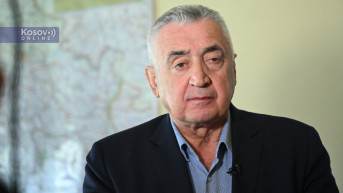
The Chairman of the Serbian Government's Commission on Missing Persons, Veljko Odalovic, stated today that Zagreb is not cooperating in the search for and identification of persons who went missing during the Croatian military-police operation Operation Storm, stressing that Serbia will continue to raise the issue before both the domestic and international public until the fate of all those who disappeared or were killed in what he described as a criminal operation is fully clarified. He also stated that, in recent years, neither Zagreb nor Pristina has shown a willingness to cooperate in resolving the issue of missing persons, Politika reported.
Speaking at a press conference entitled "Return Our Loved Ones – We Have Waited Too Long," organized by the Association of Families of Missing and Killed Persons Suza ("Tear") and the Commission on Missing Persons at the Palace of Serbia to mark the 31st anniversary of the suffering and displacement of Serbs during Operation Storm, Odalovic said that the occasion serves as a day of remembrance for those who were killed and forced to flee.
"The very fact that nearly 9,900 people were killed or remain missing as a result of that operation, and that more than 220,000 people were expelled from their homes, is something that must never be forgotten. When we add to that the fact that they were expelled from an area where an international mission was deployed, where the United Nations was present, and where NATO itself participated directly in the operation, it becomes clear that, despite efforts to find a peaceful solution, there was obviously a predetermined scenario for these events to unfold," Odalovic said.
He added that this remains a major stain on the mandate of that international mission, one that was, in his view, later repeated in Kosovo.
"We find ourselves in a situation where, wherever these international missions operated under their mandates, there are no longer any Serbs living there. That may not have been their official mandate when they were deployed, but we will neither remain silent about it nor forget it," Odalovic emphasized.
Referring to celebrations taking place today and tomorrow in Knin and elsewhere in Croatia, he questioned what exactly Croatia was celebrating.
"If 1,200 civilians were killed or went missing, if more than 70 percent of the missing were over the age of 60, and if 540 of them were women—if that is something they can take pride in, then let them bear that burden. But let them also tell their own public what they did, what crimes were committed, and what atrocities took place. That is something we, on behalf of the families, the victims, and the memory of all that happened, simply cannot forget," Odalovic said.
According to him, Croatia continues to present the narrative domestically and internationally that Serbia is failing to cooperate in the search for and identification of missing persons, that Serbia is withholding archives and information, and that it refuses to reveal the locations of mass graves.
"There is only one truth: if crimes were committed, they occurred on the territory of the Republic of Croatia. The bodies are there, the graves are there, the archives are there, the morgues are there, the investigative authorities are there—the institutions that should provide answers to these questions. We have repeatedly requested those answers and have not received them because it is obvious that our Croatian colleagues are currently unwilling to cooperate," Odalovic said.
He added that the Croatian side has not responded to Serbia's requests to hold working meetings.
"We continue to insist that all locations for which we have received information be examined. Families and associations have been of tremendous assistance in this regard, providing valuable information. More than fifty potential locations have already been submitted to the Croatian side, and we have proposed that we inspect them together, as we used to do. We are not making any claims at this stage, but when we receive credible information indicating the possible location of a burial site, it is essential that we investigate it. That is exactly what we do, without exception, whenever Croatia submits requests to us," Odalovic said.
He stressed that Belgrade has adopted a responsible approach toward locating and identifying missing persons, noting that between 1991 and 1995, 480 bodies were recovered from the banks and waterways of the Sava and Danube rivers. All were exhumed jointly with Croatian and Bosnian authorities.
"More than 300 have since been identified and returned to their families. Of those, more than 100 were handed over to Croatia, around 150 to Bosnia and Herzegovina, Republika Srpska, and Montenegro, while others were Serbian citizens. That demonstrates the responsible approach we have taken, and we will continue to act in the same manner," he said.
By contrast, Odalovic argued, both Zagreb and Pristina have become increasingly unwilling to cooperate.
"We are witnessing a coordinated campaign in which the same narrative and identical messages are being directed primarily at the international community, portraying the Republic of Serbia as responsible for everything—including all victims—without making any distinction whatsoever. I repeat: there is not a single request that we have refused to discuss or fulfil," he said.
He added that Serbia cannot remain silent in the face of what he described as manipulation and misinformation aimed primarily at influencing international opinion, while also making the resolution of missing persons cases one of the conditions on Serbia's path toward European Union membership.
"More than half of the missing persons in Croatia are Serbs. Yet you will never hear a Croatian official say that. More than 1,500 missing Serbs remain listed in the jointly agreed official records. We have exhumed 1,050 bodies from the period of Operation Storm. Around 700 have been identified and returned to their families. That was the period when we cooperated effectively," Odalovic said.
He emphasized that Serbia has investigated every reported location, whether proposed by the Serbian or Croatian side.
"There are 900 unidentified bodies in morgues throughout Croatia. We do not know to whom they belong. We are certain that more than 400 are Serbs because they were recovered from exhumation sites where we were present. DNA samples were taken, and positive DNA matches are still pending. If, for example, 120 bodies are exhumed from a cemetery in Dvor na Uni or elsewhere and only 60 are identified, then it is evident that the remaining 60 are also Serbs, because they were buried in a Serbian cemetery. These are cemeteries where Serbs were buried following various operations or individual crimes committed against them," Odalovic said.
He expressed regret that political considerations have overtak
He expressed regret that political considerations have overtaken what should be regarded primarily as a humanitarian and civilizational issue.
"We are facing a coordinated blockade of the process, implemented in exactly the same way in both Zagreb and Pristina. This has been going on for six or seven years. We cannot schedule meetings with either side to discuss issues, locations, activities, or anything else that we used to discuss and work on together. This is something we cannot and must not remain silent about, especially when it concerns the terrible crime committed 31 years ago," Odalovic concluded.
He stressed that families who lost their loved ones have the right to know what happened to them, adding that a particular problem is the absence of prosecutions for war crimes committed against Serbs.
"It is as though Serbs were regarded as legitimate targets at the time, as though there were an open season on them. The atrocities committed, the people who were killed—whether their bodies have been found or not, whether they have been identified through one list or another—are all victims of crimes. Every perpetrator must be held accountable, regardless of nationality. Just as we make no distinction between victims, we should make no distinction between those responsible for committing these crimes," Odalovic said.
Finally, he noted that Serbia maintains fairly constructive cooperation with Bosnia and Herzegovina, where the situation is somewhat clearer and regular working meetings continue to take place.
"There we are still searching for 212 of our citizens. Nevertheless, progress is being made, and both the continuity of working meetings and concrete activities in the field and at specific locations has been maintained," Odalovic concluded.


0 comments