
Ombudsman: Interethnic incidents impede the return of displaced Serbs
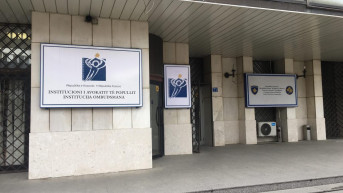
The Ombudsman Institution in Kosovo (OIK) assesses that political issues, as well as tensions and incidents in Kosovo in general, do not encourage displaced persons to return to their homes. This further hinders the process of the return of displaced Serbs and returnees from other communities. They warn that interethnic incidents create a sense of insecurity, even for those individuals who have already returned to Kosovo.
The Ombudsman Institution responded to questions from Kosovo Online about issues facing the Serbian community in Kosovo. They stated that complaints from the Serbian community were "more or less similar to other complaints accepted by the Kosovo Ombudsman" and related to property rights, the integration of returnees, the length of court proceedings, incomplete implementation of the Law on the Use of Languages, problems related to obtaining personal documentation for individuals who lived in Kosovo before 1999, their spouses, and children, issues related to employment, and the realization of pension rights.
They emphasize that some complaints from the Serbs contain allegations of discrimination, mostly based on ethnic affiliation, regarding education and certain health issues.
As stated, the challenges faced by displaced persons and returnees mainly include property usurpation and deprivation of property rights, non-enforcement of court decisions, often related to real estate, lack of access to educational institutions, economic situation, unemployment, infrastructure problems, poor social conditions, stable return, and issues with the implementation of language rights, etc.
In response to the question of how many complaints there were during the past year and what the trend is from year to year, the Ombudsman emphasizes that the trend of accepting complaints is on the rise due to citizens' trust in that institution.
"The statistics are as follows: In 2023, the Ombudsman Institution received 148 complaints from the Serbian community, while in 2022, it received 77 complaints. Statistical data for previous years are available in the annual reports of the Ombudsman Institution on the official website of the institution," the response states.
From Christmas until now, there have been seven attacks on the property of returning Serbs in the municipality of Istok alone, and the Ombudsman Institution condemns such incidents.
"The Ombudsman condemns these and similar attacks. We are collecting data on this issue as well. However, the Institution has been informed by the Kosovo Police that these cases are under investigation," the response notes.
Commenting on the increasingly frequent attacks on the property of the Serbian Orthodox Church and the fact that a few days ago the foundations of the Church of the Nativity of the Virgin in the village of Vrelo were "plowed over", the Ombudsman Institution emphasizes that data collection is underway for this case.
They state that Kosovo Serbs and their private property, as well as objects of cultural and religious significance, unfortunately, continue to suffer certain attacks.
"These attacks, to some extent, question their safety and freedom of movement and affect the enjoyment of basic human rights. KFOR protects a certain number of religious objects throughout Kosovo. However, they are increasingly handing over these duties to the Kosovo Police, which is obliged to provide adequate protection in this direction, together with the judiciary," the Ombudsman Institution explains.
In response to the question of what the Kosovo institutions and the international community can do to stop attacks on the Serbs and Serbian property and whether they are doing so, the Ombudsman Institution assesses that it is crucial for Kosovo society to respect the rights of ethnic communities and reduce tensions among them. They emphasize that this is an important way to maintain peace and stability within Kosovo society.
The reaction of central and local institutions and the Kosovo police to incidents where Kosovo Serbs and their property are targeted has shown some progress over the years, according to the response.
"The public condemnation of such occurrences, the implementation of adequate targeted measures, and more frequent visits by relevant representatives of central and local institutions to the affected individuals are very important in building mutual trust. In this context, it is necessary for legitimate representatives of the Serbs to contribute and help institutions and other actors identify the necessary measures to improve the current situation," the Ombudsman Institution states.
At the same time, they add that effective participation requires ethnic communities to seek solutions to their problems through an integrative approach, "because that is the only true path and a precondition for a peaceful, democratic, and prosperous society".
Regarding how these incidents affect the process of the return of displaced Serbs, the Ombudsman Institution warns that all tensions, both political and on the ground, do not encourage returnees to go back to their homes.
"These incidents, as well as concerns about the current political climate in North Mitrovica, generally do not encourage displaced individuals to return to their homes, which further slows down the process of the return of displaced Serbs and returnees from other communities. Interethnic incidents create a sense of insecurity even for those individuals who have already returned," the response for Kosovo Online states.


comments