
Pavkovic: Pristina is not interested in the return of Serbs to the institutions
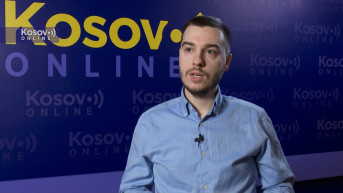
Milos Pavkovic, an associate at the Center for European Policy, believes that Pristina is not interested in the return of Serbs to institutions, particularly the police, as it would make it significantly harder to control the Serbian community. He emphasizes that the solution lies in a broader political agreement that would entail comprehensive reintegration of the Serbian community.
“From this perspective, it seems that Pristina is not genuinely interested in the return of Serbs to institutions, especially not as a group or community, because in that case, it becomes much harder to control the Serbian community,” Pavkovic told Kosovo Online.
He explains that, in cases of individual applications to the Kosovo Police, such individuals cannot exert significant influence. This is evident, he says, if someone were, for example, to apply for the position of police commander in the north, as that position requires at least 10 or 11 years of service.
“There is an obvious animosity from Pristina toward the north of Kosovo, especially toward Serbs as a community and their political organization. Essentially, the government in Pristina views Serbs in the north as a burden that hampers the functioning of institutions and obstructs certain national interests of so-called Kosovo,” Pavkovic pointed out.
He is convinced that this is why the authorities in Pristina do not want to offer concrete options for the reintegration of Serbs.
“They speak more about partial solutions, about individual opportunities, but essentially, they do not want full reintegration of the Serbian community into institutions,” Pavkovic stressed.
According to him, the reintegration of Serbs into the Kosovo Police must be part of a broader political agreement that would encompass the comprehensive reintegration of the Serbian community.
“The reintegration of Serbs into the Kosovo Police is not possible through job postings and standard procedures because Serbs are not interested in returning to institutions at this moment, or at least not in significant numbers. Their return must be part of a political agreement. Serbs left institutions—not just the police but also the judiciary, prosecution, local government, and all other institutions—as a political message and signal to the central government in Pristina that they are dissatisfied with their status in Kosovo. Therefore, they must return in the same manner—not partially, through individual job postings, but as part of a broader political agreement for the comprehensive reintegration of the Serbian community into Kosovo’s institutions,” Pavkovic emphasized.
He warns that if the government in Pristina is not ready for dialogue with the Serbian community about the terms of their return, it should not expect reintegration but rather only isolated cases of individuals returning to institutions.



0 comments