
Cottage owners at Lake Gazivode seek a solution, "Ibar-Lepenac" defends its position
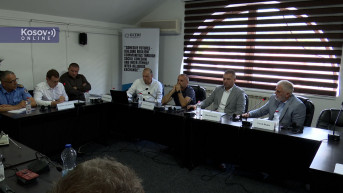
Owners of cottages at Lake Gazivode, who have been informed that their properties are to be demolished, stated today at a public discussion on property issues in the area that they had never encountered such a problem over the past 20 years. They stressed that they were willing to reach an agreement, including paying a lease fee if necessary, provided that their cottages were not demolished.
Faruk Mujka, Director of the public company Ibar-Lepenac, said that the company is registered in Kosovo's cadastral records as the owner of a large number of parcels acquired through expropriation for the construction of the Gazivode reservoir. In response, attorney Predrag Miljkovic, legal representative of the cottage owners, requested information on when the expropriation procedure had been initiated, pointing out that demolition decisions had not been properly served on all parties involved, despite having been declared enforceable.
After Ibar-Lepenac and Kosovo's Ministry of Environment, Spatial Planning and Infrastructure began demolishing five cottages owned by Serbs at Lake Gazivode late last month, the NGO Aktiv organized a forum in Zubin Potok today entitled "Dialogue on Property Issues in the Lake Gazivode Area: Challenges, Institutional Responsibilities and the Way Forward."
The discussion brought together cottage owners, representatives of Ibar-Lepenac, and local government officials. However, Acting Minister of Environment, Spatial Planning and Infrastructure Fitore Pacolli, although previously announced as a participant, did not attend, nor did representatives of the Ministry. Representatives of EULEX and KFOR were also present.
Zubin Potok Mayor Milos Perovic emphasized that the local authorities had not approved the demolition of cottages in the Lake Gazivode area and stressed that all outstanding issues must be resolved through dialogue and with due consideration for the interests of local residents.
He also noted that the ban on the use of motorboats on Lake Gazivode, together with the announced demolition of private property, does not contribute to building trust among citizens.
Perovic further recalled the case in Cecevo, where five cottages and houses built in the 1970s were demolished, arguing that such actions deepen fear and insecurity among the local population.
He said that the Municipality of Zubin Potok would continue to protect the interests of its residents and insist on respect for their rights, while calling for all unresolved issues to be addressed through dialogue and compromise.
During the discussion, the cottage owners presented their views regarding their investments, the legal status of their properties, and the problems they are facing.
Ljubisa Mijacic, one of the owners of Camp Rezala, recalled that the camp had been established in 2014 on land purchased by the owners a year earlier and represented one of the first major tourism projects in Zubin Potok.
"Camp Rezala was founded in 2014 by four owners on a plot of land that we had purchased from owners in Rezala in 2013. The camp consists of a beach bar and an open-air restaurant with a kitchen and complete equipment, benches, tables, storage facilities, and a small enclosed restaurant area. In other words, it is a beach restaurant. The camp also includes five bungalows, each with six beds, mattresses, and accompanying storage space. Retaining walls were built, the beach area was landscaped, electricity and water were connected, and the entire complex was fenced. Since 2014, total investments in the camp have exceeded €80,000," Mijacic said.
He explained that the camp had been developed to provide tourism and recreational facilities during the summer months and had been included as a tourist attraction in guides covering Kosovo and the Western Balkans.
"It has welcomed tourists from all over the world. It was a pioneering tourism development project in Zubin Potok and one of the most successful projects supported through European Union activities in Kosovo," Mijacic noted.
According to him, the owners had attempted to negotiate a long-term land lease that would allow the camp to continue operating as an open space accessible to all citizens, but the proposal was rejected.
Mijacic argued that such actions undermine the rule of law and deepen distrust among citizens, while also stressing the importance of responsible management of Lake Gazivode due to the potential impact on water quality.
He called for continued dialogue, mediation, and the introduction of a moratorium on demolition decisions until a cooperation mechanism is established between the competent institutions and the local authorities.
Faruk Mujka, Director of the public enterprise Ibar-Lepenac, reiterated that the company is registered in Kosovo's cadastral records as the owner of numerous parcels acquired through expropriation for the construction of the Gazivode reservoir.
"It is important to emphasize that the company, as the registered owner in the cadastral registry of the Republic of Kosovo, is recorded as the owner of a significant number of parcels acquired through expropriation for the construction and operation of the Gazivode reservoir. The Gazivode reservoir is not merely a lake. It is a strategic resource that provides drinking water to citizens, supports irrigation, contributes to electricity generation, and forms part of the state's critical infrastructure. Therefore, any unlawful occupation of property in its vicinity directly jeopardizes the public interest," Mujka stated.
Attorney Predrag Miljkovic, legal representative of the cottage owners, requested information on when the land expropriation proceedings had been initiated, noting that the demolition decisions had not been properly served on all parties involved, even though they had been declared enforceable.
Miljkovic argued that, through years of inaction, the institutions had created a legitimate expectation among citizens that their buildings would eventually be legalized or that their status would be resolved in accordance with the law.
"There is a legal principle developed in the case law of the European Court of Human Rights and incorporated into Kosovo's Constitution—the principle of legitimate expectation. You created a legitimate expectation among these citizens that they would be able to legalize their buildings or that their status would eventually be resolved. Now, all of a sudden, you are pulling the rug out from under them. You cannot employ someone for 20 years and then, after two decades, tell them they failed to submit their diploma when applying for the job and dismiss them on that basis. Why? Because over all those years you created a legitimate expectation that everything was in order," Miljkovic emphasized.
0 comments