
Petkovic asks McGurk to ensure OSCE facilitates Serbian parliamentary elections in Kosovo
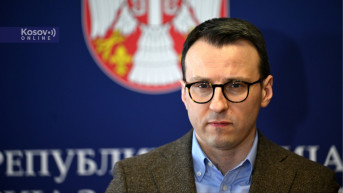
Director of the Office for Kosovo and Metohija Petar Petkovic has asked Head of the OSCE Mission in Pristina Gerard McGurk for the Mission, in accordance with its mandate and the authority granted under UN Security Council Resolution 1244, to once again provide support so that the parliamentary elections for the National Assembly of Serbia, scheduled for October 25, can also be held in Kosovo. He recalled that, under the OSCE decision of July 1, 1999, the Mission’s responsibilities “include the organization and supervision of elections.”
In a letter sent on Friday and seen by Kosovo Online, Petkovic stressed that during the electoral processes in 2010, 2012, 2014, 2016, 2017 and 2020, the OSCE Mission had played a key role by facilitating the secure and transparent collection of ballots and ensuring the security of voters, election materials and participants in the electoral process, as well as the transparency of the process itself.
In this way, Petkovic added, the OSCE helped “citizens of Serbia exercise their legally guaranteed right to vote at their place of residence in Kosovo and Metohija.”
He also recalled that during the June 2020 parliamentary elections, there were 90 polling stations and 20 election-material collection centers in Kosovo.
“Such an operational arrangement proved to be the minimum requirement for conducting the electoral process and ensuring equal access to the right to vote,” Petkovic noted.
He also pointed out that the OSCE Mission had developed specific procedures aligned with internationally accepted standards for the protection of human rights and freedoms, and that in carrying out its work it had cooperated with other OSCE missions operating in Southeast Europe, as well as with the international security presence KFOR and EULEX, as the primary guarantors of a safe and secure environment.
“The OSCE Mission’s commitment to its task and its professional engagement were crucial in enabling citizens’ electoral will to be expressed transparently and legitimately,” Petkovic noted.
He recalled that UN Security Council Resolution 1244 entrusted the international civil presence in Kosovo with the task of “organizing and overseeing the development of provisional institutions for democratic and autonomous self-government pending a political settlement, including the holding of elections” (Paragraph 11(c)).
In addition, he drew attention to the OSCE decision of July 1, 1999, which further defines the Mission’s mandate by assigning it a leading role in institution- and democracy-building and human rights, and which, in paragraph 3, “explicitly states that the Mission’s responsibilities include the organization and supervision of elections.”
Petkovic asked the Head of the OSCE Mission in Kosovo to exercise the authority granted under UN Security Council Resolution 1244, “as well as your personal authority in your capacity as Head of OMIK, to ensure that the forthcoming parliamentary elections for the National Assembly of Serbia, scheduled for October 25, are held in Kosovo and Metohija with the necessary engagement of the OSCE and all relevant stakeholders, following the same model applied in the 2020 elections,” Petkovic stated.
He asked the Head of the OSCE Mission in Pristina to respond as a matter of urgency, given the statutory deadlines governing the necessary actions and procedures within the electoral process.

0 comments