
Petkovic: Belgrade has always been committed to dialogue and in Brussels; we will stick to our red lines
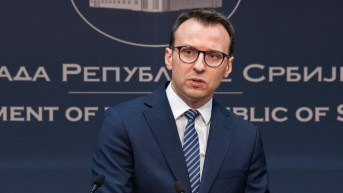
The director of the Office for Kosovo and Metohija, Petar Petkovic, said, ahead of the talks with Pristina in Brussels on April 4, that Belgrade had always been committed to dialogue and that only dialogue could bring about the normalization of relations, which was necessary to ensure a safe life, especially for the Serbs in Kosovo who were oppressed daily. Commenting on the fact that the president of the temporary authority of the municipality of Zvecan, Ivan Todosijevic, had received an invitation to report to serve a prison sentence the day before the meeting in Brussels, Petkovic states that Todosijevis's case is "a picture and example of the so-called rule of law in Pristina".
Petkovic clarified for Radio Belgrade that the continuation of the dialogue process at the technical level was scheduled for April 4.
"We will also discuss concrete steps to implement what we agreed on in Ohrid along with the clearly marked red lines of Belgrade, which President Aleksandar Vucic has spoken about several times and unequivocally and clearly presented to international representatives and mediators in the dialogue, as well as to the entire public," Petkovic said and reminded that Belgrade's red lines were that it would not agree to Kosovo's membership in the UN and that Belgrade would not recognize Kosovo either de facto or de jure.
Everything else that was agreed in the Annex, as Petkovic says, can be discussed and the way of implementation can be considered.
He states that there are a lot of important things that should be implemented and indicates that when you look at the text of the Annex itself, you can see that among the first obligations is the obligation of Pristina to form the CSM in accordance with the relevant previous agreements from the dialogue.
"All that we can hear them saying in Pristina in recent days in order to avoid their obligation to form the CSM is that they would form it in accordance with the decisions of their so-called constitutional court, on the basis of a one-sided letter from Mogherini to Isa Mustafa or on the basis of some journalistic articles, that is absolutely irrelevant. It is known exactly what was agreed in Brussels, it is about the first agreement from 2013, in the same year the implementation plan of the agreement on the normalization of relations between Belgrade and Pristina was adopted, we have an agreement on the scope and mandate of the management team and then the general principles for the CSM from 2015, where it is clearly defined what were the essential competencies of the community, what were its goals, organs, how it functioned, including point 16, which exactly stipulates that Belgrade finances the CSM," Petkovic said.
When asked to comment on Albin Kurti's statements that the Ohrid agreement did not foresee autonomy for the Serbs, Petkovic says that after returning from Ohrid, Pristina is under siege where demonstrators want to point out daily that the CSM is unacceptable.
Stating that this is Kurti's personal opinion, Petkovic says that that is why after the meeting in Ohrid, President Vucic was very careful when he said that "we hope to go in the direction of normalizing relations".
However, as the director of the government office notes, given that Pristina has been refusing to form the CSM for 10 years, it clearly shows with its new statements that it is not ready to go in that direction.
"But that is a matter for Pristina and the international representatives who are obliged to make Pristina fulfill this obligation. It will be absolutely clear who is sticking to dialogue and who does not want dialogue. Belgrade has always been committed to dialogue and that is why we are also going to talk this time because only talk and dialogue can ensure the normalization of relations, which we desperately need, and that we cooperate and have freedom of movement and have a normal life for all the people living in Kosovo and Metohija, especially the Serbs who are oppressed and who survive attacks and institutional violence almost every day," Petkovic said.
He added that the fact that Ivan Todosijevic had received an invitation to report to prison the day before the meeting in Brussels "is a picture and situation of the so-called rule of law in Pristina".
"Todosijevic is a victim of political persecution," Petkovic says.
He also points out that it is not the first time that Pristina pursues such unilateral moves before going to Brussels because, as he states, it wants to further complicate the conversation in this way.
"They do it because they don't care about dialogue. In the case of Todosijevic, absolutely everything is clear because it is a violation of the Brussels Agreement, especially item 10, where it is clearly stated that the appeals panels had to be majority Serbian for those cases that came from Serbian Community. In the case of Todosijevic, as well as all other cases of the Serbs, three judges of Albanian nationality always decided, and it should be the opposite - two judges of Serbian nationality and one judge of Albanian nationality, but this does not happen because Kurti wants to take additional revenge on Todosijevic and other free-thinking Serbs, and that's why he is sentencing him to one year in prison for what he said," Petkovic said.
He emphasizes that in this way, verbal delict is being introduced into the territory of Kosovo.
"Ask yourself what it means when, on the one hand, Pristina frees Azem Kurtaj, who on Christmas Day shot Serbian children in Gotovusa while they were carrying the Serbian Christmas tree and was released to house arrest, and on the other hand, because of what he said, because of what Todosijevic said, what actually happened in Racak, he was accused and then sentenced to one year in prison," Petkovic adds.
Petkovic points out that there are many problems at the daily level and says that it is obvious that Kurti wants to make the dialogue process more difficult with unilateral moves.
On the other hand, as he states, it is important for Belgrade to do everything to protect the Serbs, ensure security and preserve "some kind" of peace.
In this sense, he refers to the opposition from Belgrade which, as he states, "talks about the attack on Djakovica and Kacanik, but from Belgrade cafes and their offices in Belgrade and says that this clearly shows that they have no relation to the Serbs in Kosovo".
"They do not understand the problems we are facing, because if they understood the gravity of the problem, they would have done something for the Serbs and for Kosovo while they were in power, and not hand over the independence of Kosovo to Pristina, where they did nothing to prevent any recognition, unlike the time since Vucic was in power when 27 countries withdrew their recognition of Kosovo. This is how he fights for Kosovo and Metohija, smartly, and responsibly, by investing in Serbian environments, kindergartens, roads, new schools, hospitals, and housing, all of these are indicators that when the country is strong, we can help our people in Kosovo and Metohija more and better, and above all to preserve peace, which we will insist on in the coming period because that is the only way to save the lives of those people. You must take care of the Serbs in the north and south of Kosovo and Metohija," Petkovic said.

comments