
Petkovic: The Government of Serbia has decided to enable freedom of movement for all vehicles from Kosovo
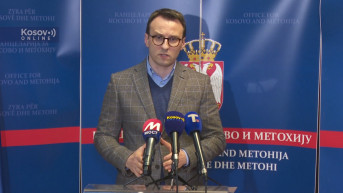
Director of the Office for Kosovo and Metohija, Petar Petkovic, announced that the Government of Serbia had today made a decision to enable freedom of movement for all vehicles from Kosovo, which had been its obligation from the 2011 Freedom of Movement Agreement.
Petkovic emphasized in a statement to journalists that a part of the decision included a disclaimer clearly stating that this did not imply recognition of Kosovo, nor could it be interpreted as Belgrade's consent to deviate from the rights guaranteed by UN Security Council Resolution 1244.
The decision will be implemented from January 1.
"This decision was actually our obligation from the 2011 Freedom of Movement Agreement signed by Borko Stefanovic, which relates to Kosovo license plates and Kosovo identity cards, the introduction of Kosovo driver's licenses, and is a result of the agreements and the attitude of that government towards the Serbs and dialogue at the time", Petkovic said.
He stated that the Government of Serbia had made the decision with this obligation in mind, expecting Pristina to fulfill its obligations from the Brussels Agreement, not just the CSM.
"Today we have enabled freedom of movement for all vehicles from the territory of Kosovo and Metohija. This will provide an additional impetus not only for the 'Open Balkan', but will also facilitate the lives of the Serbs in Kosovo and Metohija, as they mostly use administrative crossings. We have actually helped them to move and live normally because freedom of movement is necessary. Unlike Kurti, who tramples on freedom of movement, as he daily tramples on the rights of the Serbs in Kosovo and Metohija", Petkovic said.
He added that it was not a secret that 99 percent of the Serbs used Kosovo license plates because it was the only way for them to survive and move around, to be able to live.
"The monastic and clerical community of the Eparchy of Raska and Prizren also uses them to reach their sanctuaries and believers, especially south of the Ibar, where they have been using them for years. It is important to emphasize this for all the people who will attack this decision, even though they have no reason to do so because it is the result of their agreement", Petkovic reiterated.
He also read the entire disclaimer section, the status-neutral statement, by which Serbia clearly demonstrated and protected everything it defends in the process of normalizing relations with Pristina:
"Enabling participation in traffic on roads for all vehicles registered by the Provisional Institutions of Self-Government in Pristina is done solely for practical reasons to facilitate the position of individuals and enable their freedom of movement and cannot be interpreted as recognition of the unilaterally declared independence of Kosovo, does not prejudge the determination of the final status of Kosovo, and cannot be interpreted as Belgrade's consent to deviate from the rights guaranteed by UN Security Council Resolution 1244 (1999)".
He noted that the text would be prominently displayed at all administrative and border crossings, just like the disclaimer from last year, when the use of Kosovo identity cards had been allowed.
"Now, as then, we do not recognize the independence of Kosovo. This is best evidenced by the fact that even after that decision last year, pressures continued on Aleksandar Vucic and Belgrade to recognize so-called Kosovo, which we will never do", Petkovic stated.
Petkovic said that license plates did not represent any symbol of statehood and sovereignty, pointing out that there were numerous examples worldwide where different regions within one country had different license plates, such as Italy, and even in China, where Hong Kong had its own plates.
"License plates are not a symbol of statehood or sovereignty", Petkovic emphasized.
As he added, the Government of Serbia had thus enabled the Serbs to live normally and move freely across administrative crossings into central Serbia.
"In this way, we will enable our people to come to central Serbia more quickly and finish their obligations faster, as well as facilitate the movement of emergency vehicles, which is most important", Petkovic said.
He emphasized that the decision of the Government of Serbia protected the rights of the Serbs, preserved the Constitution of Serbia, and ensured freedom of movement.
"And we have not crossed our red lines", the Director of the Office for Kosovo and Metohija emphasized.
He pointed out that the decision had been made on the principle, approach, and stance that obliged the President of Serbia, as well as the entire government, to clearly and unequivocally adhere to our red lines in the dialogue, to absolutely respect the sovereignty and territorial integrity of Serbia, as had been done so far.
"This is an important and significant decision that clearly states that there is no recognition of Kosovo and that there is no membership of Kosovo in the UN, as well as in UN system organizations and agencies. This is something that Belgrade can never agree to. Negotiate and talk towards compromise, yes, but no membership of Kosovo in the UN", he underscored.
Petkovic highlighted that Belgrade had done everything possible to preserve peace and stability and, above all, to make progress in the process of normalizing relations with Pristina.
"We are a party that actively participated in the implementation of all agreements and is doing everything to protect the dialogue process because in this way we protect the lives of the Serbs in Kosovo and Metohija. Without the normalization of relations, it is difficult for us to talk about the survival of the Serbs who are affected every day by unilateral moves by Pristina. We requested a repeat of elections in four municipalities in northern Kosovo, given that Kurti organized illegal elections by containers, which the Serbs boycotted. Now, there are mayors in municipalities where over 94 percent are Serbs. These fake mayors do not represent the Serbs, but they make decisions every day that go in the direction of breaking the unity of the Serbs", he emphasized.
Petkovic said that the formation of the CSM had been requested, which Pristina had been rejecting for ten years.
"Kurti, just as he is silent about elections, is also silent about the CSM. He is very loud that he will never form the CSM, but he is silent when it comes to concrete steps on how the Community should be formed in accordance with the agreements. He says that he and Rasic will write the statute, but he has no right to interfere in that. It is clear that this is a mockery. He does not want the CSM or the collective rights of the Serbs", he added.
He said that Belgrade had respected all agreements, and done absolutely everything to reach the formation of the CSM.
"We have respected all agreements, including those negotiated and signed during the previous government, especially the Freedom of Movement Agreement that Borko Stefanovic negotiated in 2011. That agreement, which included the obligation of Kosovo license plates, acceptance of Kosovo ID cards, and permits, and the time-limited duration of UNMIK plates, is the result of that agreement. Based on that agreement, Kurti initiated the process of so-called reciprocity, which brought many problems to the Serbs, especially in northern Kosovo, where the movement of the Serbs, primarily with KM plates, is still prohibited by Pristina. This has been going on for six months, where Pristina is stopping Serbian goods from entering Kosovo and Metohija, thereby violating basic European principles of the movement of goods and services", he emphasized.

0 comments