
Petkovic: A new pogrom of Serbs from Kosovo and Metohija prevented by the solution on the Law on Foreigners
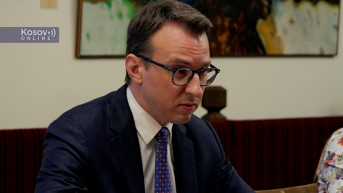
The Director of the Office for Kosovo and Metohija, Petar Petkovic, emphasized that by reaching a solution regarding the Law on Foreigners, a new pogrom of Serbs from Kosovo has been prevented, as they have been enabled to continue living and working normally, while Serbian healthcare and educational institutions will continue to function normally. He expressed hope that this solution marks the beginning of a period of normalization of relations, a return to dialogue, and the establishment of the Community of Serb-majority Municipalities (CSM), at the center of which should precisely be healthcare and education.
“A calm Sunday morning has dawned above the Church of St. Demetrius overlooking Kosovska Mitrovica, as well as for all Serbs in Kosovo and Metohija. We have reached a solution that enables the Serbian people to continue living and working normally; we have preserved Serbian healthcare and educational institutions and the university. All our employees who worked in our vital institutions essential for the survival of the Serbian people in Kosovo and Metohija will be able to continue working as before,” Petkovic stressed for RTS.
He noted that tomorrow is a normal working day, Monday, and that all employees will be at their workplaces.
“But for the Serbian people in Kosovo and Metohija, it is more than an ordinary Monday—it is proof that the state of Serbia stands by its people,” Petkovic underlined.
He emphasized that the Serbian List played a significant role, remaining in constant contact with Serbs on the ground, as well as with representatives of the international community.
“Together we have ensured that Monday will be a normal working day. Serbia remains the employer of our institutions in Kosovo and Metohija; our people will continue to receive their salaries, and the teaching process will continue in accordance with the regulations and laws of Serbia,” Petkovic said.
He stressed that there is no talk of any integration of Serbian institutions, as some had claimed with the intention of preventing this from being a peaceful day and misleading the public.
“Everything continues to operate and function smoothly as before. Through the solution we agreed upon with the Europeans, ten mayors will compile a list of all our employees and students, and that list will guarantee the preservation of their residence and public rights, regardless of the entry into force of the Law,” Petkovic added.
He stated that it is impossible to prevent Kurti from doing what he intends, but that through efforts with European representatives they managed to secure the continued existence of Serbian institutions.
By allowing the institutions to continue operating, he recalled, approximately 15,000 jobs have been preserved, and thus around 15,000 families in Kosovo, and with students arriving from central Serbia the number reaches around 20,000.
Petkovic stressed that this represents a major and significant result for the entire Serbian population.
“Of course, this solution is not ideal. It was reached under impossible conditions, at a moment when the situation had reached a boiling point. For five years Kurti has been exerting terror against Serbs, and through his anti-Serb policies he has been moving toward their expulsion. In such an atmosphere, we managed to preserve the pillars of survival for the Serbian people. Three pillars are crucial for survival: healthcare, education, and the Serbian Orthodox Church,” he explained.
Regarding the Law on Vehicles, Petkovic said discussions are ongoing in order to find a solution for all those who drive cars with Serbian license plates, stressing that it is extremely important to reach such a solution as soon as possible so that these people do not find themselves in a situation where they lose their vehicles or are excluded from traffic.
“I hope that through these solutions we are entering a period of normalization of relations, returning to dialogue and to the Community of Serb-majority Municipalities, at the center of which should precisely be healthcare and education,” Petkovic said.
He pointed out that every day is a struggle to preserve peace and stability, which is the essence of Serbia’s policy.
“The essence of our policy is to preserve peace and stability, because when such difficult days arise for the survival of Serbs, you truly understand what peace means. And no one understands that better than our people in Kosovo and Metohija,” Petkovic added.
Responding to the observation that many did not believe anything would change regarding the Law on Foreigners, Petkovic replied that the state leadership, headed by Aleksandar Vučic, despite all the accusations that nothing was being done, worked day and night, holding talks and seeking a solution with Europeans and others.
“We considered what we could do without undermining the constitutional and legal order of Serbia while preserving people’s lives. As Patriarch Porfirije said, the greatest duty is to preserve the sanctity of life and to do everything possible to reach a compromise. I believe we have reached a compromise, and Vucic will go to Jarinje to speak with our people, to hear directly how they live, although he already knows all of this. That is another sign of additional care for our people,” Petkovic said.
Commenting on criticism Kurti has faced in Pristina since yesterday, the Director of the Office for Kosovo and Metohija said that such criticism precisely shows that Belgrade did the right thing and that the institutions and the status of all employees have been preserved.
“With this solution, there is not a single act by Serbia that would lead to the explicit or implicit recognition of Kosovo and Metohija. And that will not happen while Vucic is at the head of Serbia. With this solution we managed to find a way to preserve everything as it was, to allow people to work and move forward, and now the topic of the Community of Serb-majority Municipalities must dominate and be placed at the Brussels negotiating table,” Petkovic stressed.
He expressed hope that a new momentum for dialogue has been created, adding that Belgrade has constantly pointed out the importance of dialogue and that there has never been an invitation to dialogue from Sorensen, nor earlier from Miroslav Lajčák, to which Belgrade did not respond.
“That is our policy—to seek compromise through talks and dialogue. Because what is the alternative? To witness another March 17, God forbid?” Petkovic emphasized.
Referring to the 22nd anniversary of the pogrom of March 17, 2004, Petkovic said that those events must not be forgotten so that they are never repeated.
“At that time the state reacted with a statement, but since Aleksandar Vucic came to power we have been fighting for every single one of our people, and there will never again be another ‘Operation Storm’ or pogrom. When we say that—we mean it and demonstrate it. There is great symbolism in the fact that March 17 is in two days. I constantly have in my mind the image of the Church of St. Elijah burning and a young man tearing down the cross from that church in Podujevo. More than 35 Serbian Orthodox churches and monasteries were destroyed, nine towns were ethnically cleansed, 4,000 people were expelled, eight were killed… For this never to happen again, we must build peace and stability. Because when you have peace—you have everything,” Petkovic said.
He also emphasized that this solution regarding the Law on Foreigners has prevented a new pogrom.
“Because how would schools and hospitals operate? Where would these people go? Do you think any Serb would allow their child to attend an Albanian school and learn that Adem Jashari was a hero? Our children will learn about Saint Sava, Miloš… Our people trust our doctors, and it is no wonder that Albanians also come to be treated by our specialists. We are ready to provide additional assistance, to do everything necessary, to employ people and create conditions for even better work,” Petkovic said, adding that more than 2,500 additional people have been employed in healthcare centers in Kosovo since the period of the coronavirus pandemic.
“What would Pristina be without the Clinical Hospital Center in Gracanica, where all our people from Kosovo Pomoravlje, central Kosovo, the Sirinic Zupa and elsewhere receive treatment? There is no ideal solution, because Kurti insists that the law was adopted before 2013 and the Brussels Agreement, when we had no representatives in the Pristina parliament to fight for our conditions. Later the Brussels Agreement came, but Kurti decided to implement from 2013 only what suits him, and not the Community of Serb-majority Municipalities. But things will change, and this solution speaks of our goal—that in a time when wars are raging we managed to fight for peace and for our people,” Petkovic concluded.


0 comments