
Petrov: As far as international public law is concerned, Kosovo is not a state
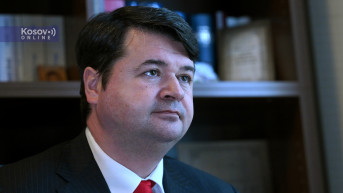
Kosovo is not a state, not only concerning Serbia but also in terms of international public law, Vladan Petrov, a Professor at the Faculty of Law in Belgrade, says on the occasion of the 16th anniversary since Kosovo declared independence.
"It's not just about our unilateral stance or the stance of states supporting it, whether because they consider Serbia a serious free state or due to their own interests as they have potential 'Kosovo cases' on their territories. It's about the principles of international public law and specific legal documents, such as UN Security Council Resolution 1244, which speaks about the sovereignty of the then FR Yugoslavia, now Serbia, over the territory of Kosovo and Metohija, and about the substantial autonomy of Kosovo and Metohija, which is also stated in our Constitution from 2006," Professor Petrov says.
He assesses that it is absolutely excluded that Kosovo will join the United Nations in the foreseeable future, or even at all.
"There are attempts for them to join other organizations such as the Council of Europe. So far, we have fought quite well through diplomatic means and we should continue to do so, and one way to continue is to show, if possible, a slightly higher level of unity when it comes to domestic politics. All political forces should demonstrate a higher level of unity so that at least in that aspect, there are no unnecessary divisions between political entities only for the sake of power struggle," Petrov says.
He points out that "encouraging statements" are coming from diplomatic representatives of the United States of America.
"From Ambassador Christopher Hill and Assistant Secretary of State James O'Brien, who was also in Rambouillet, we can see certain encouraging statements, and I wouldn't say that these are just mild warnings directed at the current regime in Kosovo; I think it's something more than that. There are obviously indications that a partnership cannot be built with such a side, and that's something we've been saying from the very beginning. Ten years ago, it was pointed out that the so-called state of Kosovo emerged out of nothing and has failed to function as a serious democracy. To be a serious partner to relevant actors in international relations, there must be an awareness that these relationships develop better if you are internally a strong and reliable partner. It is increasingly evident that the so-called Kosovo is not that. And that will become more and more apparent," Petrov notes.
Speaking about Pristina's basic obligation from the Brussels Agreement of 2013 to establish the Community of Serb-majority Municipalities, our interlocutor says that "nothing is closed".
"The fact that it is not being fulfilled, but Serbia insists on it, should not be something deceptive. Political processes are lengthy, and require a lot of patience, and an understanding of the complex geopolitical situation in which the world finds itself; nothing is closed. We cannot neglect working towards fulfilling that obligation. It is a necessary condition for us to be able to enter substantive negotiations with Kosovo Albanians regarding the final status of Kosovo and Metohija, whenever conditions permit," Petrov says.
Recalling the genesis of the "Kosovo issue", Petrov says that the Constitution of the Socialist Federal Republic of Yugoslavia from 1974 enabled the restructuring of the then-large state, and one of the main aspects was the constitutional-legal positioning of autonomous provinces within the framework of the Republic of Serbia in a way that gave them quasi-state status. They practically had all the elements of statehood, their legislative, executive, and judicial authorities, as well as their own constitution and the right to participate in amending the Constitution of Serbia. Petrov states that with the Constitution of Serbia from 1990, an attempt was made to regress the social and political reality, and at that time, Kosovo and Metohija were returned to standard frameworks, with no constitutional authority or genuine legislative power, and practically, there was no autonomy in Kosovo anymore.
"In the 1990s, not only did the demands of political representatives of Kosovo Albanians for a republic and independence intensify, but terrorist actions also began, leading to the internationalization of this issue and the famous negotiations in Rambouillet, for which Professor Ratko Markovic, head of the Serbian delegation in Rambouillet, claimed that there had been no negotiations there," Petrov notes.
Regarding the current situation in Kosovo and Metohija, the professor says that in legal terms, it represents a situation where there is no elementary human dignity.
"In such circumstances, what human rights and democratic values can we talk about in that territory? This supports our standpoint, but the point is not that something supports our standpoint; it is very important how people live and how long they will be able to live there. The international community in the coming period needs to try for its own sake, for the survival of the entire international legal order, to align its actions and not apply double standards," Petrov concludes.

0 comments