
Podgorica: Montenegro has not lost its European orientation despite internal conflicts
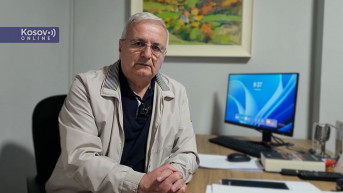
Former Albanian chargé d’affaires in Kosovo Gezim Podgorica assessed that Montenegro’s relations with its neighbors over the past 20 years have been diverse, and that the country’s main focus today is European integration, given that it is leading the region in that regard.
Speaking to Kosovo Online, Podgorica said that the political climate in Montenegro is no calmer than in neighboring countries, but that Montenegro has found a way to enthusiastically implement reforms and accelerate the process of European integration.
“Recently, there has been enthusiasm regarding the implementation of all the tasks the EU has set for a country like Montenegro with the aim of joining the Union. If you compare it with other Western Balkan countries, you will see that the political climate there is not calmer than among its neighbors — quite the contrary. Political tensions have existed for many years, but it seems, and this is a fact, that they are more effective in implementing certain processes that accelerate integration steps. What are those processes? They have greater enthusiasm in the fight against corruption, greater enthusiasm in implementing laws, and they have harmonized legislative practices that support these processes. Despite major internal political tensions, which often caused conflicts, they managed to organize themselves well around the key issues related to integration. This is a process that has begun and will certainly be completed,” said Podgorica, who is also the former director of the Albanian Telegraphic Agency.
He added that Montenegro, Albania, Bosnia and Herzegovina, and Serbia will eventually join the European Union, although the question remains when.
“The successful opening and closing of groups of chapters by Montenegro is a challenge facing the other Western Balkan countries if they are to achieve the same goal. Montenegro succeeded, and at the end of April it received very positive assessments in this regard. Unfortunately, other countries, including Albania, are not at this level,” he noted.
According to him, the influence of Serbia and the Serbian Orthodox Church in Montenegro remains very strong.
“Despite separation from Serbia and independence, Montenegro has certainly retained its ties, which could even be described as a spiritual connection between a large part of the population and Serbia. That does not mean this applies to all ethnic groups. The segment that maintains this connection with Serbia is dominant — I am not saying it is the majority, because that is something else. The majority belongs to Montenegrins. However, this pro-Serbian segment is also dominant in the current government, and considering the ties established with the current government in Serbia, Serbian policy has gained greater influence, even in decision-making. Nevertheless, we must say that Montenegrins have been careful not to allow this to determine the country’s main political direction. Montenegro has not lost its European orientation despite internal conflicts and difficulties. They knew how to continue along the path previously built by Milo Đukanović. Today’s leaders, such as the president and prime minister, are figures who have strengthened their public standing and enjoy support because they received enough votes. Despite some initial tensions, they have now consolidated their pro-European orientation. Of course, the Serbian Orthodox Church is very influential, but it has also been the cause of many crises there, and those crises have also left a mark on interethnic relations,” the interlocutor said.
He described relations between Albania and Montenegro as generally calm.
“There have never been tensions; there is mutual understanding. Of course, the Albanian factor there, since it has almost always been part of the government, has also played its role in those relations. However, the influence of Albanians there has declined due to emigration, although the Albanian factor has continued to play its role. The Albanian factor in Montenegro has a problem because it is politically fragmented into many parties despite its relatively small numbers. Division into numerous parties has weakened the strength of their representative ‘voice,’” Podgorica explained.
When it comes to relations with Croatia, Podgorica says Croatia is politically distant from Montenegro, while relations with Bosnia and Herzegovina remain problematic.
“The situation is not positive. The fact that Bosnia itself is ‘sailing’ through turbulent waters, not even knowing in which direction it should go, has an impact here. The Dayton Agreement created calmness, but it is a calmness that seems to conceal a storm. Bosniaks also have their representatives in the Montenegrin parliament, and in some cases they have become decisive factors in parliamentary majorities in Montenegro. As for Kosovo, Montenegro previously had better relations, whereas now there are extremist political circles there that have sharpened their rhetoric more than the actual relations with Kosovo. However, even harsh statements, when repeated frequently, create political ground, gain a different connotation, and can have a significant impact,” the diplomat concluded.


0 comments