
Gulic: Montenegro’s policy toward the region has failed
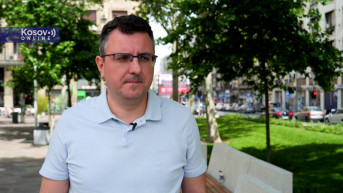
Historian Milan Gulic assessed in a statement to Kosovo Online that the policy of regional closeness Montenegro had tried to maintain with its neighbors has failed because relations are not the best, and he sees the marking of 20 years of independence in Podgorica as devastating.
According to Gulic, the question is whether and to what extent Montenegro’s relationship toward the region has changed over the past two decades since it left the State Union with Serbia.
“Since restoring its independence, Montenegro has pursued a policy of regional closeness with all the states surrounding it, except, of course, the Republic of Serbia. Things truly changed over time there, but mostly for the worse, reaching their worst possible phase in the final years of the rule of Milo Djukanovic’s regime. Although the change of regime in Montenegro changed the atmosphere in that country, the relationship of distance toward Serbia remained even afterward under the regime, that is, under the government of Zdravko Krivokapic and today at a time when Montenegro is led by the duo Jakov Milatovic-Milojko Spajic,” Gulic said.
He assesses that Montenegro’s attempt to be on good terms with everyone in the region often went to its own detriment and as a blow to its dignity and to what Montenegro historically is.
“It seems that, despite that, relations with Croatia have become quite strained, while with Kosovo, which Montenegro recognizes as an independent state, relations were never properly established or maintained. In that sense, it appears that Montenegro’s policy toward the countries of the region has mostly experienced failure, which is now visible. Montenegro has poor relations with Croatia, poor relations with Serbia, insufficiently good relations with Kosovo, while its relationship toward Bosnia and Herzegovina is mainly based on supporting what the strongest political currents in Sarajevo are trying to push through. That is not a relationship of mutual respect, it is not an equal neighboring and friendly relationship. It is something completely different,” Gulic said.
The unresolved issues between Montenegro and Kosovo, as our interlocutor points out, have not been settled.
“It seems that the only important thing there was for Montenegro to recognize Kosovo’s independence, establish diplomatic relations with Kosovo, and that this was the only thing that interested Pristina and those who encouraged Montenegro to do so. Everything else, such as the life of the Montenegrin minority in Kosovo, the demarcation between Kosovo and Montenegro, even sporadic incidents along that border line, remains unresolved, and the question is how it will be resolved, because it is difficult to resolve relations with something that used to be part of your territory. I would remind you that Montenegro’s state territory before unification included significant parts of Metohija. Montenegro’s relationship toward Kosovo therefore cannot be simple and easy in the way someone in Brussels, Washington, or now in Podgorica imagines,” Gulic stressed.
In his opinion, the marking of 20 years of independence is devastating.
“You are celebrating the restoration of statehood through a referendum that was, to put it mildly, irregular, people would say stolen. I am not sure there is anything to celebrate there. When it comes to the attitude of the people in Montenegro toward the issue of Kosovo and Metohija, that is connected with what I already mentioned, namely that this was something that in a certain historical period was also an integral part of the state territory of Montenegro, whose history present-day Montenegro inherits, at least declaratively,” our interlocutor states.
Regarding the recent decision of the Municipality of Zeta not to accept Montenegro’s recognition of Kosovo’s independence, Gulic says it has no significance.
“That is not within the jurisdiction of municipalities, no municipality can conduct the foreign policy of a state. Still, it speaks for itself that a significant part of Montenegro, a significant part of the people of Montenegro, still knows very well in the historical sense what it is and, regardless of whether those people declare themselves as Serbs or Montenegrins, they know what Kosovo means for Montenegro as well. They know what Kosovo means for the historical consciousness of the people who lived in Montenegro. In Cetinje there is Obilica Poljana, the Kosovo myth was something that was present in Montenegro as well, and the Metropolitan of Montenegro and the Littoral is the guardian of the Pec throne. Those ties with Kosovo in the cultural sense, Kosovo in the historical sense, which are preserved by one part of Montenegro, could not be so easily severed by a decision of Milo Djukanovic’s regime or by the decisions made by his successors Zdravko Krivokapic, Jakov Milatovic, and Milojko Spajic,” Gulic concluded.

0 comments