
Politika: Kurti is trying to preserve the electorate by persecuting the Serbs; the Self-determination Movement is in a weakening phase
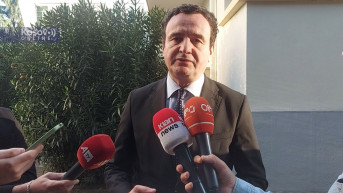
The circle around the Prime Minister of Kosovo is slowly closing, and what scares him the most, and for good reason, is the fact that he came to power as an opponent of the dialogue with Belgrade and the CSM, Srdjan Graovac from the Center for Social Stability points out, while the president of the Matica Albanaca Srbija, Demo Berisa assesses that Kurti's party is in a weakening phase because some members left the Self-determination Movement, Politika writes.
Ahead of the new round of talks between Belgrade and Pristina in Brussels, on April 4, Kosovo Prime Minister, Albin Kurti, once again resorted to radicalizing the situation in order to make the dialogue meaningless, but also to calm the heated passions on the Albanian political scene. Thus, the president of the temporary authority of the municipality of Zvecan, Ivan Todosijevic, received an invitation the day before yesterday to report on Monday, April 3, to serve his prison sentence for the statement about Racak, without having previously been served with an official verdict.
Then, on the same day, former policeman, Miljan Jovanovic, was arrested at the administrative crossing of Jarinje, who was returning from Raska with his wife and two minor children. Yesterday, he was released only after an all-night detention, and it was allegedly a mistake.
The new intimidation of the Serbs could also be interpreted as a consequence of Kurti's fear due to the shaky rating and the fact that the opposition is fiercely opposed to the European proposal and the formation of the CSM, which the West insists on.
Thus, demonstrators led by the Social Democratic Party threw smoke bombs at the government building at a protest in Pristina on Saturday. During the protest, the flags of Kosovo in front of the government were replaced with white ones because, as they stated, they symbolize the surrender of Kurti.
From the Center for Social Stability, Srdjan Graovac assesses for "Politika" that Kurti is trying to keep the part of the electorate that normally supports him.
"Intensification of the anti-Serb narrative in the media, strong anti-Serb rhetoric, nationalist rhetoric, connected to the arrests of the Serbs and attacks on them, Kurti is making ample use of in order not to keep the extremist part of the Albanian electorate in Kosovo," Graovac says and adds that Kurti's position is that there is no other way to preserve that electorate in these circumstances, except by intensifying national rhetoric and persecuting the Serbs.
Graovac states that the circle around Kurti is slowly closing and that his room for maneuvering is getting smaller.
What scares him the most, and with good reason, is the fact that he came to power as an opponent of the dialogue with Belgrade and the CSM and that in the true sense of the word he burned down institutions as a sign of protest against any agreement reached in Brussels.
"By this behavior, by accepting the negotiations and the CSM, he actually gave ammunition to the opposition, which continuously attacks him on that issue. This is the key issue on which Albin Kurti is breaking down," Graovac points out.
When the opposition attacks him for not being patriotic enough and for abandoning national interests, his moves are fundamentally logical and have multiple goals.
"The move to arrest the Serbs is aimed at the internal Albanian political scene to present Kurti as a patriot, as well as to fight for the votes of extremist Albanians, but it is also aimed at trying to force Belgrade to abandon the negotiation process," Graovac points out.
When it comes to Pristina's latest moves, Graovac warns that there will be more and more such steps.
"In this way, he is trying to put pressure on the Serbian side, first of all on President Aleksandar Vucic, because by arresting the Serbs he is trying to provoke a reaction from Belgrade to give up on this negotiation process, because Kurti is reluctantly leading these negotiations," Graovac points out.
He also assesses that Kurti accepted the formation of the CSM, but it is not known whether he will implement it.
Speaking about the fierce opposition of Albanian politicians and the public to the formation of the CSM, Graovac explains that there is an extremist mood in Pristina and the attitude that nothing should be negotiated with Belgrade, except possibly when Serbia will recognize the independence of Kosovo.
Berisha: the Self-determination Movement in the weakening phase
A day after the protest in Pristina, Albin Kurti went on a one-day working visit to Tirana.
The president of the Matica Albanaca Srbje, Demo Berisha, says that Kurti visited Tirana in order to get the support of the Prime Minister of Albania for the part that refers to politics outside of Kosovo.
"It is an attempt to get closer to Rama, because after all, Rama is in principle a recognized politician in the world and his idea was to get closer to him. This is not a surprise regardless of the internal political movements that are taking place," Berisha says.
He adds that Kurti's party is in a phase of weakening because some members left the Self-determination Movement.
"This is proof that they do not agree with the fact that he deceived his electorate and is now trying to survive," Berisha says.
Commenting on the accusations from the opposition against Kurti because he agreed to form the CSM, he points out that apart from the activities of the Social Democratic Party, everything else is for internal use because the Democratic League of Kosovo and the Democratic Party of Kosovo once accepted the formation of the CSM according to the 2013 and 2015 agreement.


0 comments