
Prorokovic: Result of Lajcak's mediation is increased conflict potential between Belgrade and Pristina

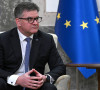
Senior Research Fellow at the Institute for International Politics and Economics Dusan Prorokovic, on the occasion of Miroslav Lajcak's four-year mandate as a mediator in the dialogue between Belgrade and Pristina, says that the result of Lajcak's mediation is an increased conflict potential between Belgrade and Pristina and across the entire Balkans and that he does not see that the Slovak diplomat has achieved any significant results.
"I do not see that what he did was a long-term solution. Solutions were imposed, invented, often implemented under pressure, there was no compromise, everything was based on insincere attitudes, and this will have long-term consequences. Of course, no one in the European Union will admit that. They will say that Lajcak did a fantastic job, that the result of his work is Chapter 35, that the Council of Europe is opening doors to the so-called Republic of Kosovo, and maybe even some other international organizations. But these are all stories they were telling in 2008, and here we are in 2024 dealing with the same issues again," Prorokovic said to Kosovo Online.
He adds that all the problems we have faced so far will remain long-term.
"Just now we have a terribly increasing conflict potential based on mistrust. Here, no one believes anyone anymore," Prorokovic notes.
Considering that Pristina was dissatisfied from the start with Lajcak's appointment as a mediator in the dialogue, and later with his approach to the dialogue, our interlocutor says he does not see many reasons for Albanians to be dissatisfied with Lajcak.
"But I see many reasons for them to be dissatisfied with themselves or with the Americans. They expected everything to be completed rapidly after 2008, for Serbia to recognize them, to establish bilateral relations with them... Why were they so confident? Because someone in Washington promised them that. Because of that, they did almost nothing and put their fate in the hands of some Western mediators, and I don't know who in Washington could promise them that and how they could make such wrong assessments. They achieved something, but they didn't finish the job as they thought 16 years ago, and probably because of that, they will now blame Lajcak. They will start shouting at him, Borrell, and the EU, but the essence is still elsewhere," Prorokovic assesses.
Speaking about the dialogue itself, he says that for Serbia, this process represented buying time to some extent, a little relativization of pressure, while for Albanians, the dialogue was a condition of their Western partners, and the West wanted to get as much as possible from Serbia and implement the Ischinger plan.
"They succeeded somewhat in that, thanks to all the agreements that were signed, but it cannot be argued that everything succeeded for them. I think they would exchange all these concessions that Belgrade made over the years for, for example, Belgrade's consent for Kosovo's membership in some international organizations, in the Council of Europe and OSCE, and for the path of integration of the so-called Republic of Kosovo into NATO... they would return everything, Gazivode and the dinar, and license plates would become a secondary issue, just to resolve the international legitimization of the status. And that is precisely not resolved. They achieved something through technical dialogue, and indeed, the power of Pristina has been strengthened on the ground, but in international relations, things are quite different," Prorokovic concludes.
On April 3, 2020, the European Council appointed Miroslav Lajcak as the EU Special Representative for the dialogue between Belgrade and Pristina and other regional issues in the Western Balkans.
0 comments