
Radakovic: North Mitrovica a testing ground for abolishing the competences of Serbian local self-governments
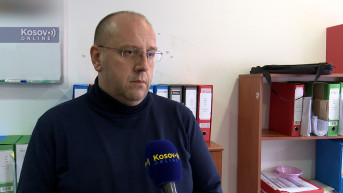
Dusan Radakovic from the NGO Center for Advocacy of Democratic Culture told Kosovo Online that a series of developments on the ground, including recent events in North Mitrovica, indicate a trend of centralizing decision-making and disregarding the competences of local self-government, along with what he says is an increasingly pronounced redefinition of the concept of a unified city of Mitrovica.
“Every day, through various activities we see, we can conclude that the actions are such that the focus is primarily on the city of Mitrovica. It is no longer South Mitrovica or North Mitrovica, only the city of Mitrovica is being mentioned. We have moves such as the opening of the tax administration, the ‘Love Mitrovica’ sign in North Mitrovica, issues with garages, distrust toward the inspectorate, the police refusing to assist the inspectorate in North Mitrovica, decisions made at the central level, inspections roaming around the north, all in areas that fall under the jurisdiction, that is, the responsibility of local self-government,” he said.
Radakovic also recalled visits by Prime Minister Albin Kurti to North Mitrovica, when he was accompanied only by the Mayor of South Mitrovica, Faton Peci, while the Mayor of North Mitrovica was not even informed of the visit.
“We have examples of a march being organized from South Mitrovica to the northern part. It seems to me that the Mayor of South Mitrovica is more active and carries out more activities in the north than in his own municipality, where he was elected by citizens. Every day we see examples that are very negative and poorly interpreted toward a city where the Serbian community and other communities form the majority, where Serbs make up more than 85–86 percent, and Albanians less than 10 percent, yet it is presented as a unified city. If the city were unified, there would perhaps be one or two Serbs in the local parliament,” he pointed out.
He also noted the inactivity of the international community, to which representatives of local self-government often appeal when they have nowhere else to turn.
“It seems that in recent times, since the war in Ukraine and the coronavirus period, foreigners have completely lost their capacity for negotiation and problem-solving. I worked for the international community and I know that when a problem is initiated, it is resolved within a maximum of 24 hours. Today we have a situation where we, as the NGO sector, as well as political parties, municipalities and institutions themselves, seek help and reactions. The international community, to put it colloquially, is groping in the dark, it is absent. The conflicts in Ukraine, the conflict now in Iran, have too much influence, causing the international community to remain silent on such serious matters,” he said.
Radakovic explained that North Mitrovica is only a starting point, and that similar examples of undermining competences could occur in other municipalities where Serbs are the majority.
“The abolition of jurisdiction, that is, the abolition of the Municipality of North Mitrovica, would lead to catastrophe and collapse, displacement and a complete violation of the Ahtisaari Plan, the Constitution of Kosovo and all possible competences that municipalities in Kosovo have. Disregarding one municipality today will mean disregarding Leposavic, Zvecan, Gracanica tomorrow and so on. Through North Mitrovica, an example is being created so that all other things can more easily be abolished or Albanized, if we can put it that way,” he said.
Given that the municipality cannot count on the assistance of the police, as shown in recent cases of refusal to assist municipal inspectors, Radakovic sees peaceful protests by citizens as one of the remaining mechanisms.
“Every day, public pressure should be exerted toward central institutions, the Ministry of Local Government, the Ministry of Police, through statements, public pressure, and why not protests by citizens in front of police stations. Because if we are talking about the most transparent police in Kosovo and the region, as the Kosovo police present themselves to be, what kind of double or triple standards are these, where someone calls you and you respond, while another call from an institution you represent is ignored. Who decides whether the police should provide assistance when an institution led by the head of the inspectorate calls you? And when a small local business needs to be closed, special or intervention units assist, expecting that Serbs would attack them,” he said.
If Kosovo goes to parliamentary elections again, Radakovic expects even greater pressure on the Serbian community.
“I think that the former president will align with the Democratic League of Kosovo and that Albin Kurti has lost diaspora votes, which were the biggest driver and perhaps those 6–7 percent he received in the previous election round in December. I believe the elections will bring change, that we will certainly have elections, which is regrettable, but I think Self-Determination will have several percentage points less, if not even a double-digit drop, because voters are extremely tired of elections that lead nowhere. On the other hand, Self-Determination does not want to take responsibility for solving problems, we just go to elections that ultimately bring nothing. I think this cycle will finally bring a turning point, that the opposition will come to its senses and form a serious coalition that includes Serbian parties, whatever they may be, to create a serious coalition with which it is possible to talk realistically, because at this moment it is not possible to talk with Self-Determination,” Radakovic concluded.


0 comments