
Radojevic: Beating of Raskovic a consequence of international community's silence; opening bridge would mean further persecution of Serbs
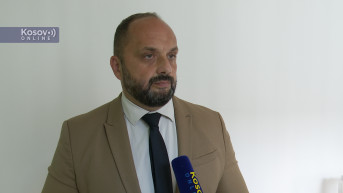
North Mitrovica Mayor Milan Radojevic assessed today that the security situation in Kosovo, particularly in the north, was absolutely not stable and warned that opening the main Ibar Bridge in Mitrovica would pave the way for further persecution of Serbs in the north.
He said that residents of North Mitrovica were justifiably concerned and that representatives of the Serb List had conveyed those concerns to the KFOR Commander at yesterday's meeting.
"We pointed out that the security situation in Kosovo and Metohija, particularly in the north, is absolutely not stable—far from it. We cannot talk about security in Kosovo and Metohija when there are no stable institutions, when you have no parliament, no ministers, no prime minister, no president. We cannot talk about any kind of security," Radojevic told TV Prva.
He stressed that fully reopening the main bridge over the Ibar River to traffic would be catastrophic and would pave the way for further persecution of Serbs.
According to him, the pressure exerted by Kurti, his special units, and the Kosovo Police on Serbs in northern Kosovo, particularly residents of North Mitrovica, was enormous because the northern part was a thorn in Kurti's side, as Serbs had remained there since 1999 and because it was the only administrative, educational, and healthcare center for all Serbs in Kosovo.
"He knows very well that if he breaks that center—that is, if he breaks North Kosovska Mitrovica—he has broken the Serbs in Kosovo and Metohija. Therefore, opening the main bridge to traffic is extremely important to him. Consider the symbolism—nobody before him managed to do that. In other words, he has managed to subjugate the north militarily, to bring Serbs under control, to expel Serbs, and to arrest Serbs, so opening the main bridge to traffic would at the same time mean opening the way for further persecution of Serbs in northern Kosovo and Metohija," Radojevic said.
He stressed that the case of Nenad Raskovic was merely the culmination of what he described as Kosovo Police terror against Serbs, particularly in northern Kosovo, and that it had happened because the actions Albin Kurti had taken over the past several years and months had not met with any concrete condemnation from the international community.
"Apart from some vague statements, there has been no concrete response whatsoever, which Kurti sees as a clear signal to strike even harder and more aggressively against Serbs in Kosovo. The culmination of everything, when you fail to react in time, is precisely yesterday's case of the beating of Nenad Raskovic. Imagine that in the 21st century, at a time when KFOR says that the security situation has improved, the Kosovo Police handcuff you to a tree, beat you with a water hose, and demand that you confess to things you did not commit. I ask that this man's name be remembered because he is a symbol of the suffering of Serbs in Kosovo and Metohija and of the Kosovo Police's treatment of Serbs in Kosovo and Metohija," Radojevic said.
According to him, the international community was extremely efficient and quick when it came to condemning statements by Serbian President Aleksandar Vucic, who, he said, was genuinely making every possible effort to protect Serbs in Kosovo. However, when Kosovo Serbs appealed for protection from the international community and KFOR itself, there was silence.
"Even now, we still have no information as to whether the international community will take any action regarding the beating of Raskovic. This was a brutal beating. It is horrific. It is incomprehensible that something like this could happen in the 21st century. We are still waiting for reactions. They should have been just as quick in demanding the arrest of those Kosovo Police officers and the harshest possible sanctions against them. Instead, this morning we woke up to silence from the international community," North Mitrovica Mayor Milan Radojevic said.
He added that the reality on the ground did not correspond to the reports and assessments coming from KFOR and the international community, and that at yesterday's meeting with KFOR they had received no assurances that the announced reduction in troop numbers might be reconsidered.
"We received no assurances that they would abandon or change their decision. We were told that these decisions had been made at a higher level, at NATO headquarters, but we were also told that the decision is conditional and can be reversed at any time if the situation on the ground changes," Radojevic said.


0 comments