
Radojevic: Serbs fear opening of bridge over the Ibar, KFOR reduced number of troops before March 17 as well
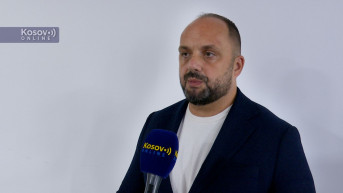
Serbs are concerned over the announcement that the bridge over the Ibar, which divides North and South Mitrovica, will be opened, given that the security situation is not good, Mayor of North Mitrovica Milan Radojevic said, recalling that these plans are reviving memories of the March pogrom.
Appearing on the Morning program of RTS, Radojevic said that the issue of the main bridge over the Ibar is extremely sensitive for residents of northern Kosovo, given that the situation has been particularly sensitive over the past three years.
Representatives of the Serbs, he said, have repeatedly raised the question with Quint ambassadors, representatives of the European Union, and the KFOR commander: “On what basis is the security situation in Kosovo and Metohija being assessed, specifically for the northern part of Kosovska Mitrovica?”
“Is it based solely on police reports that are, and I have to use this term, truly disappointing and ridiculous, where you never find a single ethnically motivated incident listed in those police reports? These ethnically motivated incidents are absolutely being covered up,” Radojevic said.
He also pointed to what he described as “horrifying images coming from Zubin Potok.”
“Where people's weekend houses on Lake Gazivode are being demolished, where property is being seized, where searches are being carried out every single day in the villages of that municipality, and where people are being beaten during those searches,” Radojevic said.
He recalled the case of Nenad Raskovic, who is still waiting for an answer as to who beat him.
“No action has yet been taken against them, while on the other hand we are receiving information that the security situation is safe and that the main bridge over the Ibar can be opened to traffic,” Radojevic stressed.
He said that Serbs want an answer from the international community to the question of what has changed over the past year for the security assessment to now allow the announcement of the bridge's opening.
“It is truly incomprehensible that at a time when there is absolutely not a single stable institution in Kosovo and Metohija,” Radojevic stressed, recalling that parliament is not functioning, the government is in a caretaker mandate, and there is no president.
“We must not forget that KFOR made a similar assessment and reduced the number of troops before March 17. These are scenes, these are memories that are once again being revived among residents of North Kosovska Mitrovica, as well as among other Serbs in Kosovo and Metohija,” Radojevic said.
Fear of the Hague verdict
Radojevic warned that the verdict for those accused of war crimes in The Hague is approaching, which is why Serbs in northern Mitrovica have legitimate concerns about the reaction of Albanians.
“Serbs have good reason to fear that the Kosovo Police is not up to the task, that it cannot protect either us, our churches, or our monasteries,” the mayor said, recalling that representatives of the Serb List had asked the KFOR commander to strengthen the mission's presence precisely ahead of the verdict.
He added that local authorities do not have good communication with the Kosovo Police, citing as an example the demolition of around 30 garages in North Mitrovica without a court decision or the municipality's consent.
“That means sheer force and repression,” Radojevic concluded, describing the police conduct during the demolition.
The goal of unifying Mitrovica
Asked how he interpreted a statement by South Mitrovica Mayor Faton Peci that opening the bridge would mark the end of the idea of dividing northern Kosovo, Radojevic replied that this was just one in a series of moves being made on the ground by Kosovo authorities.
“The ultimate goal is the unification of Mitrovica and the abolition of the separate municipality of North Mitrovica,” the mayor said, recalling the decision to establish a joint board between the two municipalities, adopted by the caretaker government, which he described as a “very dangerous move.”
Radojevic also emphasized why he considers North Mitrovica crucial for the Serbian community.
“The Clinical Hospital Center and the University are located in North Kosovska Mitrovica, so North Kosovska Mitrovica is the administrative, educational, and cultural center for Serbs in Kosovo and Metohija. So it is clear to Kurti. If he breaks North Kosovska Mitrovica, he has, so to speak, broken the resistance of the Serbs in Kosovo and Metohija,” Radojevic said.
Political scientist Ognjen Gogic believes that the greatest danger in Kosovo today does not come from extremists within the Albanian community, but precisely from the institutions that are supposed to protect the rights and security of all citizens.
“The danger comes from the institutions that are supposed to protect the rights and security of all citizens, and above all from the Kosovo Police,” Gogic assessed, recalling the events following Gazimestan and the celebration at the Monastery of the Holy Archangels, when, according to him, the Kosovo Police demonstrated that it had distorted its role and was behaving like an inquisition.
The role of KFOR and NATO
Gogic pointed out that the EU and NATO are currently shifting responsibility onto each other.
“The EU and NATO are shifting responsibility onto each other,” Gogic said, recalling that NATO decided in June to optimize KFOR's presence, which in practice means reducing the number of personnel in the mission.
The political scientist believes that international missions have failed to stabilize the situation on the ground and enable local institutions to take over self-government, and are therefore withdrawing instead of assuming responsibility.
“This is not, I would not say laziness, but rather a certain unwillingness to actually tackle the problems,” Gogic explained, drawing a parallel with the situation in Afghanistan in 2021.
Institutional crisis and the responsibility of the international community
Gogic warns that the situation in Kosovo should not be viewed solely through the prism of Albin Kurti's election campaign, but in the context of a broader erosion of the system.
“This is no longer a blockade or an institutional crisis. This is a constitutional coup. Kurti prevented the new assembly from being constituted within the constitutional deadline, and Kosovo is now being governed by a caretaker government that has no legal basis whatsoever. So, regardless of the fact that he has public support, he has no legal basis for governing,” the political scientist assessed.
He believes that the international community should assume responsibility instead of transferring additional powers to institutions that violate the law.
“This is a major defeat and failure of the international community in Kosovo. They should actually be aware that they have created a system that appears to be unsustainable and that they need to become even more engaged to prevent a collapse, rather than actually leaving additional responsibilities to this system,” Gogic concluded.
He noted that there are all the signs of an early warning that the situation could become even more complicated if action is not taken in a timely manner.


0 comments