
Radojkovic: The EU is cautious, does not give blank check support to the Pristina administration
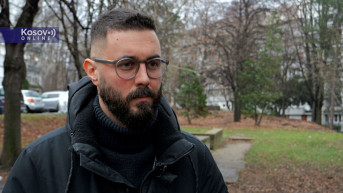
Historian Stefan Radojkovic said that the European Union, regarding the lifting of sanctions on Kosovo, is cautious toward the Pristina administration and does not want to give it blank check support until it is convinced that it will more or less act in line with the wishes and interests of the Union.
Radojkovic told Kosovo Online that the EU is waiting for the outcome of the situation in Kosovo and whether, in the event that a president is not elected, a new crisis will follow, as well as what the approach toward the Serbian community will be.
“It can be said that they are cautious in their approach toward the Pristina administration, that they do not fully believe the Pristina administration will be cooperative with the institutions of the European Union. For that reason, they are probably waiting to see whether there will be a re-election of Vjosa Osmani or perhaps another candidate for president of the Pristina institutions, and whether the government of Albin Kurti will show credibility and stability, so that at the institutional level they have an interlocutor. Because if there is no re-election of Vjosa Osmani and a new political and institutional crisis begins, then there is also an increased risk of pressure, for example, on the Serbian community, especially in the north of Kosovo, which has been shown to be the subject of political campaigning and institutional pressure for the sake of political points,” Radojkovic said.
As he notes, the EU is showing signals of goodwill regarding the lifting of sanctions, but does not want to give blank check support to Pristina.
“It seems to me that they are still cautious, that they are signaling they are willing to lift all sanctions, which in any case have not proven to be an effective means of pressure on Pristina, but that they are not ready to give blank check support to the Pristina administration until they see that it will behave more or less in line with the wishes and interests of the European Union,” our interlocutor said.
Asked whether one of the parameters for lifting sanctions could be the announced integration of education and healthcare, or whether these are unilateral moves, Radojkovic points out that the EU wants to bring Kurti back within the framework of the Brussels agreements.
“It would be logical for them to want to return Kurti to the framework of the Brussels agreements signed in 2013 and 2015, and later all subsequent agreements related to the so-called Franco-German plan and the Ohrid Agreement. In other words, it is not that some, conditionally speaking, integration of the Serbian education and healthcare systems was not envisaged, but within the framework of the Community of Serb Municipalities. We all know that Kurti is an absolute opponent of such a framework, and now the question arises whether the EU will be able to compel him to apply the pressure that he is clearly exerting on the Serbian community, but within the agreed frameworks from 2013 and 2015,” the historian added.
As he adds, it is logical that the Union does not want the dialogue to remain a dead letter on paper.
“In that sense, Thaci proved to be a far more cooperative interlocutor both for the Serbian community and for the Republic of Serbia. We will see. If I were in the place of the European Union, it would be logical for them to want the Brussels dialogue to be functional, not a dead letter on paper. We will see what role the EU Envoy, Mr. Sorensen, will play in this, but it will certainly be one of the signals of whether Kurti is becoming more cooperative. I am personally very skeptical about that. He once said about the declaration of independence of the Pristina institutions that it was a declaration of dependence, because it was created on the basis of the Ahtisaari Comprehensive Proposal for the settlement of this issue, where he sees excessive interference by international actors in what he views as an internal issue of Kosovo and Metohija. In that sense, anything is possible,” Radojkovic said.
In his view, greater pressure could be exerted by the United States in a certain format, but the question remains how willing they are to engage in Balkan issues and how much they have left this matter to the European Union.


0 comments