
Milutinovic: The lifting of EU sanctions is not unconditional, a functional political system is necessary
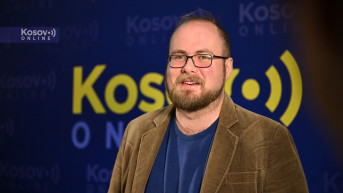
Petar Milutinovic, a researcher at the Institute for European Studies, stated that the lifting of EU sanctions on Kosovo is not unconditional, as political actors in Pristina had hoped, but that Kosovo must establish a functional political system and respect democratic principles in order to benefit financially.
Milutinovic recalled that Kosovo is currently in the phase of visa liberalization, which allows citizens to travel freely to European Union member states, which, he adds, is one of the benefits for the economy, citizens, students, and ordinary people in Kosovo.
As he emphasizes, the novelty lies in the fact that, after the sanctioning and conditioning of European Union support for Kosovo, a new space and opportunity are opening up to establish an institutional system that will guarantee a definitive peaceful transfer of power across the entire territory.
“The basic prerequisite is the existence of a functional, operational political system that will ensure respect for at least the basic institutional order. That is, having both a majority and a minority in parliament and in local assemblies, and establishing a basic democratic principle. Once that is established, financial support from the European Union, that is, the European Commission, will follow, and it is precisely conditioned on progress in the area of institution building. Therefore, it is not as unconditional as many political elites may have expected,” Milutinovic told Kosovo Online.
According to him, everyone in Kosovo is now aware of this, and Milutinovic sees the lifting of sanctions as an opportunity for a certain amount of funding from the Growth Plan to be allocated to establish a stabilization institutional mechanism for Kosovo’s political system.
“This is the fundamental and well-intentioned goal of Brussels, that is, the European Commission. It wants both Serbia and Kosovo to act in their own best interest, in the sense of normalizing relations, but on a democratic, procedural, and institutional basis,” our interlocutor emphasized.
Kosovo will first have to ratify certain agreements, Milutinovic noted, after which it will be able to expect an inflow of financial resources.
“This again depends on the political elites in Kosovo and Metohija, on whether there is some basic consensus among all political actors. What is the primary strategic goal – is it the normalization of political circumstances, or continuing with the current state where no one talks to anyone, no one wants to establish a basic institutional system, but instead abuses it,” he says.
In Milutinovic’s view, even after the lifting of sanctions and the allocation of financial resources, the European Commission will continue to monitor the situation in Kosovo and the respect of agreements, that is, whether the funds are going to the right place or into the grey zone.
“When a majority imposes itself, it begins to abuse its position, and then the European Commission asks why it should make certain concessions to Self-Determination. If Self-Determination, which has been given power, does not want to accommodate and establish what is in the best interest of both the party and the political system there, which de facto exists, why should it then receive funds? Of course, the Commission will reassess this, whether everything has been ratified and whether all procedures have been respected. Based on that, you can further expect to receive those funds. Even when you receive the funds, the question remains whether they will be used in a procedural manner or misused. They want to know what the money is spent on, so that it does not end up in the grey zone. Everything is highly conditional because there is certain experience on the basis of which oversight is conducted,” Milutinovic concluded.

0 comments