
Radojkovic: Negative reactions to the Assembly are a result of established "red lines"
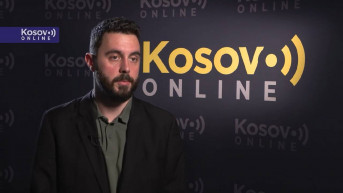
Historian Stefan Radojkovic assesses that the negative reactions to the All-Serbian Assembly and the Declaration are part of the "regional dynamics" and the consequence of the red lines set by Serbia and the Republika Srpska.
"The messages we hear today from Sarajevo, and even from the Pristina administration, are expressions of their concern because they realize that their key partners in the West are increasingly respecting the positions of Serbia, and therefore the Republika Srpska. They understand that Serbia and the RS have options if their voices are not heard," Radojkovic said for Kosovo Online.
He evaluates the reactions from Pristina as part of the narrative and rhetoric of political marketing that has existed among Kosovo Albanians for decades.
"The point is that Serbia's policy today is contextualized in the contemporary period. The current policy actually corresponds to the situation in international relations over the past few years. What doesn't work in the Albanians' favor is the fact that they are aware that their Pristina administration exists solely thanks to Western support. Since the West is no longer the only and most dominant actor in international relations, they are aware that their position is shaky and could change, not quickly but over time. This is what they are now trying to prevent, hence this rhetoric, which used to work in the offices of the main international actors in the collective West. However, it is becoming increasingly ineffective and probably won't have the same impact as it did until a few years ago," Radojkovic said.
Describing the current geopolitical situation as a "changing world," he added that "frictions between the great powers" represent not only potential danger but also potential opportunity.
Radojkovic emphasizes that, in this context, two key messages from the All-Serbian Assembly should be viewed.
"Red lines have been drawn and communicated. There is a general consensus below which we will not go, and that is the survival of the Serbian people and the survival of Serbian institutions, whether in Bosnia and Herzegovina or in Serbia," Radojkovic emphasized.
He stresses that the second clear message is that Serbia is ready for cooperation.
"In this sense, neither Sarajevo, nor Podgorica, nor Skopje have any reason to fear the Republic of Serbia or the Republika Srpska. However, this communication must be more substantive, this road must be two-way, not one-way, as it usually has been. Simply put, Serbia as an actor in the Western Balkans is one of the key actors, and that will not change regardless of changes in international relations," Radojkovic emphasized.
He added that the negative reactions to the All-Serbian Assembly are part of the "regional dynamics."
"The All-Serbian Assembly should not incite negative emotions in the region. However, we know from experience that the Bosniak people and their political representatives, and likewise the Kosovo Albanians and their political representatives, primarily fear such institutionalization of cooperation among Serbs in the region, mainly because Serbs as an ethnic group are the most numerous. On the other hand, Serbia as a state is actually the key regional actor in the context of the Western Balkans. It does not serve their interests, or at least they perceive it that way, for the Republika Srpska and Serbia to deepen, expand, and, above all, institutionalize their cooperation. This shows that Serbia and the Serbian people are aware of their strength and potential not only for regional relations but also on the international level," Radojkovic concluded.



0 comments