
Radojkovic: The power of the new mediator in the dialogue does not depend solely on Brussels, Washington’s role is crucial

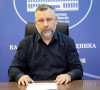
Historian Stefan Radojkovic believes that the new EU Envoy, Peter Sorensen, will influence the dialogue only to the extent that Brussels is able to pressure Pristina and Belgrade into greater constructiveness in negotiations, while the process itself will essentially depend on Washington’s willingness to engage in resolving the issue.
"He will be powerful and influential only to the extent that the EU and Brussels can push Serbia and Pristina to conduct the dialogue in a more constructive manner. However, the biggest part of this will primarily depend on Washington and the developments in Pristina and Serbia," Radojkovic told Kosovo Online.
He is not only referring to the upcoming February elections but also to all the previous unilateral moves by Pristina aimed at the Serbian community.
"All of this will affect the scope of the dialogue. Likewise, Serbia has every right to be extremely dissatisfied with Pristina’s behavior and, therefore, to potentially suspend its participation in the dialogue for a certain period until the situation improves, at least regarding the position of Serbs and other Serbian citizens in Kosovo and Metohija," Radojkovic said.
Even without the current issues on the ground, he notes that Sorensen himself will have little direct influence on the dialogue process.
"He may try to use his personal expertise and charisma to encourage goodwill between Belgrade and Pristina, but his strength will only be as great as Brussels' influence. Given the current balance of power in Europe and the world, especially in the Balkans, Washington appears to be the decisive factor. If he gains Washington’s support, he will carry some weight. If he does not, or if Washington simply has no interest in Brussels’ dialogue – which can be inferred from Donald Trump’s foreign policy, at least his rhetoric – then the Balkans will not even be at the bottom of Washington’s foreign policy priorities. Consequently, Sorensen’s influence will be proportional to that of Brussels and the EU, which is not expected to be significant," Radojkovic emphasizes.
When asked how Sorensen’s engagement might differ from Miroslav Lajcak’s mandate, Radojkovic points out that the Danish diplomat is well-acquainted not only with the Balkans but also with Kosovo, which will enable him to "speak a language that local actors understand."
"What might set him apart from Lajcak is that he spent some time in Kosovo and Metohija during an extremely tense and negative period, marked by violence against Serbs, Roma, Ashkali... This was the time of the March Pogrom. He knows what cards Pristina holds. He is well-versed in the Balkans, having served in Belgrade, Zagreb, and Sarajevo, so he understands the entire region. In that sense, he might be able to communicate in a way that is more comprehensible to local actors," Radojkovic explains.
However, he reiterates that it is difficult to expect that, as an individual, Sorensen will be able to implement any of the previously agreed-upon measures.
"As an individual, he will not be able to do much, even though his mandate is to work on implementing what was agreed upon in Ohrid and in the Agreement on the Path to Normalization, which is all part of the Brussels dialogue. I believe everything will depend on Washington, developments on the ground, and the actions of local actors – Belgrade and Pristina," Radojkovic concludes.


0 comments