
Radulovic: The murder of a policeman in Loznica is an isolated case, it will not affect the Belgrade-Pristina dialogue
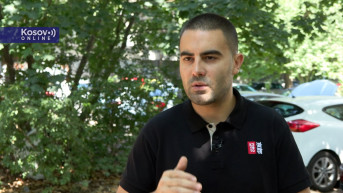
Military analyst Vlade Radulovic emphasizes for Kosovo Online that the investigation will reveal the background of the murder of the Serbian policeman in Loznica, but he believes it is an isolated case that Serbia will find difficult to leverage in Brussels, considering that Pristina quickly responded by arresting Faton Hajrizi's accomplices.
Radulovic points out that there have been some "semi-political statements we have heard in recent days," both from Kosovo and central Serbia, but the investigation will show if there is any background to the whole event that could be interpreted from an organized aspect: whether it was an individual who escaped from prison and then everything went wrong, or if it is something else.
"I would not be able to interpret the results of the investigation, I actually don't know them, and much will depend on that for what can happen in the future. I still see this as an individual case that unfortunately happened, so I believe something like this will not be repeated in the future," our interlocutor says.
He highlights another segment of the situation, which is also very significant.
"You had a situation here where, in certain circles of Kosovo Albanians in Kosovo and Metohija, the person who killed a member of the Serbian Ministry of Internal Affairs and wounded his colleague is being glorified, celebrated as some sort of martyr, as a hero, which is scandalous, especially considering that this person had a criminal record, was a repeat offender, escaped from prison, was processed by the Kosovo Police and Kosovo's provisional institutions, and now such a person is being celebrated. This is, on one hand, disappointing in itself, because it shows what kind of society actually exists in Kosovo and Metohija," Radulovic states.
He adds that this is also supported by the fact that there is a systematic, decades-long destruction of relations between Albanians and Serbs in Kosovo.
"It has been portrayed that everything against Serbs and Serbia is a reason for celebration, for glorification. And when you have such circumstances in a society that are acceptable or generally accepted by a good part of that society, then we can hardly talk about any potential coexistence, reconciliation, or finding some solution," Radulovic believes, assessing that in such a case, we can hardly look forward to the future that is coming.
According to him, the case of Faton Hajrizi can hardly be linked to the dialogue, in the sense of becoming some kind of asset for Serbia in Brussels.
"Things might be viewed differently if, for instance, the Kosovo Police and provisional Pristina institutions had not taken steps to apprehend and arrest those who helped with the escape in Kosovo and Metohija. From that perspective, we could say that the institutions in Pristina are doing absolutely nothing. They reacted very quickly, and it seems to me that they took the argument out of our hands. For example, in earlier cases, Belgrade often appealed, pointing out that Pristina was doing nothing regarding the clarification of certain criminal acts and the like, especially when it came to attacks on Serbs or the property of the Serbian Orthodox Church. There were very few cases, even regarding returnees, fighters of the Islamic State returning from the Iraqi-Syrian battlefield to Kosovo and Metohija. This time, that is not the case," he assesses.
This does not mean, he explains, that Belgrade will not use this event as an example to point out what the Serbian population in Kosovo is facing, but also what impact such a situation can have not only in Kosovo but also in the region, from a security perspective. Radulovic, however, reminds that certain circles in Brussels "have not forgotten the events in Banjska and northern Kosovo."


0 comments