
Djukic: EU representatives do not represent their countries' policies, Borrell and Lajcak are the best examples
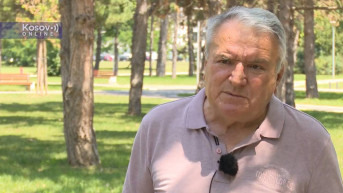
Member of the Forum for International Relations and former ambassador Srecko Djukic assesses that the selection of EU leaders from Estonia, a country that recognizes Kosovo, will not be decisive for Serbia because EU representatives have an obligation to represent the Union's policy, not their own countries', and that the examples of Josep Borrell and Miroslav Lajcak best confirm this.
"In our public, this is often linked, even within a part of the political establishment. However, every representative of the European Union or any other international organization or their country acts within the mandate they have. So, whoever the mediator is, they must act in accordance with EU policy. We had Lajcak from Slovakia and Borrell from Spain. These two countries have not recognized Kosovo and Metohija, but they acted exactly from the positions of the EU, which sought complete normalization and practically recognition between Belgrade and Pristina," Djukic says.
According to him, the character of the selected EU representatives and whether they will advocate soft or hard diplomacy tools will be much more decisive.
He emphasizes that the former Prime Minister of Estonia, Kaja Kallas, is considered a proponent of "hard diplomacy," but that she will be able to practice this exclusively within the framework of EU policy.
"She cannot go beyond that. There is nowhere for her to go. Just as Lajcak acted within the policy of the European Union, not within the policy of the country from which he comes," Djukic explains.
This diplomat says that Serbia does not have special relations with Estonia, as well as with most Baltic countries, and that the responsibility for this lies equally with Serbia and these countries, because neither side, as he emphasizes, has made an effort to establish closer and broader diplomatic relations.
However, he stresses that this should not be of particular importance because politicians change in the EU, but its established policy does not.
"All this can be viewed through another lens, because these Baltic countries are on the edge of the Russian Federation, have negative experiences with Russia, a different policy compared to ours, but again, take Lajcak and his country. That is not the priority. What matters is what we want to achieve and whether we can explain, defend, and persist with our position in negotiations. People change in positions, but policy does not change if people change, or it changes only in details," Djukic concludes.



0 comments