
Rajic: Kosovo and Nagorno-Karabakh should not be compared
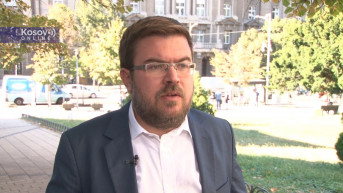
Political commentator Predrag Rajic believes that the situation in Nagorno-Karabakh, where Azerbaijan conducted a military operation and declared victory, cannot be directly linked to Kosovo because the genesis of these territorial disputes is different.
Rajic says for Kosovo Online that he is not inclined to draw geopolitical analogies when it comes to different territorial dispute issues. He notes that in Nagorno-Karabakh, it is about a part of the territory that was under the control of local authorities and influenced by a neighboring state, rather than under the control of the state to which international law assigns that territory.
"Analogies can be drawn to some extent, but I'm not inclined to do so because the development of the situation in Kosovo and Nagorno-Karabakh has been different. We have seen Baku's willingness since 2020 to resolve this issue, and they are on their way to doing so. It seems that even the authorities of the unrecognized Republic of Nagorno-Karabakh have decided to lay down their arms and start the reintegration process into Azerbaijan. How exactly this process will unfold remains to be seen, but it appears that the question that has been open for decades in the South Caucasus, a source of direct conflicts between Armenians and Azerbaijanis, is going into history as the Azerbaijanis are likely to claim complete victory. However, I am not sure and fear that tensions between Baku and Yerevan will not be completely erased, and we will continue to have some hotspots in the South Caucasus that threaten to disrupt the peace of the entire region," Rajic said.
Rajic believes that the situation in Nagorno-Karabakh will not have direct implications for Kosovo because the Kosovo issue operates in a different geopolitical context.
"Geopolitically, there is the crucial influence of the United States and its allies, primarily Germany, in Kosovo and Metohija. There is no presence of any other military force on the ground except for NATO and its allies, and perhaps some countries close to the Alliance have armed formations there, like Austria. But in the South Caucasus, specifically in Nagorno-Karabakh, you had the presence of the Russian military, which was supposed to maintain peace and had that mandate under the 2020 agreement signed by Azerbaijani President Aliyev and Armenian Prime Minister Pashinyan in the presence of Russian President Vladimir Putin. The situation is different because other geopolitical actors were involved in the events in the South Caucasus compared to Kosovo and Metohija, entirely different actors. In the South Caucasus, you did not have, and still do not, any military bases of a NATO member state, except for Turkey, which has its interests and has unequivocally supported its ally, Azerbaijan, in this conflict," Rajic concluded.



0 comments