
Rakocevic: Culture is our only true freedom
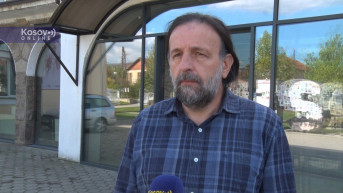
The cultural life of Serbs in Kosovo is restricted by the harsh rules of the ghetto, and within ghettos, it is impossible to speak of the normal development of culture. We have lost the city, galleries, libraries, our theater stages, we have lost the scent of the city, and in such a situation, the atmosphere in which our culture now lives is extremely restrictive, says Zivojin Rakocevic, writer and director of the "Gracanica" Cultural Center, for Kosovo Online.
What gives hope, he adds, is that cities have somehow been revived in small communities.
"And what is most important is that some of our cultural centers have developed to the point that we have choices. The basic thing in culture, life, and relationships is to have choices. As for culture in Kosovo and Metohija, it is our only true freedom, and within it, we have choices," Rakocevic explains.
The restrictions, he says, were imposed as far back as 1999, and they continue to multiply and become more complicated with additional obstacles.
"Whether it's due to the lack of infrastructure or the atmosphere being created, there's a constant message that culture is a danger, that spirituality is a danger, and that anything different or other is a danger. The obstacles are varied and exist on different levels. When a writer from Skopje brings ten of his books, and at the General Jankovic crossing they take nine from him, and he arrives at a promotion in Gracanica with just one book, and Milutin Stancic has to figure out how to go back and leave his nine books somewhere along the way, and then tells his friend, 'You come and try to cross General Jankovic with my nine books so I can have something to give to friends at the promotion,' that is one of the many pictures of the life we live," Rakocevic explains.
Another image, he says, is the fact that there is no free movement of books, and they have to be smuggled.
"You worry that if you have five publications, someone might confiscate them. I can't even remember the last time a writer sent us a book by mail and it actually arrived. That's the third problem. Some books in Latin script make it through, but there seems to be some force, some invisible ethnic censor who, when they see a book in Cyrillic, stops it. So, it’s a million small things and double or even triple layers of administration that you have to navigate. But in the end, none of that matters. The most important thing is that you walk into the hall behind us, experience something beautiful in the darkness of that hall, feel a catharsis, and get the sense that you are in a city, and that nothing is lost," concludes Rakocevic.

0 comments