
Rakocevic: The paradox is that as of January 1, Kosovo gained visa liberalization, yet journalists cannot enter Kosovo
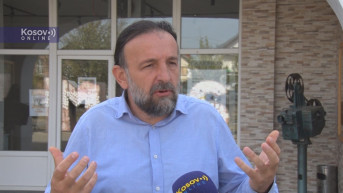
Zivojin Rakocevic, President of the Association of Journalists of Serbia, remarked that one of the factors leading to the denial of entry to Tanjug journalist Andjelko Utjesanovic at the Merdare border crossing was the desire of the authorities in Pristina to demonstrate, in front of their public, their sovereign control over the territory and decision-making without providing any justification, except for the vague claim of a "national security" issue, as reported by Radio Mitrovica Sever.
Utjesanovic traveled to Kosovo with a delegation from the Serbian Orthodox Church to report on Patriarch Porfirije's visit for Christmas, however, he was stopped at the Merdare crossing, and entry into the territory of Kosovo was denied without any explanation.
"There are several factors; all important events, such as the visit of the patriarch, impose on the Kosovo system this strange imperative to arrest someone or prevent them from entering. This is done to show their public that they sovereignly rule the territory and decide on everything," Rakocevic stated to Tanjug.
When asked about the possibility of dialogue or inquiry with the authorities in Pristina, Rakocevic mentioned that questions could be asked, but answers were often absent or justified with formulations claiming someone posed a threat to national security.
"Everything stops there. We informed all our international contacts and journalistic federations. We ask them to resolve the case of Svetlana Vukmirovic, a colleague from RTS who was banned from entering Kosovo. Resolutions are passed, and continuous efforts are made to ensure her freedom of movement, as we will do in the case of colleague Utjesanovic tonight. However, you have a system that fears journalists and believes it can restrict the movement of professionals," Rakocevic said.
Regarding the reaction of UNMIK, EULEX, or any other international institution and organization functioning in Kosovo, Rakocevic mentioned that, in the past period, the only understanding they had received, both verbally and factually, had been from the OSCE.
He added that UNMIK and EULEX simply faced the wall of Kosovo institutions and the national security narrative.
"You cannot expect concrete answers from UNMIK or European missions and EULEX. They may exert some pressure, but this also has another dangerous symbolic level where Albanian authorities say to their public, 'We decide who can enter and who cannot, not someone else,'" Rakocevic said.
He mentioned that Utjesanovic had to leave Merdare humiliated and that he had no idea what could be a valid justification.
"There is no justification. This is a symbolic level where it is conveyed that 'you can come to Kosovo only under our conditions, and we can reject you without any justification or sense,'" Rakocevic said.
He pointed out that Utjesanovic had entered Kosovo without any issues last year and reported.
"The paradox is that, as of January 1, Kosovo gained visa liberalization, yet journalists cannot enter Kosovo. Andjelko did not enter; another colleague did. There are hundreds of good professionals here who, if nothing else, must endure this pressure. This situation is not good for professionals and people who work impartially," Rakocevic said.
As he added, Utjesanovic is currently prohibited from doing his job, being a journalist and professional, and he emphasized that it was unacceptable to deny entry to a journalist in this day and age without proper justification.
"You cannot set up a barrier and say, 'You, with that name and surname, you cannot go any further.' These are dangerous precedents. I believe all our institutions and colleagues at the European and global levels should be aware of this fact – 23 years after a conflict in Kosovo, that conflict continues, especially toward journalists. We need to think about this fear of journalists in Kosovo, fear of the truth, and fear of testimony. On the other hand, unfortunately, a lot has been invested in that national narrative in journalism," Rakocevic concluded.

0 comments