
Rakocevic: Serbs in Kosovo are prisoners of the pogrom; violence could recur due to lack of institutions
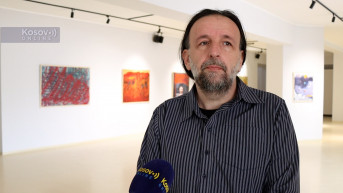
After March 17, 2004, it became clear that there is not a single place, not a single sacred site, nothing of importance in the lives of Serbs in Kosovo and Metohija that cannot be destroyed. In that moment, it was understood that nothing was protected. From that moment on, Serbs in Kosovo and Metohija became prisoners of the pogrom, writer and journalist Zivojin Rakocevic says in an interview for Kosovo Online.
On the occasion of the 21st anniversary of the March pogrom, Rakocevic emphasizes that everything the Serbs in Kosovo had was struck at its core on March 17, 2004.
"This was our St. Bartholomew’s Night. On that day, everything suffered – from completely isolated elderly people to the most brilliant frescoes of Our Lady of Ljevis. Houses, urban settlements, people, cities, villages, libraries, health centers, frescoes, icons – everything was hit. From that moment, from March 17, 2004, we count time from the point when everything we had was directly, at its very essence, attacked," Rakocevic states.
In the chaos of the pogrom, he adds, the concept upheld by the international community and all laws practically disappeared.
"The future of Kosovo and Metohija burned in the pogrom of March 17 because 50,000 soldiers, tens of thousands of officials, intelligence services, supposedly perfect global laws, all the appeals to rights and democracy – simply vanished. In that moment, it became clear that the institutional concept had failed. In Kosovo and Metohija, there are super-institutions, institutions, and sub-institutions. Super-institutions are the US embassy and other embassies; institutions are the visible ones – municipalities, government structures; and sub-institutions are tribal criminal organizations. On March 17, these parallel worlds and structures united to carry out a final reckoning, aiming to erase the Serbs along with their culture, their lives, and their civilization," Rakocevic explains.
He warns that the violence of 2004 could be organized again within a few hours, as institutions essentially do not exist – just as they did not exist in those March days 21 years ago. There has been no progress in democracy, no development of institutions, nor the return of Serbs to urban areas.
"It is completely clear that in such a situation, you can do whatever you want. However, I believe that what truly matters is what we do and what we have learned from March 17. And it seems that we have learned something. Over all these years, in different places, what was destroyed has been creatively rebuilt. At the Monastery of the Holy Archangels, we have a colony of painters creating new works. We have people who preserve memory and ensure that lessons are drawn from the greatest peacetime crime in Europe since World War II. Because never before in our history has the Serbian Orthodox Church, or we as a people, perhaps ever experienced the loss of so much life, heritage, and everything we had, in just two days," Rakocevic concludes.


0 comments