
March Pogrom 20 years later, through the eyes of a refugee from Pristina
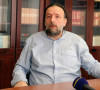
Dusko Celic, a displaced person from Pristina and an associate professor at the Faculty of Law, University of Pristina with a temporary seat in Kosovska Mitrovica, writes for Kosovo Online.
The word "pogrom" originates from Old Russian and could be literally translated as: devastation, destruction, annihilation. In political terminology, the term "pogrom" denotes an attack by a mob or a crowd, explicitly or tacitly approved by the authorities, aimed at the devastation, destruction, or annihilation of a national, religious, or racial group or minority and its property.
These days mark the twentieth anniversary of the Albanian March Pogrom, organized by former members of the paramilitary organization "KLA" and Albanian chauvinists against Serbs and Serbian cultural heritage in Kosovo and Metohija.
The March Pogrom was organized in front of the eyes and with the tacit approval of the interim authorities in Kosovo and Metohija, established on the basis of UNMIK acts but also in the presence of tens of thousands of KFOR and UNMIK police officers, whose mandate, let us recall, according to UN Security Council Resolution 1244, was "to establish a secure environment, ensure public safety, protect and promote human rights."
How cynical and empty these words seem in the case of the March Pogrom!
The military and civilian mission of the UN demonstrated in practice that it was not prepared or did not want to thwart or prevent the systematic attacks by tens of thousands of Albanians on Serbs, their homes, on the centuries-old witnesses of Serbian spirituality and civilization. Entire neighborhoods of Kosovo and Metohija cities were engulfed in flames during those days, where Serbs managed to persist despite everything, after the massive and tragic exodus that followed after June 10, 1999.
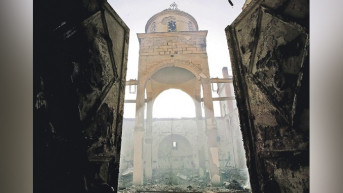
The unrest of these March days always overwhelms me anew. It's as if I am reliving the terrible realization that under the terror of Albanian barbarians, the remaining Serbs were expelled from Pristina, Obilic, Kosovo Polje, Urosevac, Gnjilane, Prizren... It's as if the flaming images of Decani, Our Lady of Ljevis, the Holy Archangels, and the Prizren Seminary are before my eyes again... It's as if I am experiencing once more the burning of the Orthodox Church of St. Nicholas in Pristina, where my ancestors drew spiritual strength and where I, my son Lazar, my relatives, known and unknown fellow citizens, received the sacred sacrament of baptism.
The fate of the only remaining Orthodox church in Pristina is a mirror of the overall suffering of the Serbs and their spiritual and cultural heritage in Kosovo and Metohija.
It was built in 1830, on the foundations of the monastery of the same name recorded in Turkish censuses from 1544, thanks to the Obrenovic's ingenuity and the immense efforts of prominent residents of Pristina to obtain permission from the Sultan, this modest rectangular basilica, internally only divided by columns into three naves, was not allowed to have a bell tower at that time; it was added later. Nevertheless, even in its unpretentiousness, the church somehow transcended itself, thanks to its dominant position in the historical center of the city and the spiritual warmth that, despite its architectural modesty, it somehow exuded magnificently.
During the difficult and prolonged occupation, it was the spiritual refuge and home of Orthodox residents of Pristina. It remained so even after the mass exodus of Serbs in June 1999, until the March Pogrom.
With sadness, I recall my visits to the Church and the gentle and modest parish priests, Father Miroslav and Trajan... Through the haze of childhood, I remember the old priest - Father Trajko, the family priest from those "tough times."
The image of the ancient iconostasis will remain indelibly etched in my memory, carved by craftsmen of the once famous Debar school in unrealistically beautiful woodwork...
I wonder how this masterpiece of human creativity, the scene of Christ's crucifixion, the royal icons, the colonnade carved into five levels in the form of unreal woodcarving, the imperial doors, and the cross covered with the finest gold leaf, could provoke anyone in human form, even a barbarian, to burn it to ashes?
What emerged during the difficult and long Turkish occupation thanks to the persistence, loyalty, and ingenuity of our ancestors, was destroyed in "peace," and what irony, in "peace under the auspices of the United Nations"!?
Yet, I believe that in these days of sorrow, days of remembrance of the suffering of our people and our holy sites in Kosovo and Metohija, days of great trials for all of us and especially for the remaining Serbs in Kosovo and Metohija, we must find the strength to preserve the hope that our roots, deep for centuries, have not been nor can they be destroyed, and that from them will spring forth the fruits of freedom.


comments