
Rakocevic: Thousands of procedures become an insurmountable obstacle to media freedom
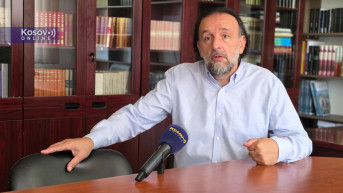
Journalist and writer Zivojin Rakocevic said that the fact that Serbian-language media outlets – Kosovo Online and RTS – were prevented from reporting from the Kosovo Assembly, leaving five media workers without access to information from the constituent session, shows that journalists in Kosovo face not only major cases of discrimination, but also numerous administrative obstacles and procedures that make their work almost impossible.
Rakocevic explained that there are two levels of discrimination faced by journalists reporting in the Serbian language.
“The first level consists of these major, fundamental incidents, such as the removal, dismantling and destruction of the memorial plaque dedicated to our colleagues Djuro Slavuj and Ranko Perenic, the list of banned words, and the use of language. The second level, which has been perfected and whose true meaning is understood only by journalists and colleagues working in the field, is the level of procedures, the level of bureaucrats and the level of minor details that seek to strip journalistic life in Kosovo and Metohija of all meaning,” Rakocevic told Kosovo Online.
He pointed out that journalists in Kosovo who report in the Serbian language face a large number of procedures and obstacles on a daily basis, which accumulate over time and make their work increasingly difficult.
“Thousands of small obstacles turn into one insurmountable barrier that, after all the procedures, requests, paperwork, humiliation, waiting at counters and phone calls, simply results in someone telling you: ‘Well, you cannot today, this does not apply to you.’ Then all that time, your entire life, all your effort and all your freedom are reduced to the fact that, after everything, you are driven away from a counter by an unnamed and unknown official in Pristina who tells you: ‘You cannot, this does not exist for you,’” Rakocevic said.
He believes that by preventing reporting from the Assembly, one third of the Serbian population of present-day Pristina was symbolically sent back to its ghettos.
“In essence, they should welcome every media outlet that comes to Pristina. After all, today five Serbs were turned back from Pristina, while in that same Pristina, where this parliament is being constituted, only about 15 or 16 Serbs live. So, when you look at what is happening to our language, our presence and our media from that perspective, you realise that this society, in which we have been forced to live for 27 years after the conflict, does not understand that there should be media, that there should be institutions, that there should be someone you do not have to agree with, that there should be someone who asks you questions you do not want to answer, and that there should be someone who is different from you in every respect,” he said.
Rakocevic also pointed out that, in his opinion, the process of achieving media freedom effectively does not exist for the Serbian-language media community in Kosovo.
“A ban on journalists, a ban on media outlets, a ban on different viewpoints, a ban on people who simply report and do their job is unimaginable today, after all this time in Kosovo and Metohija. It represents the failure of all the efforts made by the international community and all media communities and associations, as well as various European and global institutions, for whom it would have been unimaginable for something like this to happen 15 years ago. Therefore, for us as a media community, for all of us who are witnesses to this process, it is clear that the process of achieving freedoms simply does not exist, even for those who work for those very freedoms and for media pluralism,” Rakocevic concluded.
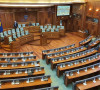
The Kosovo Assembly denied certain media outlets reporting in the Serbian language the opportunity to cover the constituent session, despite the fact that they had submitted complete accreditation documentation properly and on time.
Among the media outlets that were denied entry to the Assembly building were Kosovo Online and RTS.
0 comments