
Ramadani: For NATO, Turkey’s negotiating and military influence is becoming increasingly important, especially in the Western Balkans

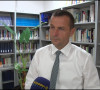
The President of the Euro-Atlantic Council of North Macedonia, Ismet Ramadani, told Kosovo Online that the NATO Alliance increasingly values Turkey’s negotiating abilities, its geographical and strategic importance, as well as its military potential in the event of potential hotspots—particularly in the Western Balkans.
“There is enormous respect for Turkey because of its geographical and strategic position. In an article by a Turkish analyst, it is pointed out that it is easy for France and Macron to be NATO members when their immediate neighbors are Liechtenstein, Monaco, Switzerland. Turkey, however, is in a position where its neighbors are Syria, Iraq, Iran,” Ramadani said.
He added that these are just some of the reasons why it is no surprise that Ankara will host the NATO Summit next year.
“Turkey is still very important in NATO as a member. First, it is the second-largest power with active armed forces in NATO and has military capacities worthy of respect, still ranking among the top four or five NATO members. At the same time, it is significant that Turkey already plays a major role in negotiating processes. Turkey is a power that can participate in achieving peace agreements,” Ramadani emphasized, citing its mediation in the dialogue between Russia and Ukraine.
On the other hand, the analyst stressed that Turkey’s military potential must not be overlooked in the case of potential hotspots, especially in the Western Balkans.
“All of this gives importance to Turkey,” Ramadani underlined.
He explained that the country is rapidly preparing for the upcoming NATO meeting, for which a complex has been chosen that can accommodate 15,000 people.
“Some even compare it to the Pentagon, maybe even more impressive in terms of modern technology,” the analyst revealed.
He also had no doubt that NATO’s choice of Turkey as host took into account the influence Turkey has in certain countries, including in the Western Balkans.
“Regardless of nostalgic comments or claims that it wants to create a new ‘empire,’ the fact is that Turkey is quite present in this region. Especially through investments, whether in Serbia, North Macedonia, Bosnia and Herzegovina, Croatia, Bulgaria, Romania,” Ramadani said.
Asked how realistic the claims are that Ankara harbors “Ottoman nostalgia,” the analyst said that “modern times” require every country to be present in the region where it is located.
“I think Turkey’s presence as a military, political, and economic power in the Balkans can be the subject of agreement with NATO members, especially the U.S., because they know about Turkey’s influence both in the Balkans and in the Middle East,” Ramadani noted.
He recalled that the West initially criticized Turkey for entering northern Syria without prior consultation within NATO, but quickly recognized its importance in achieving peace.
“Time has shown that by entering northern Syria, Turkey managed to prepare rebels against Assad, and today this area is 80 percent under Turkish influence. A few months ago, Turkey succeeded in concluding a peace agreement with the Kurds, who had been fighting and losing many lives in uprisings for decades. So, that is another reason why Turkey plays a role in making peace,” Ramadani stressed.
Regarding Ankara’s influence in the Western Balkans, the expert said it is not just “nostalgia.”
“Turkey is still a factor that can preserve peace and establish some form of relations between military structures and politics in the Western Balkans,” Ramadani underlined.
As part of NATO’s regular annual rotation, from this autumn the mission will again be headed by Commander Orhan Ulutaş.
Ramadani said that his appointment was not accidental but came at a “tense time.”
He recalled that during his first term, after the events in Banjska and unrest in which KFOR soldiers were attacked, General Ulutaş managed to calm the situation.
“Turkey’s politics and influence in Serbian politics and in Kosovo nonetheless contributed to the situation today being calmer on the northern borders of Kosovo,” the analyst said.
He added that NATO’s great contribution lies in encouraging negotiations between Belgrade and Pristina in order to reach an “efficient and rational agreement.”
In this, he sees the decisive role of the U.S.
“There will likely be political-diplomatic subordination initiated by the Trump administration. Regardless of whether the political structures in Kosovo and Serbia are satisfied or dissatisfied, I think this Trump administration will definitely contribute to the development of relations between Kosovo and Serbia,” Ramadani concluded.


0 comments