
Rankovic: The Special Mission of Kosovo in Greece is a step forward toward recognition
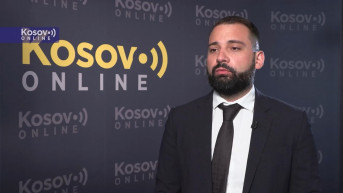
The special mission of Kosovo in Greece represents a significant step forward in the diplomatic relations between the two sides, which may eventually result in formal recognition, says Petar Rankovic, a researcher at the Institute for European Studies, to Kosovo Online.
He recalls that economic cooperation was the primary topic at the beginning of their relations when the Chamber of Commerce of Pristina opened an office in Athens in 2019. However, since 2021, when the Greek Minister of Foreign Affairs visited Pristina, this cooperation has expanded to political issues and protection, reflecting Kosovo's desire to broaden its presence and influence in Greece.
“Since 2021, we have been talking about new responsibilities and new activities of this office, and we now see that this office, initially focused on economic cooperation, is set to gain a political dimension. Symbolically, this is very important, as it is intended to serve quasi-bilateral relations, simulating diplomatic-consular representation as countries that recognize each other have in other states,” explains Rankovic.
He notes that the relations between Greece and Kosovo are complex, given Greece's stance on not recognizing Kosovo's independence while simultaneously supporting Kosovo's efforts for membership in international organizations such as the EU and NATO.
“I remind you that Greek Prime Minister Mitsotakis was on an official visit to Belgrade in February, where he clearly stated that Greece would not change its stance on Kosovo. Also, I remind you that during the last vote on Kosovo's membership in the Council of Europe, Greece was abstained, although there were announcements that it had changed its stance on this issue,” says Rankovic.
On the other hand, he points out statements indicating that Athens supports Kosovo's membership in international organizations and recalls that Greece is one of the few EU member states that recognized Kosovo's documents before the Brussels Agreement.
“I consider this issue very challenging, and there are significant chances that at some point, Athens will officially recognize Kosovo, given that everything happening in recent years supports the strengthening of bilateral relations, which at some point can undoubtedly result in official recognition,” he states.
In the broader geopolitical context, Rankovic emphasizes that Greece's foreign policy towards Kosovo should be viewed in light of its relations with Turkey, which has "serious strategic and geographical aspirations in the Aegean islands."
“In fact, analysts from Greece and Europe interpret that Greece is making certain concessions to official Brussels and Washington regarding the status of Kosovo and maintaining bilateral cooperation, while at the same time gaining unconditional support in protecting its interests regarding Turkey, given that Greece is a crucial NATO and U.S. partner in balancing Turkey's aspirations both in the Aegean region and beyond,” says Rankovic.
Finally, he reminds that although Greece officially insists it will not change its stance on Kosovo, it, unlike other countries, primarily Cyprus, establishes and expands cooperation both economically and politically.
“Greek foreign ministers have been on official visits to Pristina twice, where, besides formal meetings, they also had informal walks in the streets of Pristina, discussing various issues informally. This demonstrates Athens' clear willingness to establish and expand cooperation with Pristina, which is not the case with Spain and Slovakia, and especially not with Cyprus, which does not want to cooperate with Pristina on any issue. Therefore, if one of the five EU member states eventually revises its stance on Kosovo's independence, Greece is certainly the first from which this could be expected,” concludes Rankovic.



0 comments