
Ristanovic: Kosovo–Montenegro archive exchange is a symbolic gesture, irrelevant to war crimes investigations
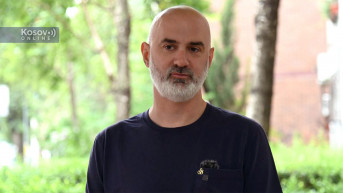
Petar Ristanovic, a research associate at the Institute for Serbian Culture in Leposavic, believes that the agreement between Kosovo and Montenegro on the exchange of archival material is more of a symbolic message than a meaningful step toward investigating war crimes. He told Kosovo Online that the cooperation primarily has a political dimension and sends a message of “closeness between Albanians from Montenegro and Kosovo.”
Kosovo and Montenegro signed an agreement to hand over archival material to the Institute for War Crimes in Kosovo. The agreement was signed in Montenegro by the executive director of the Institute, Adem Hetemi, and the Montenegrin Minister for Human and Minority Rights, Fatmir Djeka.
Ristanovic explains that it is difficult to determine what material from the Montenegrin side could be relevant for war crimes investigations.
“Based on the available information, we don’t know exactly what kind of material is involved. The only thing mentioned is material from Radio Television of Montenegro, and it’s hard to imagine how that would be significant for investigating war crimes. That is why I believe this is more of a symbolic gesture than something that will yield any concrete results of real importance for researching this topic,” he said.
He added that the cooperation has a primarily political dimension and sends a message about “the closeness of Albanians from Montenegro with institutions in Kosovo.”
“We can see that Albanian representatives in the Montenegrin government attended the signing, and it seems to me that this initiative is at a lower level and aims to signal the closeness between Albanians from Montenegro and those from Kosovo. The question is whether it can lead to any concrete result, whether there is anything significant in Podgorica that could be useful to Albanian institutions investigating crimes. I sincerely doubt it, perhaps something from the security services’ documentation, but I really don’t believe such material will ever be exchanged,” he stated.
Comparing Kosovo’s cooperation with the Srebrenica Memorial Center, Ristanovic said that it also reflects a selective approach.
“The Memorial Center focuses exclusively on crimes committed by Serbian forces, and the Albanian side also deals only with crimes committed by Serbs in Kosovo and Metohija. Based on their past work, it is evident that they are absolutely not interested in the undeniable crimes committed by Albanians. So, there is a shared perspective between them and the Memorial Center in Srebrenica when it comes to history and what should be studied. That explains their cooperation,” he said.
Commenting on the continued insistence by Kosovo Albanians on filing a genocide lawsuit against Serbia, Ristanovic described it as a recurring domestic issue with no real weight.
“It seems to me more like a topic used to score political points in their public discourse. The fact is, such an accusation would not be upheld by any international court, especially today, when the Hague Tribunal is losing credibility due to everything happening around Palestine,” he emphasized.
Ristanovic believes Serbia should take a more proactive approach regarding its own archives and research into events in Kosovo after 1990.
“Serbia should encourage researchers and allocate significantly more resources for studying Kosovo and Metohija, especially events after 1990, which are still largely unexplored. It would also be good, even necessary, for Serbia to open up its archival collections, particularly those of the military, police, and security services. We are in a situation where many influential figures from the KLA today enjoy cult status in Kosovo. Our security services certainly possess a trove of documentation on these individuals, but it is inaccessible to researchers, making it practically impossible to write serious biographies,” Ristanovic concluded.



0 comments