
Savkovic: Military exercises send strong political messages, increasing armament trend is concerning
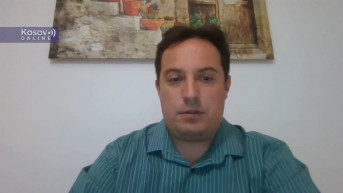
Military analyst and senior advisor at the ISAC Fund, Marko Savkovic, emphasized that military exercises are not only about training units or demonstrating power but also about sending strong political messages. He expressed concern over the increasing trend of military exercises and investments in weapons and military equipment, not just in the region but globally.
"The general trend of increasing military exercises is certainly worrying, not only in our region but also more broadly. It is clear that the world we live in has become more insecure. We are seeing an exponential increase in military exercises worldwide, as well as a rise in investments in weapons and military equipment. Trust is diminishing, and everyone is preparing for different scenarios. Nothing is excluded anymore, as the conflict in Ukraine has shown," Savkovic told Kosovo Online.
When asked whether the recent military exercise involving the KSF and the Albanian Armed Forces, which included artillery, was a response to the exercise conducted by the Serbian Army on the Pester Plateau, Savkovic pointed out that it does not necessarily have to be interpreted that way, but it is undeniable that both exercises were not only military but also political demonstrations.
"The emphasis here is primarily on demonstration. By conducting a military exercise, you send a message to partners and potential adversaries: 'We are here, we are ready for any eventuality.' You might also be sending a message to your own population to reassure them and say that you are capable of defending them in whatever scenario might develop tomorrow," Savkovic explained.
He adds that military exercises do not always mean "saber-rattling," but due to distrust and poor bilateral relations in the region, they are often interpreted that way.
"If there were more trust, we wouldn't be talking about saber-rattling. Military exercises are a normal occurrence; they are attended by a large number of accredited military representatives, you invite other countries - you seek their presence to legitimize the military exercise itself and show that it is not an act against anyone. They do not necessarily have to be saber-rattling, but because trust is lacking, and because bilateral relations are what they are, we interpret them in such a way," Savkovic said.
He explained that it is undisputed that armed forces must train and test in the most realistic conditions to see if they have mastered new capabilities.
"In this particular case, the Kosovo army has some new weapon systems and military equipment. This is not the first exercise; there have been several, including one in September on the same range in Albania, which I believe is adapted to NATO standards. All of this follows the policy that the authorities in Pristina have been pursuing for several years. For me, this is not a surprise," Savkovic emphasized.
He added that every military exercise also has an internal function.
"Of course, such exercises always have an internal function. Through them, you demonstrate that you are free in your actions and that you can exercise if you want. You remember how much Belgrade opposed the Kosovo army, but it was still formed, and now that army must strengthen its interoperability and readiness through exercises. This is all, I would say, a logical continuation of the actions we have seen over many years," Savkovic concluded.
0 comments