
Sejdarasi: The Berlin Process showed the EU's determination not to give up on the Western Balkans
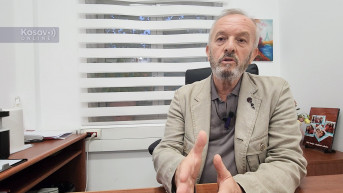
Bardhi Sejdarasi, the chief economics editor at ABC News in Tirana, says for Kosovo Online that the Berlin Process summit demonstrated the EU's determination not to abandon the Western Balkans and that it is ready to move forward with the implementation of the Growth Plan. He believes that Pristina's decision to block Serbian goods was rash and that it faced immense pressure from all sides because of it.
"The Berlin meeting, with the participation of Western Balkan countries, was a continuation of a project initiated by the European Commission long ago, which allocated 6 billion euros from EU funds to create a common regional market," Sejdarasi pointed out.
He reminds that this was a long-standing request from Albania’s Prime Minister Edi Rama.
"He requested that, regardless of whether Western Balkan countries are ready to become part of the EU, they should be helped and encouraged to implement the reforms required by Brussels. What was expected has now happened. Important agreements were signed, specifically for the allocation of a grant fund of 2 billion euros and another fund of 4 billion euros, which will be given as low-interest loans. Countries have benefited from these funds based on the European Commission’s formula," Sejdarasi explained.
He adds that seven percent of the total fund, which is the first installment, will be given immediately, and the distribution of the fund is done according to GDP and population size.
"Albania received a total of 922 million euros, with 64 million euros to be given immediately as the first installment. It’s the same for Kosovo, with a slightly lower figure," Sejdarasi noted.
He emphasizes that Western Balkan countries will use this money to implement the required reforms.
"If these reforms are not implemented, the European Union will reclaim these funds. Overall, the EU has spent around 30 million euros for our region, while the remaining 6 billion euros is still available. In total, the amount Brussels uses for its own projects is 1.7 trillion euros, while the Western Balkans receive only 0.06% of that amount. So, it is a modest fund, but it still helps in implementing reforms," Sejdarasi stressed.
Commenting on Pristina's recent decision to partially lift the blockade on the import of Serbian goods, Sejdarasi says that it was a rash decision by Prime Minister Albin Kurti from the start, and it was changed under pressure from Germany.
"Germany set a condition for the Kosovo government, which was not publicly disclosed, but it was related to Pristina's participation in the regional free trade agreement, CEFTA. This agreement includes six countries, plus Moldova. The pressure on Kurti was immense, from all sides, as he created an imbalance in trade relations in the region. Restricting cross-border transactions certainly creates problems, not just for governments but also for businesses. Pristina’s reversal of this measure removes the barrier to the entry of Serbian goods into Kosovo," Sejdarasi explained.
He points out that this would allow free trade in the region, enabling citizens to exchange goods and services.
At the same time, he says, this opens a direct path for Kosovo to become a member of CEFTA, instead of being represented by UNMIK.
"Additionally, the movement of people has been made easier since Kosovo unilaterally decided to lift the ban on entry for Bosnian citizens with ID cards, a decision that will take effect on January 1st next year," Sejdarasi concluded.


0 comments