
Shala: The Kosovo Online portal serves Belgrade's hybrid operations through propaganda content

Security expert Drizan Shala stated that the Kosovo Online portal acts as an “extension of the Serbian state and participates in the destabilization of Kosovo through propaganda and manipulative content serving Belgrade’s hybrid operations.”
On Facebook, alongside a screenshot of an article published by the portal—which reported on Serbian Interior Minister Ivica Dacic’s statement regarding the actions of a Kosovo police officer toward a Serbian high school graduate in North Mitrovica—Shalja accused the portal of being “a proxy structure serving the Serbian state” and part of “a broader campaign to destabilize Kosovo through information.”
He also criticized Dacic, calling him “a known promoter of a fascist-leaning narrative who instrumentalizes media such as Kosovo Online to incite interethnic tensions.”
Shala claimed that “Kosovo Online does not represent the interests of Kosovo Serbs, but rather carries out the directives of the political-criminal establishment in Belgrade, using disinformation and targeted efforts to undermine Kosovo’s constitutional order.”
“However, even in this case, Kosovo Online is failing, just as it will fail in future attempts to undermine Kosovo’s sovereignty,” Shala wrote.
In the comments below his post, some Facebook users called on the Kosovo Police and Prosecutor’s Office to shut down the portal.
In a previous post, Shala also commented on an article reporting the reaction of a group of civil society organizations to the same incident.
He claimed the article is “a classic example of hybrid propaganda aimed at creating a narrative of Serb victimization in Kosovo, criminalizing Kosovo’s security institutions, encouraging ethnic tensions in sensitive areas, and discrediting constitutional authority and the rule of law.”
“This article is not just disinformation. It is an operational tool of the hybrid war Serbia is waging against Kosovo,” Shala wrote.
He further argued that Kosovo Online uses “emotionally charged terminology without concrete evidence,” and that civil society organizations sharing this version of the events are “covert tools of Serbian intelligence structures.”
“Kosovo’s institutions must identify, expose, and neutralize these forms of hybrid penetration. A sophisticated counter-strategy and the strengthening of strategic communication—especially on the diplomatic front—are needed,” Shala concluded.
However, Shala had previously been interviewed by the same portal, where he commented on the security situation in Kosovo.
In recent days, the portal has also faced criticism from Serbian Telegram channels for its editorial policy, which they claim is “in deep conflict with the official policy of Belgrade and UN Resolution 1244.”
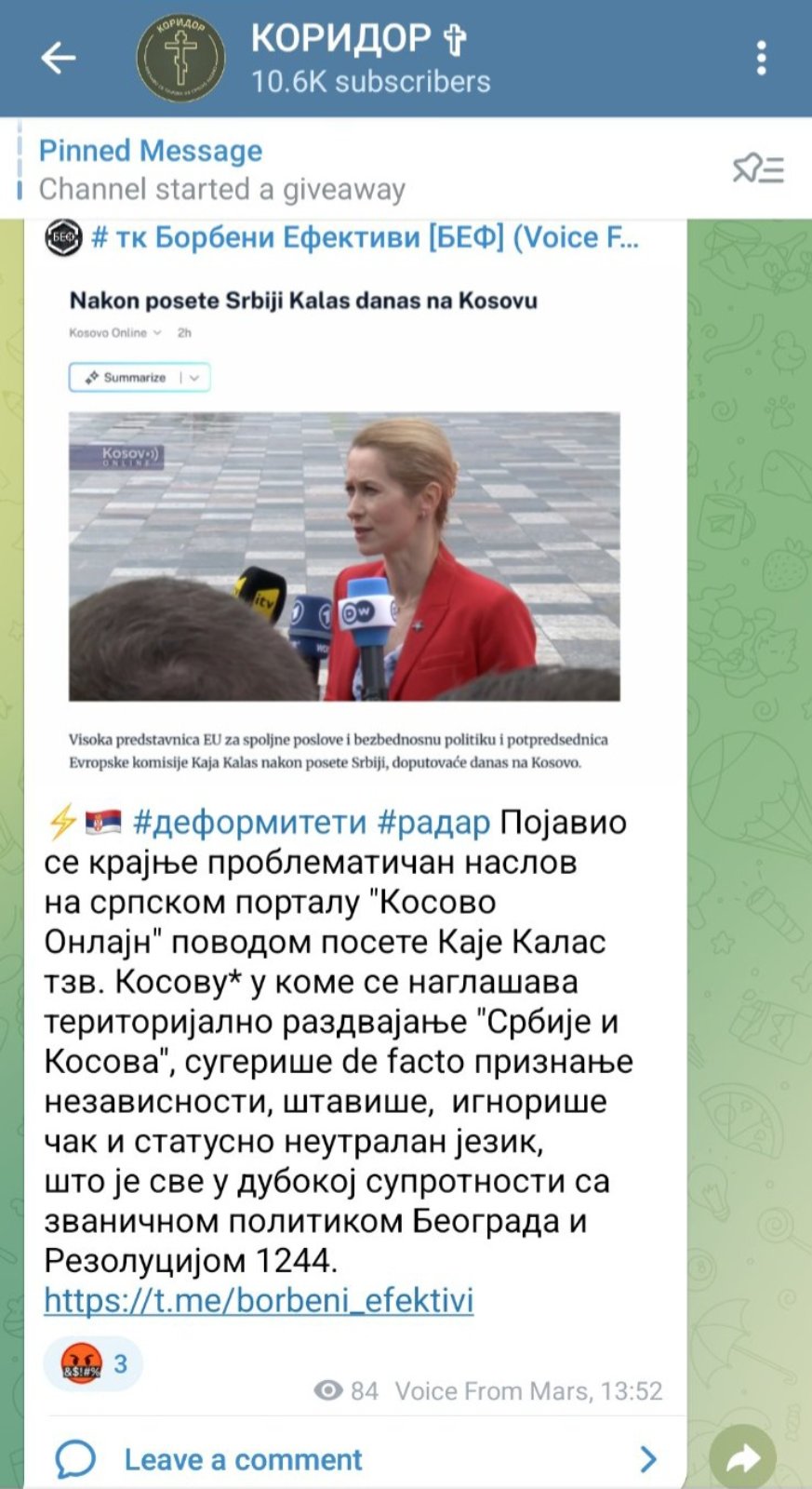
The editorial board of Kosovo Online has called on the relevant institutions and journalist associations in both Serbia and Kosovo to respond to such targeting of media and to ensure unhindered work for all journalists and editors. The protection of journalists and media freedom must be an absolute priority in any democratic society.

0 comments