
Sheriff from Alberta Vladan Stoiljkovic: The Battle of Kosare is the Second Battle of Kosovo
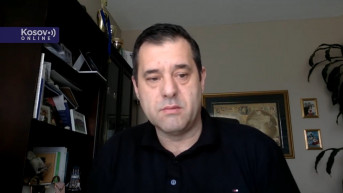
The sheriff in the Canadian city of Alberta and former member of the 63rd Parachute Brigade of the Serbian Army, Vladan Stoiljkovic, who participated in the battles at Kosare from April 11 to June 3, says that for him, the battle for Kosare was the second Battle of Kosovo, where a group of young men showed how to defend and love one's country.
"For me, the battle at Kosare is definitely the second Battle of Kosovo. It's the battle where we showed, where a group of young men showed, how to defend and how to love the country, where we showed that we stood up to a much stronger enemy, in numbers, in arms... We showed that none of us wanted to move back even a meter. That's why it's a battle that definitely needs to be included in textbooks, to show young generations how to love and how the country was defended,” says Stoiljkovic.
He says his unit, the 63rd Parachute Brigade, arrived at Kosare on April 11th.
“It took us five to six hours to climb because the path was difficult and demanding. As we approached, we saw scattered equipment, parts that the army had left in the first onslaught since the attack happened on April 9th. From that, we could conclude that a serious and tough battle awaited us. At the very top, across Sabani meadows, I entered the fight at 5:20 am and was there until June 3rd when I was wounded,” Stoiljkovic states.
He says that the hardest moment for him was between May 10th and 11th, when the area of Kosare was bombarded with cluster bombs.
That evening, they were preparing for an attack on enemy positions around Maja Glava, which is why a group of 80 to 100 soldiers was added to them.
“While the major was giving us instructions for that action, the attack with cluster bombs began. I saw sparks flying everywhere and a sound that resembled the bellowing of bulls. I felt like my body was floating about twenty centimeters above the ground and that the detonations were moving me left and right,” Stoiljkovic recounts.
When everything quieted down, he saw scenes like those from horror movies.
“To the left, the bunker where we stayed was no more. One soldier was dead beside it. Another stood up and when I asked if he was alright, he replied: ‘I am missing a finger’. We rushed to a third who was coughing and spitting blood. When we turned him over, we saw he was hit by shrapnel shaped like a wheel of cheese. He said: ‘Oh my mother, I’m dying’. And there he passed away. I took a helmet from that dead soldier because mine had flown off somewhere from the detonations. As we made our way, we saw about ten dead soldiers and one sitting. He had no legs, and had placed his rifle under his chin. I think he said: ‘If I don’t have legs, what do I need life for’ and fired... All that night we carried down the wounded and dead. There were no more trees, leaves, branches around us... The soil was so loose, soft, like the one used for planting flowers. At dawn, I saw that the path we used to carry down our comrades was completely bloody. As if someone had turned on a tap and a stream of blood was flowing. There was snow, everything was visible. My uniform was so soaked with blood that I was completely wet from it. Definitely, for me, it's one of, if not the, hardest event,” Stoiljkovic shares.
He was wounded about ten days before the end of the war, on June 3rd, 1999.
He explains that morning, he and two comrades were ordered to scout the right edge of a forest right on the border with Albania.
“They saw us before we saw them. I saw a soldier lying in a black uniform and another standing over him. The last thing I remember is seeing the gunpowder flashes from his barrel and falling from the force of the hit, looking at my boots. I received a bullet in the head. It went right through the helmet and made a cut on my head,” he narrates.
He says his comrades initially thought he had died. Only after the confrontation with the enemy was over did they come for him and realize he was still alive.
“I deeply believe that the helmet from the soldier who died saved my life. The shield around the helmet was much narrower, so the helmet was above the position it was supposed to be. That saved me,” Stoiljkovic states resignedly.
After the war, he worked as a salesperson in Belgrade for several years before moving to Canada with his wife. There, he has been a sheriff in Alberta since 2016. “Being a law enforcement officer in Canada is a privilege and at the same time a very hard and responsible job. This job here carries a lot of responsibility and danger on the street, but it's a little different than in Serbia. Here, things happen literally like in a movie. Of course, there are privileges, especially a status in society, in the Serbian community, in the church. I am very glad to be able to help our people who are here,” says Stoiljkovic.
Asked how much Canadians know about the events in Kosovo, especially at Kosare, he explains that they mostly think Serbia is Siberia, so they are surprised when they find out it is not.
He adds that it turned out his supervisor in the police had been part of UNPROFOR forces in Croatia in 1993 and was among the members of the Canadian contingent that prevented a crime against Serbs in the Medak Pocket.
“When we met, he told me something that pleases me today: 'Serbs were the only ones who respected the agreement out of all three warring sides in the Medak Pocket.' But, many Canadians do not know what happened. They didn’t even know about the biggest Canadian battle after the Korean War, which was the battle in the Medak Pocket. A film ‘The Canadian Secret War’ was made about it. The unit that stopped the Croats from committing war crimes received the Order of Military Merit and the Medal of Bravery personally from the queen about ten years ago,” explains Stoiljkovic, who decided last year to return to Serbia with his family.
“Canada is a good country, but Serbia is definitely better. I returned to Serbia for a simple reason: because of my wife and child. We want to raise our child by Serbian standards, to grow up where his grandparents, uncle, and aunt are..., and we are alone here. In the last 10-12 years, we see progress and advancement in the country and we want to help build this Serbia. The other day, my son called me from school and said: 'Dad, can I share my snack?'. That's forbidden in Canada, as well as hugging, to ‘give a high five’,” he says.
He adds that they are currently occupied with ordinary, life problems, however, he is convinced that everything will end well.
“My wife graduated in Political Sciences and it's going a bit tough with her employment, we applied to several places, so far unsuccessfully. But we’ll see, we hope everything will be alright. Serbia is our country, after all, I fought for this country. Definitely, we are not going anywhere from Serbia,” Stoiljkovic concludes.

0 comments