
Maric: I was the last one to leave Rasa Kosares; everyone was convinced that we were dead
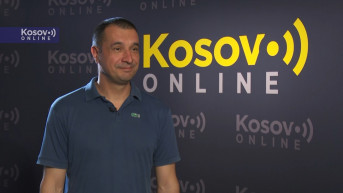
The last border guard who, during the attack on Kosare on April 9, 1999, left the Rasa Kosares peak on the border with Albania, Milenko Maric, tells Kosovo Online that he will never forget that day, and that the story of defending Kosare is a story of brotherhood that still lasts.
"The youngest generation of the army defended Kosare. Brotherhood and camaraderie sustained us. We were united like brothers, and that's what kept us at Kosare. Even now, after 25 years, we think the same. We still meet and gather," Maric says.
Originally from Belgrade, he belonged to the last, March class of soldiers on regular military service in the 53rd Border Battalion, which had training in Djakovica in 1998.
That year, he was transferred to Kosare and did not move from there until he was severely wounded.
"Since 1998, we had incursions at Kosare, breaking up terrorist groups, smuggling weapons, confiscation... I think there were more than 50 of those attacks on our positions. However, April 9 was one of the toughest days. It started in the morning, and we didn't know where the shots were coming from or with what. Still, we were surrounded from all sides. That first morning, there were 100 of us against their 1,500. That's something to survive," Maric says.
He admits that even today, 25 years later, memories of April 9 are still vivid.
"The memory of April 9 cannot be erased from the mind," he emphasizes.
He explains that the general attack on Kosare began around 4:15 a.m. with artillery fire on the Morina checkpoint, but the fire soon moved to their positions.
"The attack from Albania started with artillery preparation in the early morning hours, around 4:15 a.m., towards the Morina checkpoint, but the fire soon moved to the positions of the Kosare checkpoint, first to ambush point C4, and then to the Rasa Kosares position. We were attacked with artillery. Everything was targeting us to force us out because it was the highest point not only holding Kosare but also part of Albania," he explains.
With eight other border guards, Maric was on the Rasa Kosares position, which was under the most intense attack that first day.
"The attack first hit C4, where they were spotted, then Rasa Kosares, where I was. C4 asked for support from us, but we only managed to fire one mine, and then we were covered by artillery units from Albania. Thousands of shells fell there. And everyone thought we were dead up there," Maric recounts.
He explains that around 9:30 or 10 a.m., the artillery suddenly fell silent. That's when the ground attack began.
"The first attack came from 501 and from Kaptaza toward us. We repelled it once, and then we were covered again. As we later found out, they were hitting us with bursts, which are seven-barrel rocket launchers. And by noon, we had dispersed to ambush points 502. After me, no one stayed on Rasa Kosares after 2 p.m.," he states.
When the other border guards saw them, they couldn't believe they had survived.
"We managed to get out with one wounded. Unfortunately, that soldier passed away after 1999. If it needs to be said, he died a natural death," Maric says.
Attacks on Kosare continued with unabated intensity throughout that day. He was wounded in one of the artillery attacks during that first evening.
Shrapnel from mortar shells tore open his abdomen and broke his right leg.
"My comrades somehow got me down to Batusa. That evening, there were many wounded and dead. They first transferred me to the hospital in Pristina, where I spent 20 days, then to the Military Hospital in Nis. I lay there under a tent next to the hospital, as there was no space. When my wound hardened, they urgently transferred me to the Military Medical Academy, and I waited for the end of the war there," he explains.
He says it bothers him that even today, 25 years after the battle at Kosare, many don't know the real truth, especially about the role of the 53rd Border Battalion.
"At least some truth should be told, but many don't know the real truth. Many have only seen Kosare in photographs. It seems like everyone was at Kosare except the border guards. And that, of course, hurts. We spent 15 months there, but there's no trace of us, while those who were there for eight hours are everywhere," Maric emphasizes.


0 comments