
Simic: Serbs in Kosovo and Metohija are heroes of the 21st century, lawlessness and dictatorship prevail in Pristina
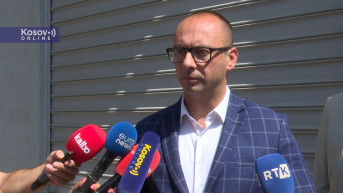
There is not a single ministry in Pristina that does not do everything within its remit to make life more difficult for Serbs in Kosovo, Serb List Presidency member Igor Simic said, adding that under Albin Kurti's regime, the Serbian people had no legal protection whatsoever. He stressed that, under such circumstances, the Serb List's absolute priority was to preserve the Serbian community, describing Serbs in Kosovo as heroes of the 21st century who were safeguarding the land of their ancestors.
Commenting on frequent Kosovo Police operations and detentions on war crimes charges, Simic told Euronews Serbia that these represented systematic pressure by the Pristina regime aimed at altering the ethnic composition and making it more difficult for Serbs to remain.
"It is obvious that someone in Pristina is nervous because, 27 years after the conflict and all the attempts to expel them, Serbs are still surviving in these areas. There is not a single ministry in Pristina that does not do everything within its remit to make life more difficult for Serbs, while violating all Brussels agreements and applicable legal acts that should guarantee equal rights to all citizens," Simic said.
As an illustration of direct repression, Simic referred to the recent beating of Nenad Raskovic in Zubin Potok, recalling that it was not an isolated incident.
"Nenad Raskovic is not the only person who has suffered torture. We know of at least seven other confirmed cases of people being beaten who, out of fear for their personal safety and fear of being falsely accused and placed in detention, do not dare speak publicly about what they endured. This creates uncertainty that affects every Serbian family in Kosovo and Metohija—even if you have done nothing contrary to the law, that does not guarantee that you will not be arrested," Simic said.
Another particular problem, he said, was the demolition of Serbian-owned structures at Gazivode Lake on the grounds that they had allegedly been built illegally. Simic compared the procedure with the situation at Radonjic Lake near Djakovica, where court proceedings concerning properties owned by Albanians had lasted a full seven years.
"If you are Albanian, you have access to every legal mechanism to prove ownership. If you are a Serb and have a house at Gazivode, you receive a piece of paper—or learn from the media—that you have ten days to remove the structure yourself or the excavators will arrive. Even if you submit all the ownership documentation proving that the structure was built on your land, it means nothing. In court, representatives of the Ibar-Lepenac company claim that they have no idea who is demolishing Serbian houses, while armed police officers just happen to be nearby. If you are a Serb, under Albin Kurti's regime you clearly have no legal protection whatsoever," Simic said.
Simic said that the police in the north had transformed into a body enforcing political repression, assuming roles that did not legally belong to it.
"The Kosovo Police in the north behaves like sheriffs in the Wild West—they are simultaneously the executive, judiciary, and legislature because they interpret laws arbitrarily. We have situations in which municipal inspectors in the north are detained simply for doing their jobs and requesting documentation from businesses owned by Albanians. The only thing worse than a criminal is a criminal in uniform, because in a normal society there is someone you can turn to for protection from a criminal, whereas here, when you are attacked by a uniformed officer, there is no response from international representatives. The approach is to portray Serbian communities as hotbeds of crime at any cost," Simic stressed.
Commenting on the possible opening of the main Ibar Bridge and the transfer of responsibility for protecting Visoki Decani Monastery to the Kosovo Police, Simic warned that these were extremely dangerous decisions.
"The Serb List and the Serbian people are absolutely opposed to opening the main city bridge and to changes in the security arrangements at Visoki Decani. That bridge has witnessed nearly 1,000 ethnically motivated attacks in which people have been killed and seriously injured. It is illogical and dangerous to expect that police officers who beat our people today will protect Serbian children on the bridge tomorrow," Simic said.
Speaking about the broader political situation in Kosovo, Simic said that a legal vacuum prevailed in Pristina, in which basic democratic institutions were not functioning.
"Under the regulations currently in force, only municipal assemblies and mayors presently have full legality and legitimacy, while everything else is open to question. We have the paradox of MPs simultaneously serving as caretaker Prime Minister and ministers. Kurti has become accustomed to disregarding every law in the north, and now that lawlessness has spread to Pristina, where neither their own Constitution nor the decisions of the Constitutional Court are being respected. This is lawlessness and dictatorship," Simic said.
Speaking about the role of the Serb List, which holds nine seats in the Assembly, Simic stressed that its representatives had no communication with Albanian parties and did not want to become involved in their internal political disputes.
"Our absolute priority under these impossible circumstances is to preserve our people and ensure the survival of Serbs in Kosovo and Metohija. Despite everything, our people demonstrate incredible strength. Serbs in Kosovo and Metohija are heroes of the 21st century who are safeguarding the land of their ancestors and our greatest holy sites—Decani, Gracanica, Ljeviska, and Banjska," Simic concluded.



0 comments