
Simic: Without de-escalation, talking about elections is pointless; the US is asking Pristina to fulfill EU conditions

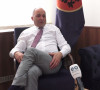
Without de-escalation, talking about elections was pointless, Igor Simic, Vice-President of the Serb List said, who was in the American capital, Voice of America reports.
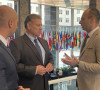
In Washington, he spoke with US administration official Gabriel Escobar and congressional staffers about the current situation in Kosovo and the possibilities of easing tensions.
In an interview with Voice of America, Simic indicated that clear messages had been conveyed to him in Washington.
"That the United States demands from the Government in Pristina to approach de-escalation, as soon as possible, and fulfill the demands that came from the European Union. This implies the withdrawal of Special units from the north of Kosovo and Metohija, but also the creation of an atmosphere in which the Serbs will be able to continue their lives, but also political action. These are prerequisites. In the past months, we had a situation where our citizens, civilians, were shot in the back - and no one was held accountable for it. Even those who were arrested under pressure from the international community were, unfortunately, released after only a few days. The process obviously remained in a deadlock. We also asked for an end to the arbitrary arrests of the Serbs - without any evidence, according to the principle that the Serbs must prove their innocence," Simic noted - adding that, contrary to that, the task of the prosecutors was to prove the guilt of citizens accused of illegal acts.
What we have seen is that the European Union, in several announcements and posts, is asking for de-escalation, as well as what they themselves qualified as an end to arbitrary arrests. What the international community is asking from the Kosovo authorities in order to start the de-escalation process has been precisely defined. What can the Serbian community do to contribute together with the Serb List in that process?
The plan of the European Union, as we understood it, which was agreed with the official Belgrade, was to de-escalate in such a way that Belgrade would release the arrested members of the Special Forces. It happened. Also, the degree of combat readiness of the Armed Forces of the Republic of Serbia should have been reduced. As far as we know - that happened. The third step that should be taken by the Serbian side includes the actions of the Serbs in the north of Kosovo and Metohija and the Serb list is the moment the illegal mayors leave the municipal buildings together with the Special Forces...
How illegal, illegitimate maybe, but not illegal...
I think they are illegal because the members of the election committees were close relatives of the mayors who were elected. I think that is absolutely illegal.
That is your claim which may or may not be true. Let's get back to de-escalation.
What I am saying is supported by the rules of the Central Electoral Commission in Pristina that relatives cannot be members of election commissions of people who are candidates in those elections. In this sense, the elections were conducted irregularly. Such a thing was not possible or allowed in the previous elections.
What can the Serb List and the Serbian community do to prevent a new “landmine” from happening - as Miroslav Lajcak characterized the holding of the last local elections that were boycotted by the Serbian community? Can he help to prevent that from happening?
Of course, and I want you to know that. We are interested in peace. I deal with politics, but this is not a question of political decisions, this is a question of the survival of the Serbs, my family, and children. All the children who live there, both Serbian and Albanian, because when peace is preserved, we have preserved it for both. In this sense, we are ready to think about how to act in the future, but before that, it is necessary to create the conditions. In an atmosphere of fear for the bare survival and safety of the Serbs, it is impossible to conduct a normal campaign. It is necessary, I will be very direct, to withdraw those Special units, that is the request of the Serbs, the request of the European Union, the request of the United States. Withdraw special units that are illegally present.
It is an open request that is before the Kosovo Government, there is no dispute...
But, if the preconditions are not met, how to conduct the elections, if we have a situation where more than a thousand people do not live in the north of Kosovo and Metohija today because they are on secret lists for arrest, among them there are doctors, professors, distinguished people, people of integrity in that community. So we cannot ignore the fact…
We have to take it with a grain of salt; it's not easy to check, because it's just your word, versus me who has no knowledge about it - except for what I heard...
The European Union, i.e. its most expensive mission that deals with the rule of law, EULEX, clearly came out with the position that the arrests of the Serbs were arbitrary and demanded of the Kosovo authorities not to do so.
But they didn't talk about lists. The fact is that the EU announced that it was wrong to arrest the Serbs arbitrarily, without court processes and decisions. Let's not go into lists. You mentioned that you are advocating for peace; it is necessary to fulfill the prerequisites, and then you will consider whether you will participate in them; after all, it is one, let's say, decisive input from the European Union, that contributes to de-escalation. Do you think it is enough that you answer that you are ready for peace, without a clear answer whether you want to participate in the elections or not, even though it is a prerequisite for de-escalation according to the EU?
If we look at the situation from that side, before we had this escalation, at the end of May, then in June, and to this day in the north of Kosovo and Metohija, we already had mayors, we were a part of the system. Police officers, prosecutors, judges, and administrative staff. That was not enough to protect the rights of the Serbs and prevent escalation. At that moment, we had special units already present in the north of Kosovo and Metohija, which built illegal bases by seizing Serbian land from Serbian hosts, not even respecting their expropriation laws. Therefore, with the very existence of Serbian mayors, Serbian policemen, and judges, we did not have enough tools and mechanisms to prevent Albin Kurti's regime from carrying out terror on the Serbs. So, the talk about the elections, like some magic pill that will solve all open issues, is really irresponsible. It means that someone is not familiar with the situation.
This is something that your partners are asking you, the US, the EU, and the people you talked to also support it…
If you look at the steps, first comes de-escalation, and then we talk about elections. If there is no de-escalation, the story about the elections is a hypothetical story, I do not want to talk about that out of respect for the people who supported me as their representative and those who are protesting today, peacefully in front of their municipalities. They are asking, imagine, to enter the municipality and do their work providing services to the Serbs and the Albanians and Bosniaks, and all other communities.
Can we then conclude in relation to this topic that the Serb List, as currently the largest political organization of the Serbs from Kosovo, from the north, is not ready at this moment to participate in the elections?
Without fulfilling the conditions that the citizens have set before us, we cannot discuss the possibility of elections.
Did you convey that to the interlocutors?
Yes, and we encountered a great understanding of such an attitude. The only difference is that with them there is hope that de-escalation will occur, and I, as someone who lives in the area of Kosovo and Metohija, do not see that de-escalation. I am worried about the period that is ahead of us, that someone in Pristina will use the period of these vacations to create another problem in the north of Kosovo and Metohija with unilateral moves. In this sense, we clearly demanded that the USA, through its people, especially through security institutions such as KFOR, which has legitimacy and obligation under Resolution 1244, be more present in the north of Kosovo and Metohija and prevent anyone who wants to threaten the peace in that area and at the same time the Western Balkans.
Can you, as a political party, make a decision about potential participation in the elections independently of Belgrade?
The decision that we will not participate in the elections was made by our people, long before the meeting was held in Raska, at the joint session of the representatives of the Serbs of Kosovo and Metohija, when the policemen took off their uniforms. That was the decision of the Serbs, not the decision made in Belgrade. The boycott of the elections, which were organized against our will, was also the decision of the Serbs. Belgrade had no influence on that decision. I will remind you that the Serb List wanted to leave Kosovo's institutions more than ten times and draw the attention of the international public to the fact that our basic human rights were being threatened. At the request of official Belgrade, we did not do that, we wanted to give peace a chance. We wanted to give the negotiators a chance to fulfill what they promised us. For example, those elections were not boycotted by the Serbs only, even those young Albanian mayors received twice less votes from Albanian citizens than in the 2021 elections when they participated in them. That was a message from the Albanians too, or someone thinks that the Serb List forbade Albanians to vote as well. No, they were Albanians living with the Serbs in the north. This is just one concrete example that says that ordinary people did not support Albin Kurti's policy of solving open political issues with violence.
In several conversations with local congressmen, and it seems to me that the EU mentioned it, there is something called, which they say, Belgrade should not interfere in those potential elections that would take place perhaps in the fall. How do you understand that, and what exactly does it refer to, and how do they get the impression that Belgrade is interfering or could be interfering?
Those are very simple things. The Serbs in the territory of Kosovo and Metohija would not survive in the territory of Kosovo and Metohija if there was no Belgrade. Salaries, pensions, child benefits, social benefits, and funding of schools and hospitals. None of that would be possible. The most direct survival of the Serbs depends on Belgrade. And that's a fact. When it comes to the decisions of the Serb List, they are autonomous, they are made by the Serbs. Sometimes, even moderated in relation to what the real attitudes of our people are, because we who deal with politics still have to take care of the long-term interests of our people on the ground.
That's clear to me...But, I mean...how?
On the other hand, consultations with Belgrade are public. All our meetings are in the media. And who else should we consult? With Pristina, which wants the Serbs gone? We have regular meetings with international partners and we are very honest in those meetings. We never promised anything we didn't want to or couldn't deliver. On the other hand, if someone expects to shift the solution of the problem between Belgrade and Pristina to the shoulders of local political leaders in Kosovo and Metohija, that is impossible. There is a dialog that is predefined. We have an official negotiating system, that is, a team from Belgrade, and a negotiating team from Pristina and Brussels. A place where a solution should be found that will allow us to finally, once and for all, through compromise solutions, create the preconditions to live a normal life, to discuss the economy, ecology, and the improvement of living conditions. And not that 24 years after the conflict, the Serbs in the north of Kosovo and Metohija fear again whether they will survive. They again fear that March 17, 2004, will happen again - when everything Serbian was burning - houses and churches and villages and everything else - and that in the presence of international forces. That is why we constantly insist on an increased presence of international forces, in order to guarantee that someone who wants to be a little Zelenskyy, like Albin Kurti, does not create a new crisis area in the “soft underbelly”, if I may say so, as diplomats use those words, in Europe. And open some new front that will mean chaos again, suffering again, exodus again, and divert the entire Western Balkans from the path of progress to the path of regression.
I didn't understand that metaphor, little Zelenskyy, but we won't go there - if you said so - we'll waste time. How much did the withdrawal of the Serbs from the police, I think there were 500 of them, last November, make maintenance of overall order and peace in the north of Kosovo difficult? If that had not happened, perhaps the arrival of what you call members of the Special Kosovo Police in that area would not have happened. Because as far as I remember, EULEX, when it happened, mentioned that there would be problems with maintaining peace and order.
Nine months have passed since the Serbs left the Kosovo Police. Of course, the situation today and then cannot be compared at all. They were professionals who did their jobs well. However, you cannot police in a community without the people living in that community. In that sense, the difference is felt. But on the other hand, you have to clarify that we currently have regular, ordinary police, if I may say so, made up of Albanians, who are a part of the traffic police and everything else, about which citizens have complaints, but not about their personal safety in the sense that they will shoot them. And you have the presence of Special Forces, which according to the Brussels agreement, even according to the Constitution of Kosovo, which says that the police composition must reflect the ethnic composition of the municipality, not only in the north, but everywhere, is not respected. In this way, those people, as I said, who have repeatedly shot our citizens, create everyday problems. They also created a problem that caused Serbian police officers to leave those institutions. We had a situation...
You didn't answer my question. Could the withdrawal of 500 people be the cause of the current situation, that there are not enough people and that members of the Special Forces are coming...
We can't start from the “second floor”. The “first floor” is the sending of special units to purely Serbian areas. Purely Albanian Special Forces. This caused the security situation to worsen.
And what if they were sent because there weren't enough policemen?
They had been sent before the Serbian policemen left the institutions. That's important to say and thank you for that. Serbian police officers left the institutions on November 6 last year. Those Police Forces had started building their bases seven months before. Somewhere even a year before that, in the municipalities of Zubin Potok and Leposavic. And that was the reason. Because the Serbian Police officers had hundreds of cases in which they watched those Special Forces beat Serbian citizens and civilians, and they could not protect them from that. The Serbs, who were a part of the Kosovo system, I personally, as a Deputy, Minister, Mr. Rakic, President of the Serb List, people who were in the police and prosecutor's office, did not want to be a part of those institutions that repress their citizens. They did not want to be a decoration that provides some semblance of multi-ethnicity to the Kosovo society that is doing everything to threaten, I tell you again, the survival of the Serbs.
Forty-five members of the Serbian community, among other non-Albanians, joined the Kosovo Police 2-3 days ago. Western diplomats, here I mean the head of EULEX, the US Ambassador, have warned about the campaign of intimidation carried out on social networks against people returning to institutions, which they interpret also as de-escalation. How does something like that affect de-escalation and how do you stop it?
We left Kosovo's institutions because the provisions were not respected, which state that the ethnic composition of police officers should correspond to the ethnic composition of the population. You know, when they sent those special units. Even then, international diplomats did not react. So, we asked that it be respected.
I ask you for now?
And I'm glad they remembered it now. On the other hand, the campaign they are talking about is actually, as far as I could find sources, a message that was published on the Telegram network by an anonymous person.
Wait, just a second, okay. But it caused a reaction from EULEX, the US Ambassador, let's not trivialize things now, one message on Telegram?
Try to find any media statement given by any representative of the Serb List regarding that case, that we contributed to it and I will take back everything. But I won't agree to that…
I am asking you as a citizen. So I did not equate you, there is no information that your political party is...
But the campaign is so raised, it's unbelievable.
Does it make de-escalation difficult? Reaction to the employment of 45 people in the Kosovo Police Service?
I don't see it being related to de-escalation in any way. I don't see a way to talk about de-escalation…
This implies, in a way, some kind of return of members of the Serbian community to Kosovo institutions. Where is the fact that their withdrawal certainly did not contribute to stability in the north of Kosovo, nor in the whole of Kosovo?
It will not contribute to de-escalation by employing forty people in the positions that belong, as you yourself said, to the 500 policemen who were on that ground. That is less than 10 percent. That's not de-escalation.
With such a campaign, no one will want to work there - if your neighbors...
It's not a campaign; it was a message on a social network.
To what extent did the violence and riots at the end of May, when 93 KFOR members were injured, not thirty but 93, undermine the trust between the Serbian community and the international military mission?
You forgot the fifty-three Serbs.
Right, that's right. I am asking you because you are from Belgrade, and the fact is that peacekeeping forces play a major role in protecting the Serbian community. A circumstance in which 93 of them were injured in one day - I have to ask you what kind of impression it leaves. And was trust broken in some way because of the important fact of their presence and protection of the Serbian community?
I have mentioned several times - the Serbs have no problem with the presence of KFOR. We even demanded, but unfortunately, we did not receive a positive response, the increased presence of KFOR because it is a way to prevent Special units from beating our citizens. We condemn every violence that has been committed, but unfortunately, the fact is neglected - knowingly that the Serb was the most severely injured in the violence. Dragisa Galjak, who was shot without warning by Albanian Special Forces in the municipality of Zvecan.
One Hungarian soldier lost his leg - among 93 injured soldiers. You say that you are looking for an increased presence of KFOR, which is completely understandable because it is a community that often draws attention to vulnerability. On the other hand, the Serbs who protested injured KFOR soldiers. Looking for something from someone who has inflicted significant physical harm?
Almost 60 days after those protests you mention, we still have protests. Members of KFOR are in the immediate vicinity of our citizens - we no longer have any incidents. On that day, unfortunately, Albin Kurti's regime managed to create a problem and placed KFOR troops between itself and the Serbs. I was one of the beaten citizens who sat calmly on the ground. It is an unfortunate event that is the result of the fact that Pristina managed to create a heated atmosphere and then placed members of the international forces in front of it, as a shield. It didn't send a good picture and we are aware of that.
Is it known who the masked persons were who beat the KFOR soldiers and can the Serb List help, in the good spirit you want to build, to bring the perpetrators of the violence to answer before the law?
We believe that the institutions, Kosovo and international, should understand that it is necessary to preserve the peace. I can't identify people, I'm not a police officer - I don't have the right to do that. The Serb List can do what it has been doing since that day - to talk to the citizens and explain that it is necessary to preserve the peace. At the same time, Pristina cannot arbitrarily arrest Serbs, implying that they have committed violent acts. This must be proved by the court.
If you have information about possible miscreants - can you offer it to the authorities and then the matter can be cleared up?
Absolutely, but we cannot conduct an investigation and do not expect the Serb List to...
I didn't even think that - only if you saw it and have information about the culprits... Okay, I have two more things - Milan Radoicic, Vice President of the Serb List, has been under US sanctions for more than half a year, which designates him as a member of Zvonko Veselinovic's criminal group. How much does something like that make the position of the Serb List difficult in the talks with the US side in Washington, and with partners from the European Union?
I don't think it makes it difficult, we are in Washington. In none of the meetings we had, such a thing was mentioned. The strength of the Serb List comes from the support we have within the Serbian community. What I can tell you when it comes to Mr. Radoicic is one of the representatives of the Serbian people, who enjoys the enormous trust of those same people. Regarding the sanctions you mentioned - we are aware of that. On the other hand, we were never aware of any evidence that would specifically talk about his responsibility for the acts he is accused of. The Serb List is a partner to everyone who wants to preserve peace in the area of Kosovo and Metohija - because it is a vital interest. In that sense - we have never had any problems cooperating with international partners because of what you mentioned.
In conversations with members of a part of the non-governmental sector from the north of Kosovo, they expressed fear or noticed that their voice was not heard loud enough in Belgrade - but that Belgrade was more ready to listen to the voices of the Serb List. How do you interpret that?
I think they are being listened to; that may be a personal perception. Mine and theirs. I believe that civil society can contribute to the democratization of the entire society, even when we are talking about the Serbs who live in the area of Kosovo and Metohija. I am glad that these people were here because they share the fate of their people. They were able to present everything that I told you about. The Serb List pays special attention to the positions, analyses, and reports made by non-governmental organizations, both Serbian and Albanian. Personally, I have some objections that they could be much more public with their views - but I leave that to them. The Serb List sees them as important factors in improving the position of the Serbs.

0 comments