
Sljuka: Despite opposition from Pristina, Belgrade's insistence on forming the CSM has EU support
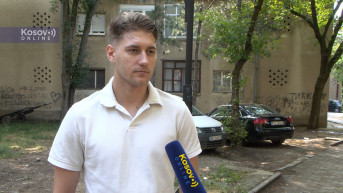
Aleksandar Sljuka, a collaborator from the NGO "New Social Initiative" in North Mitrovica, assessed that despite opposition from Pristina, Belgrade's insistence on forming the Community of Serb Municipalities (CSM) as a key condition for implementing the reached agreements has understanding in the EU.
"The EU supports such an approach by the Serbian side, and I think they will also insist that the Association be the first and most important issue in the sequence of implementation, to at least take certain steps, after which certain things can be expected from the Serbian side. This will be very difficult for Kurti to accept, especially considering that elections can soon be expected in Kosovo. He will not look to harm himself and lower his rating by forming the CSM at this sensitive moment for him," Sljuka emphasized for Kosovo Online.
Commenting on yesterday's round of dialogue between the chief negotiators of Belgrade and Pristina in Brussels, Petar Petkovic and Besnik Bislimi, Sljuka said that the mediator in the dialogue, Miroslav Lajcak, gave both sides a deadline until July 18 to present their objections to the proposal, but he does not expect any change in the positions of either side.
"We have essentially already seen this with the dinar. The sides have entrenched themselves in their positions, and the EU was powerless to unblock it. After seven meetings about the dinar, we saw no progress, and now that topic is practically no longer discussed. I think this is more of a welcoming speech from Borrell and Lajcak rather than a sign of their constructive engagement regarding the implementation of the agreements," said Sljuka.
He added that meetings about the implementation of the agreed terms are necessary and that the extension of Miroslav Lajcak's mandate will lead to more meetings.
He emphasized that the fundamental problem of the dialogue at the highest level is the lack of progress and noted that Kurti not only refused to meet with Vucic last week but also presented three new conditions for the continuation of the dialogue.
Sljuka said this can be interpreted in various ways, but the essence is that Kurti needs to be "appeased."
"We know that, essentially, as long as Kurti is not appeased, there will be no significant steps forward. However, I think these conditions will not be a decisive obstacle because the EU seems to have slightly changed its stance. Initially, it supported or tacitly approved all of Kurti's conditions and attempts to dilute the course of the dialogue. I think this will no longer be tolerated," Sljuka emphasized.
However, he does not expect anything "sensational" to happen during the dialogue before next year.
"The question is how this will affect Kurti. I think it won't. We won't see anything sensational at least until next year. As long as Lajcak's mandate lasts, there will be no major progress in terms of forming the Community of Serb Municipalities," concluded Sljuka.


0 comments