
Sljuka: Despite Pristina’s objections to the draft statute of the CSM, no signals from the EU that it will be revised
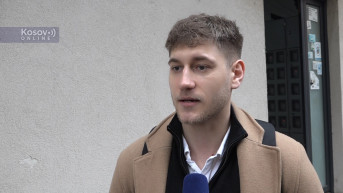
Aleksandar Sljuka, an associate at the non-governmental organization New Social Initiative, tells Kosovo Online that he doubts the European Union will revise its proposed draft statute for the Community of Serb Municipalities, despite Kosovo President Vjosa Osmani stating that she does not believe the document can pass the Constitutional Court's review.
Sljuka believes that if the EU were to amend the text it authored, it would lose credibility in the process, as it has already presented the draft to both Pristina and Belgrade, and both have initially accepted it.
"That would be a major issue because, if space were opened for Pristina to make suggestions, Serbia might also want to modify certain points. This would only prolong the process further, delaying any resolution for a long time," Sljuka explained.
He notes that, even before Osmani's statement, Kosovo officials had criticized the European draft statute as being inconsistent with Kosovo's Constitution. However, so far, there has been no response from the EU on whether these concerns are valid or if the draft will be revised.
"This leads me to believe that the EU will not take any action on this matter. Some who have read the draft claim that there are provisions that the Constitutional Court of Kosovo could find unconstitutional – not to reject the entire statute, but similar to the 2015 agreement on the CSM, where certain provisions were deemed inconsistent with Kosovo’s Constitution and had to be amended," he pointed out.
If the Constitutional Court were to rule that even a single provision contradicts Kosovo’s Constitution, Sljuka argues, it would create a significant problem. He believes officials in Pristina would use this as justification to further distrust the CSM, claiming that the EU is imposing something unconstitutional on Kosovo.
In his view, if there are legitimate concerns that certain aspects of the draft statute do not align with Kosovo’s Constitution, they should be addressed before submitting the document to the court. Otherwise, if the court again finds inconsistencies, it could lead to serious negative consequences.
"However, we have received no signals from the EU that this will happen. For them, I would say, this is a done deal. They have repeatedly insisted that the draft be sent to the court, and had there been political will in Pristina, it would have already been submitted, and we might have already seen the consequences of that. I sincerely hope they send it, just to untangle this whole situation and clarify where we stand with the statute," Sljuka stated.
If Albin Kurti remains at the head of the next government, Sljuka predicts that it will continue delaying the formation of the CSM – unless new punitive measures are imposed on Kosovo, which he considers unlikely.
"During the campaign, we saw that Kurti openly stated he does not plan to establish the Community. Distrust will only deepen further if the proposed statute turns out to be unconstitutional," Sljuka concluded.



0 comments