
Sljuka: Serbs are slowly leaving Kosovo under pressure, international actors are doing nothing to prevent it
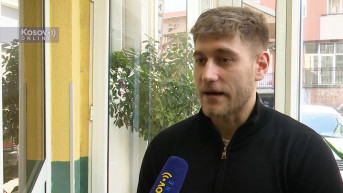
Considering everything that has been happening to Serbs in Kosovo in recent years, from economic pressure to pressure from security forces, it can be said that a silent pogrom or a silent exodus is taking place, Aleksandar Sljuka, an associate of the non-governmental organization "New Social Initiative," says for Kosovo Online.
"Under pressure from all these factors, people are leaving, primarily from northern Kosovo, and the most problematic aspect is that this trend is irreversible, those who leave mostly do not return. Even if certain conditions were to change, it is very difficult to expect that these people would come back," Sljuka points out.
Given that Serbs are exposed to almost daily provocations, including physical violence and the desecration of Serbian churches, yet such incidents are not met with strong condemnation from the international community, Sljuka notes that when there are condemnations, they come only in the form of statements, without concrete actions on the ground to prevent further escalation or unilateral moves by the government in Pristina. This, he says, has left the Serbian people disappointed in the international community.
"The Serbian people are also resentful toward the international community because it was supposed to guarantee that all rights would be respected when Western partners supported Kosovo's independence in 2008. Serbs have seen that this is not happening," he states.
According to Sljuka, if the majority of international actors are content with the current situation, as long as stability is maintained and the narrative of a multiethnic Kosovo is not undermined, then they will not intervene, condemn, or take action.
"This is exactly why the silent exodus is happening. There is no widespread violence like before, but people are slowly leaving, and in this way, the idea of a multiethnic Kosovo is fading. Whether consciously or not, international actors are doing nothing to stop this," he says.
He hopes, however, that the March violence of 21 years ago will not be repeated, emphasizing that it was one of the most tragic events for the Serbian community in Kosovo after the war, aside from the immediate aftermath of the 1999 conflict. He also points out that the circumstances in 2004 were different, as there was greater frustration among Kosovo Albanians over Kosovo’s unresolved status, whether it would return under Serbia’s jurisdiction or gain independence.
"They used the support of the United States to exert pressure and say: ‘Look, we are dissatisfied, and we will do everything to show our discontent so that you support us in gaining Kosovo’s independence.’ That moment has now changed. We see that the US has shifted its approach on the global stage, and today, such violence would no longer receive the same backing. It would be perceived completely differently by the international community, which is why I don’t believe it would happen again.
Additionally, while many believe that the March violence was organized by certain institutional structures, it was primarily carried out by individuals. Now, however, institutional violence is being implemented, systematic repression through Kosovo’s state apparatus. The approach has changed, which is why I don’t think a repeat of the same scenario is realistic," Sljuka concludes.

0 comments