
Sorensen: Kosovo to begin negotiations on arrangements for self-management of the Serbian community
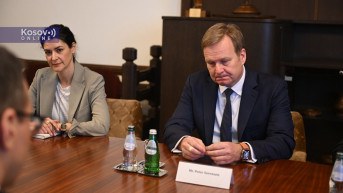
The European Union Special Representative for the Belgrade-Pristina Dialogue, Peter Sorensen, stated that the implementation of obligations arising from the normalization process remains far below the level to which Belgrade and Pristina committed themselves, stressing that neither side should wait for the other in order to begin implementing the agreed arrangements, Gazeta Express reported.
According to Sorensen, Kosovo should begin negotiations on arrangements and guarantees for an appropriate level of self-management for the Serbian community.
In his first written interview since taking office, given to Gazeta Express, Sorensen assessed that the dialogue nevertheless delivers concrete results for citizens, citing as examples the holding of the trilateral meeting of the Joint Commission on Missing Persons and a temporary solution for Serbian citizens who work and study in Kosovo.
At the same time, he emphasized that the implementation of obligations under the 2023 Agreement on the Path to Normalization is significantly below expectations.
"Implementation is not where it should be. It is not optional. The 2023 Agreement and its Annex remain in force. They are legally binding for both parties and form an integral part of their European path. The passage of time does not change that," Sorensen said.
Speaking about the sequence of implementing obligations, Sorensen stressed that the issue is not about which side should make the first move.
"It is not about who goes first. Neither side should wait for the other. For Kosovo, the Annex clearly provides for the immediate commencement of negotiations within the EU-facilitated dialogue on concrete arrangements and guarantees for an appropriate level of self-management for the Serbian community. At the same time, Serbia's obligations, including not opposing Kosovo's membership in international organizations and accepting Kosovo documents and symbols, continue in parallel and are equally delayed," he said.
Asked whether he had told acting Kosovo Prime Minister Albin Kurti that Kosovo should begin implementing the agreement first, Sorensen replied that the European Union expects both sides to fulfil their commitments without preconditions and in good faith.
"As I said, this is not about Kosovo having to move first. Both sides must act without preconditions and in good faith. I have conveyed the European Union's expectations to all interlocutors in Pristina, as well as in Belgrade. The obligations exist, they are known, and they have not yet been fulfilled," Sorensen said.
Commenting on the political deadlock in Pristina, Sorensen assessed that a prolonged technical mandate limits the ability to make important decisions but stressed that this does not alter the obligations arising from the dialogue.
"The obligations under the Agreement bind Belgrade and Pristina, not only the governments currently in office. They cannot be put on hold because of elections or coalition negotiations," he said.
Commenting on the reintegration of Serb judges and prosecutors into Kosovo's institutions, Sorensen recalled that Kosovo's Constitution provides for a multiethnic judicial system and that the European Union has consistently called for the return of Serbian judicial personnel in accordance with Kosovo's laws and agreements reached through the dialogue.
"We welcomed the withdrawal of the resignations of Serb judges and prosecutors on July 15. What followed concerned us. Accepting resignations that had previously been withdrawn appears incompatible with Kosovo's laws and the principles of the rule of law," Sorensen said.
He added that the European Union would not prescribe a specific procedure but would assess the outcome.
"What we will evaluate is whether there is a genuinely multiethnic judiciary and prosecution service in which the Kosovo Serb community is effectively represented and has confidence," he said.
Speaking about rhetoric in relations between Belgrade and Pristina, Sorensen said that Europe has no place for statements that justify or relativize ethnic cleansing.
"Such statements insult victims and survivors, are incompatible with the European path, and contradict the obligations undertaken in the dialogue. This applies regardless of which side they come from," he said.
Asked when a new high-level meeting between Albin Kurti and Aleksandar Vucic could take place, Sorensen replied that it would happen only when there is a realistic possibility of achieving concrete progress.
"A high-level meeting is not a reward or an opportunity for a photo opportunity. It is organized when it can contribute to concrete results. The EU High Representative is ready to convene such a meeting when circumstances allow and when both leaders are prepared to achieve results. Both sides know very well what is needed for that to happen," Sorensen concluded.
0 comments