
Spahiu: The whole region suffers because of a lost year for dialogue
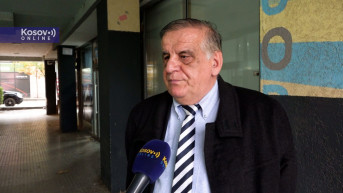
Professor of political science Nexhmedin Spahiu believes that due to the elections in Kosovo and the failure to form institutions, the outgoing year has been lost for the Belgrade–Pristina dialogue, which he says is a major setback that affects not only Kosovo and Serbia, but the entire region.
In his view, concluding the dialogue and implementing what has already been agreed between Albin Kurti and Aleksandar Vucic would mean a great deal not only for Kosovo and Serbia, but would also be a significant gain for the whole region.
“But it is what it is. It is good that both in Belgrade and Pristina the political situation should soon stabilize so that the implementation of the agreed points can continue,” Spahiu said.
He believes that the current standstill in the dialogue does not serve Pristina’s interests, as it is in Kosovo’s national interest to resolve the dispute with Serbia as soon as possible.
“This situation is not in line with Kosovo’s national interests. The lack of progress stems from the indecision, or rather the inability, of Kosovo’s political forces to bring the dialogue with Serbia to an end. Making compromises is not easy, but there must be strength and will to finish it as soon as possible, bearing in mind that it is Kosovo’s national interest,” the professor emphasized.
Illustrating his point, he said that when someone decides to buy a car but finds the price too high, they can wait for the price to drop – but in the meantime, they remain without comfort, that is, without a car. The price, he noted, might become lower over time, but losses accumulate while waiting.
“The same applies to Kosovo. Perhaps the price that Serbia demands for recognition is high, but by waiting for a cheaper deal, Kosovo loses much, and it should have the determination, strength, and will to resolve the issue once and for all. We all lose, Serbia loses too, but we lose more because we need recognition. Serbia does not,” Spahiu concluded.
Regarding how long the vacuum in the dialogue might last, he explained that if extraordinary parliamentary elections are held on December 28, another round could follow later when it comes time to elect Kosovo’s president.
He noted that this could happen because the president of Kosovo is elected by parliament rather than by direct vote, unlike in most Balkan countries – from Turkey and Romania to Slovenia – except Kosovo and Albania, where the president is also elected by parliament.
“Albania has never really had a problem with this, since its president can be elected with 51 percent of parliamentary votes, but here the requirement is a two-thirds majority, and that always becomes a political knot. The smartest thing for the political forces in Kosovo, including the Serb List, would be to vote in the meantime for constitutional changes so that the president would be elected directly by the people,” Spahiu said.
He believes this would be important for Kosovo’s entire society, as it would eliminate recurring political deadlocks.
“It would also be important for the Serbian community and other minority communities. In that case, presidential candidates would have to visit areas where ethnic minorities live to seek their votes. And when you go, for example, to Gracanica or Leposavic to ask for votes as a presidential candidate, you must also make commitments to that community, and that would be real progress,” Spahiu concluded.


0 comments