
Spasojevic: The pogrom has continued to this day, taking the form of institutional violence
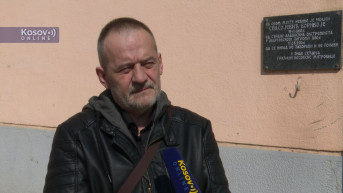
Dragan Spasojevic, the son of Borivoje Spasojevic, who tragically died during the pogrom on March 17, 2004, in North Mitrovica, said in a statement for Kosovo Online that Mitrovica preserves the memory of the sacrifice made by his father and Jana Tucev, who was also killed that day, but that the violence which began then has not stopped to this day, it has only changed its form.
“For me, March 17 is a date that shows that the people have yet another reason to strengthen their determination to remain in these areas, to continue living despite all the challenges that exist, the hatred of the other community or individuals or groups from that other community who best deal with their vanity and some kind of misfortune by committing violence or trying to commit it against the Serbian community and trying to erase the traces of Serbian existence in Kosovo and Metohija,” Spasojevic says.
Twenty-two years have passed since the tragic death of his father, but, as he points out, the sacrifice Borivoje made has not been forgotten.
“He was an electrical engineer, he participated in many projects related to Mitrovica and Trepca, he was a respected man. He was a good friend to many, and people remember him as their fellow citizen, especially under the circumstances in which he died,” he adds.
The investigation that was conducted did not lead to the perpetrators or those who ordered the attack, which further complicates the situation for the victims’ families. Spasojevic recalls that even 20 years ago, the international investigation that was launched did not promise justice for the victims of the March violence.
“As our people say, the morning shows what the day will be like. When after March 17 an international team was formed to investigate the perpetrators of the violence of March 17, that team was called Tor. Their main question, when they called me to ask about the case of my Borivoje Spasojevic, was what he was doing on the street. They did not ask about the direction the bullet came from or other things, they were very interested in what he was doing on the street. And their colleague from the Federal Bureau of Investigation, Beril Vinch, had previously participated on the Serbian side in repelling the attack of those Albanians, about two hundred of them who crossed into the northern part, armed with pistols and throwing stones, smashing shops, shooting around. So they could have asked him, instead of me, what people were doing on the street at the moment when bursts of gunfire were heard, when shots were being fired, when stones were flying here in the north without any provocation,” he says.
Spasojevic states that the main targets were enclaves where Serbs had returned and where life had resumed.
“All of this mostly happened in places where return had been successful. Wherever Serbs returned, there were burnings, injuries, and expulsions. And that says enough about that so-called coexistence. Maybe they should have introduced this Law on Foreigners on March 18 so that it could also be linked by date as institutional violence. The pogrom of March 17 has continued in continuity, only now it has taken the form of institutional violence, where they pretend not to understand and believe that life here began in 2008 when independence was unilaterally declared,” he adds.
Time passes, he says, and only a change in the global situation and political will in Kosovo can bring the justice that the victims’ families demand.
“Everything depends on shifts in the world and the configuration of political will globally and political will in Kosovo. The one who is a criminal cannot deal with their own crimes, they at the very least try to justify them, as we have seen in the statements of Albin Kurti and others who speak about it. They say that the people were outraged because of something the Serbs did, although they do not mention what those reasons are, but they say that the reasons exist. And in that way they justify the violence that happened, the churches that were burned, and all those things and all that horror they carried out in those days,” the son of the tragically killed Borivoje Spasojevic concludes.
His granddaughter V.S. says she is proud to have a grandfather who was a hero, killed without any fault.
“I do not remember my grandfather, but through my father’s stories, it is as if I grew up with him and as if I know him,” V.S. told us.

0 comments