
Stanic: Access to the single European market would accelerate development in Serbia and the region
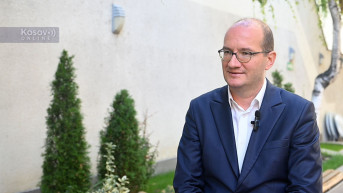
Bojan Stanic of the Serbian Chamber of Commerce said that Serbia's access to the single European market would lead to greater economic activity and long-term stability in GDP growth, while helping the country align more quickly with European Union (EU) legislation and policies.
“Participation in the single European market is our goal. I would not call it an alternative to the European Union, but rather something that would help us meet all those obligations more quickly in terms of harmonizing legislation, aligning with policies and, ultimately, achieving full membership,” Stanic told Kosovo Online.
Stanic stressed that economic integration with the European Union would affect Serbia's credit rating and make the country a more reliable place to invest, leading to greater economic activity and capital mobility.
“If there were tangible progress in the integration process, it would certainly increase investors' confidence in investing in this region. That would lead to better economic prospects and, ultimately, to political alignment stemming from those economic opportunities,” Stanic said.
Asked how this would affect gross domestic product (GDP), Stanic said that Serbia's GDP growth rate is already good, but that integration would help sustain growth over a longer period, accelerating development in the country and the region and making a significant contribution to long-term sustainability.
According to him, various restrictions are currently in place, including non-tariff barriers, quotas and restrictions on transport operators, which are hurting the Serbian economy and making the European market increasingly difficult to access.
“Borders are the biggest obstacle. Given that 90 percent of all goods leaving Serbia are transported by truck, there is also the 90-days-in-180 rule. We have seen no real progress on this issue and no understanding on the part of the European Union. Restrictions could also arise through the introduction of quotas, as is the case with steel, and through carbon-related requirements,” Stanic said.
According to him, investors are also affected by political statements suggesting that the visa-free regime with Serbia is now being reconsidered, at least according to reports in some European media.
“Investors hear all of this. Businesses hear it too, and they become concerned about whether Serbia has a European Union membership perspective and will continue its European integration process, or whether it is simply moving further away from the EU and risks ending up in the same group as Turkey and Georgia. All of this definitely affects investment, but we still hope that reason and economic rationality will prevail, given that Serbia, with its industrial potential, together with Bosnia and Herzegovina and North Macedonia, can contribute to Europe's goal of increasing its level of economic autonomy,” Stanic said.

0 comments