
Starovic: KFOR's action is a negative precedent that will have consequences
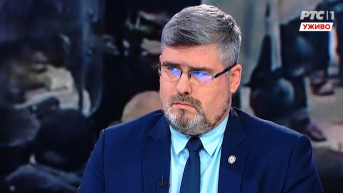
State Secretary in the Ministry of Defense, Nemanja Starovic, pointed out that today's action of KFOR in Zvecan represented a serious and negative precedent that would have consequences and added that from the moment Albin Kurti had come to power, it was clear that he wanted war at all costs.
Starovic, in RTS's "Oko" show, said that there was communication with representatives of KFOR, which was intense, both at the level of the mission commander and the chief of the General Staff of the Serbian Armed Forces, as well as at lower levels.
"Of course, there was no mention in that communication that something like that could be expected. What happened represents a serious and negative precedent that will have consequences. We will see in what form and to what extent," he explained.
Starovic emphasized that the President of Serbia, the Commander-in-Chief, Aleksandar Vucic, and the Deputy Prime Minister, Minister of Defense, Milos Vucevic, were having intense communication with international partners, as well as with the Serbs, and with the duty officers of the Serbian Army units deployed along the administrative line.
He assessed that the greatest responsibility rested on the countries of the Quint.
"What we have witnessed in recent years, especially the last two, is a repeating pattern, the same matrix - the extremist regime announces unilateral moves, we immediately receive guarantees from the Quint that they will not be allowed, and when they do withdraw, condemnations follow that are increasingly harsh. Thank you for the condemnations, but in a practical sense, the situation on the field remains unchanged," Starovic said.
Asked about the injured, he said that according to the information he had, two Serbs had been injured by firearms, one of them seriously, and there were many more lightly injured.
Kurti wants war; he believes that now is a favorable geopolitical moment
Starovic emphasized that from the moment Albin Kurti had come to power, it had been clear that he wanted war at all costs.
"He is well on his way to getting it despite everything we did, trying, in cooperation with international partners, to prevent something like that. Kurti wants a war, and he has favorable geopolitical circumstances, as a result of which it will no longer matter to anyone who started it," he explained.
He said that it was no coincidence that Kurti chose a moment when our society was in shock due to mass murders when Serbia had an aggravated political situation.
"Kurti thinks it's the right moment to start a war," he underlined.
Starovic explained that the units of the Serbian Army followed the command of the Commander-in-Chief, the President of Serbia, and that they were in a state of maximum combat readiness, deployed along the administrative line and ready to carry out any order of the Supreme Commander.
"If you ask me whether units of our army will go in to protect the lives of our compatriots in Kosovo and Metohija, first of all, we will certainly not let it happen again. But such a move is made only once and that is why it is important to weigh such a decision," he said.
Starovic emphasized that the request of the Serbs for the withdrawal of special units of the Kosovo Police from the north was completely understandable.
He said that he admired the Serbs in Kosovo who had shown unity, determination, and responsibility in December last year and in recent days.
"They are aware of how dramatic the situation is and that every move can lead to disaster," he underlined.
The responsibility for maintaining peace rests with the countries of the Quint, primarily the US
When asked whether they could be expected to prevail over Washington's position, Starovic noted that the reaction of US Secretary of State, Antony Blinken, had been unusually harsh and that such language had never been used in Washington towards Pristina.
"I consider myself a diplomat and I believe in the power and strength of diplomacy. But, as important as statements of this type are, we have no right to be naive, because if such strong statements and announcements are not accompanied by concrete steps on the ground, they lose their value," Starovic said.
He said that the preservation of peace, which was threatened, was in the hands of the Quint countries, that really had the power, and among them, primarily the US, to influence Kurti and the Albanian extremists in Pristina.
"The responsibility for preserving peace lies with them. We are ready to invest in peace and to sacrifice a lot to preserve peace, but not the lives of our people," Starovic pointed out.
Serbia will always be with the Serbs in Kosovo and will not allow a pogrom
Asked what advice he had for the Serbs in the north of Kosovo - how to act in the coming days, Starovic said that the advice and appeal were to remain consistent with the principles of democratic and non-violent resistance because they were the only ones that produced results.
"Serbia will always be with them, and we cannot and will not allow them to experience a pogrom again," Starovic emphasized.
He stated that all the international delegates, before the elections in the north of Kosovo, said that it was important that those elections be held, regardless of how many people participated because the mayors would not even take the oath, and the opposite had happened.
"Then they said, “Let them take the oath, but they will not perform their duties”, now we have a situation where the Special Police Forces and KFOR insist on allowing illegal mayors to enter the offices, and with brutal force they prevent people, who have been working in those offices for 30 years and services to access the workplace. This is inadmissible," Starovic said.
He said that he believed that the abandonment of the institutions had not been a mistake and that it was the long-term will of the Serbs in Kosovo, who had been demanding it to happen for years due to the fact that the Brussels Agreement had not been implemented.
"It is a move by which they indicated to the international community that Pristina has not implemented its obligations for ten years. Boycotting the elections is a necessary move, because none of the demands were met, which were the withdrawal of the special militarized mono-ethnic unit from the north and to start implementing the CSM. These are common sense messages," he underlined.


0 comments